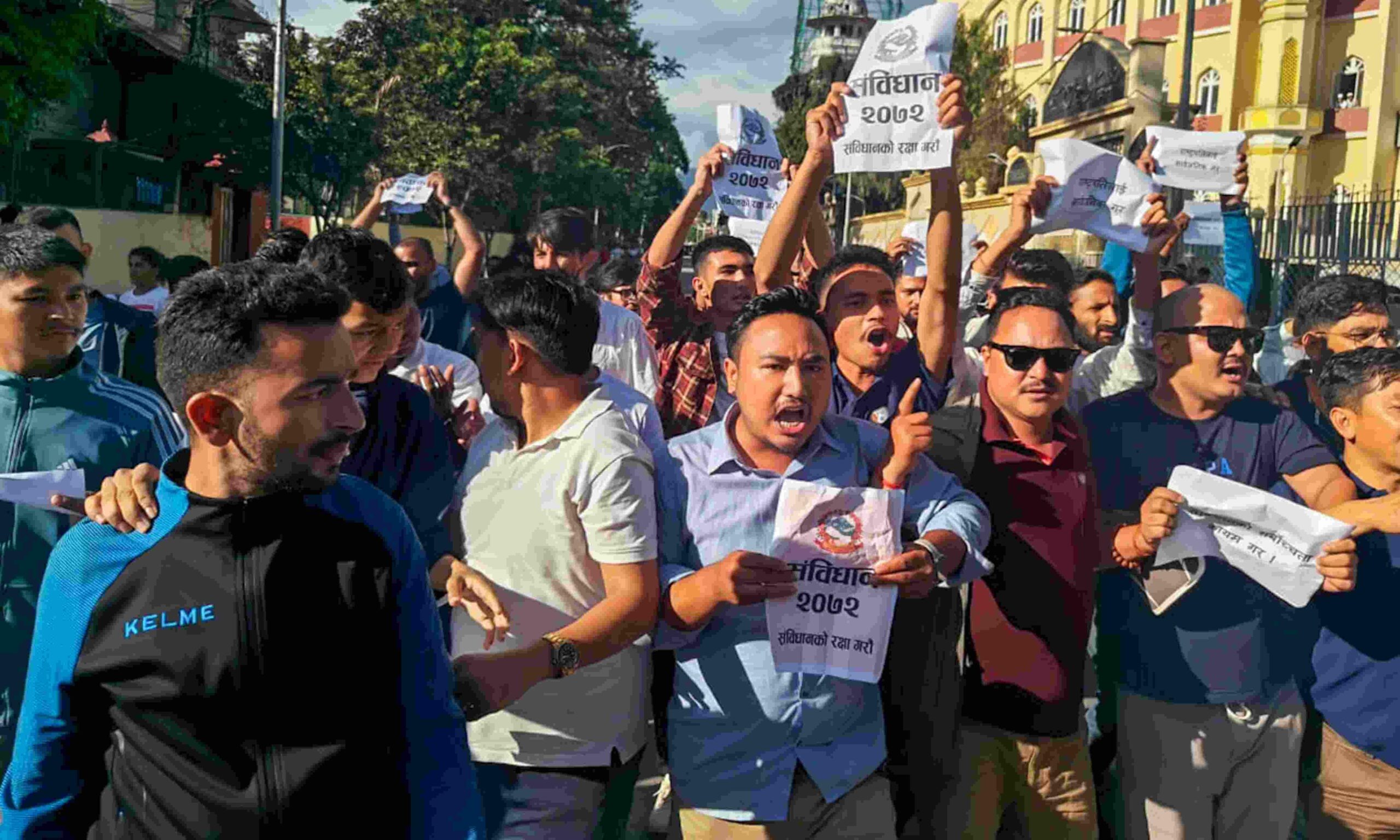
From Nepal to Kenya, Indonesia to Morocco, and Serbia to several European countries, young people are increasingly taking to the streets to challenge governments, political establishments and conventional structures of political authority. Although the immediate triggers vary across countries, a recurring pattern is becoming visible: a generation that appears increasingly dissatisfied with the political leadership and institutions that claim to represent it.
These protests are often explained through familiar factors such as unemployment, corruption, economic inequality and rising living costs. While these explanations are important, they may not fully capture the underlying transformation. What appears to be emerging is a widening disconnect between the aspirations of younger generations and the ability of established political leadership to understand, represent and respond to them.
The issue is not simply that politicians are older while their electorates are younger. Older political leadership has always been a feature of representative democracies. Previous generations also experienced governments dominated by older politicians, political corruption, economic uncertainty and administrative inefficiency. Yet, at different historical moments, political systems produced leaders who could connect with the aspirations of younger citizens, articulate their frustrations and offer a sense of hope and political direction.
The question today is whether that generational connection is becoming increasingly difficult to establish.
It’s a different world
The transformation of technology and lifestyles over the past 15 years has fundamentally changed the social environment in which the present generation has grown up. Affordable smartphones, widespread internet access, social media and global connectivity have expanded the horizons of younger citizens in ways that were difficult to imagine for previous generations.
The challenge for political leadership is to demonstrate that political institutions can understand changing aspirations, respond to contemporary economic and social concerns, and offer a credible vision of the future.
Young people today are exposed to different societies, governance models, employment opportunities, educational systems and standards of public service. Their understanding of what is achievable is no longer shaped exclusively by their immediate social and geographical surroundings. They can observe how institutions function elsewhere, compare opportunities across countries and publicly question the performance of their own governments.
This has important implications for political expectations. A generation that is globally connected may increasingly expect public institutions to be transparent, responsive and accountable. It may also be less willing to accept the argument that administrative inefficiency, political privilege or corruption are unavoidable features of governance.
Also read: How the Gen Z protest may have impacted campus politics in the country
The gap between aspirations and actual experiences consequently becomes more visible. A university graduate struggling to find employment, a young professional unable to afford housing or a student experiencing inadequate public services can compare these conditions with opportunities available elsewhere. The resulting dissatisfaction is not necessarily a consequence of declining living standards alone; it can also arise from a growing perception that existing institutions are failing to deliver possibilities that appear increasingly attainable.
Missing political bridge
However, changing aspirations alone do not explain why these frustrations are increasingly directed towards political establishments. The more important question concerns the ability of political leadership to mediate between changing social expectations and existing political institutions.
Political leaders perform functions beyond winning elections and administering governments. They articulate collective aspirations, provide ideological direction and create a sense of political belonging. Historically, certain leaders and political movements have been able to connect with younger generations, translating their frustrations into political participation and a belief in the possibility of change. This relationship appears increasingly strained in several contemporary political settings.
Established political parties continue to operate through familiar organisational structures, patronage networks and conventional electoral strategies. Their communication machinery may have become more sophisticated, but their ability to establish credibility among younger citizens is a different question. Sections of the younger generation increasingly associate political establishments with corruption, nepotism, privilege and inefficiency.
Also read: 79 years after Independence, what a ‘free’ India looks like to Gen Z
The distinction between electoral popularity and generational resonance is important. A political leader may command an extensive electoral organisation, substantial financial resources and millions of social media followers without necessarily inspiring confidence among younger citizens. Digital visibility is not the same as political identification, and electoral success does not automatically establish a meaningful connection with the aspirations of every generation.
The problem, therefore, is not necessarily the absence of younger politicians. It is the apparent weakening of leadership capable of building a bridge between the experiences of established political generations and the expectations of younger citizens.
Generational difference in distrust
There is some empirical evidence that this disconnect is reflected in changing political attitudes. The UN’s World Social Report 2025: A New Policy Consensus to Accelerate Social Progress provides an interesting generational comparison.
The central message of the figure is that distrust in government is not merely an issue of age; it also reflects a generational shift in political attitudes. Younger citizens appear more likely to express complete distrust in government than earlier generations did at comparable ages. This suggests a growing disconnect between younger citizens and political institutions, potentially reflecting changing expectations of governance, accountability and political responsiveness.
However, the figure establishes a generational difference in distrust, not the reasons behind it. The political representation gap offers another dimension. The Inter-Parliamentary Union’s data show that only 2.8 per cent of parliamentarians worldwide are aged 30 or below, despite young people constituting a substantial proportion of the global population.
While the age of political representatives does not necessarily determine whether they represent younger citizens’ interests, the imbalance raises legitimate questions about whose experiences and priorities are reflected in political decision-making.
Collective mobilisation
These movements are not identical, nor do they represent a single, coordinated global uprising. Their immediate grievances are shaped by different national circumstances. Yet, they reveal a recurring tendency: young citizens are increasingly prepared to bypass conventional political channels and express their dissatisfaction through digital networks, public demonstrations and decentralised movements.
Digital visibility is not the same as political identification, and electoral success does not automatically establish a meaningful connection with the aspirations of every generation.
It would be misleading to interpret these developments simply as a rejection of democracy by younger generations. In several countries, young protesters are demanding precisely those things that democratic institutions are expected to provide: accountability, representation, transparency, equal opportunities and responsiveness. The distinction between dissatisfaction with democratic institutions and dissatisfaction with democracy itself is crucial. A generation may remain committed to democratic principles while questioning whether existing political parties and leaders adequately represent those principles in practice.
Also read: Meet the faces of India’s Gen Z protest movement
The challenge for political leadership is therefore not merely to communicate more effectively with younger voters or to incorporate younger faces into electoral campaigns. It is to demonstrate that political institutions can understand changing aspirations, respond to contemporary economic and social concerns, and offer a credible vision of the future.
Deeper global angst
Previous generations also experienced political exclusion and dissatisfaction. What may distinguish the present moment is the combination of rapidly changing aspirations, global information exposure, new forms of collective mobilisation and a perceived shortage of political leadership capable of mediating between generational expectations and institutional politics. The Gen Z protests should consequently be understood not merely as a series of demonstrations against individual governments, but as a manifestation of a deeper generational representation gap.
The real question facing political establishments is not whether younger citizens can be mobilised through elections or social media. It is whether political leadership can still inspire them to believe that the existing political system is capable of delivering the future they aspire to.
(The Federal seeks to present views and opinions from all sides of the spectrum. The information, ideas or opinions in the article are of the author and do not necessarily reflect the views of The Federal.)