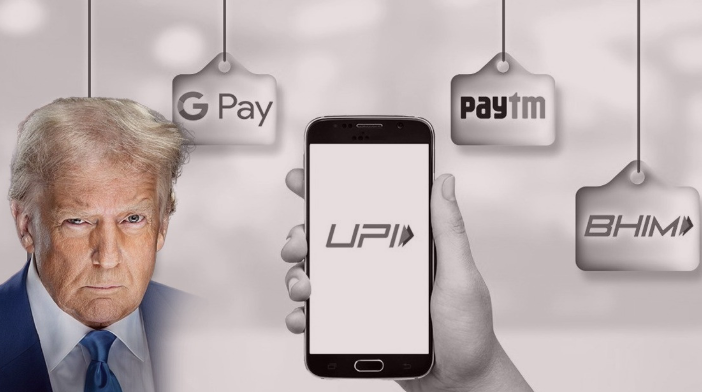
UPI Transaction Charge: Debate has intensified in India over the possibility of future charges on payments made using UPI and RuPay debit cards. A bill introduced in Parliament proposes changes to the legal provisions related to the existing payment system. This issue is also being linked to the India-US trade deal and the US demand for a level playing field in the digital payments sector. However, Finance Minister Nirmala Sitharaman has clarified that no final decision has been taken regarding MDR.
UPI has played a significant role in transforming the digital payment landscape in India. Its use has grown rapidly, from small shopkeepers to large businesses. A key reason for its popularity is its ease and, currently, no transaction fee, of making payments. Now, new discussions have begun regarding the possibility of fees being imposed on payments made using UPI and RuPay debit cards.
The issue comes to light at a time when India and the United States are negotiating a trade deal. According to reports, the US has long questioned some of India’s digital payments policies and demanded a level playing field for foreign payment companies.
What is America’s objection regarding UPI and RuPay?
UPI was launched in India in 2016. This has led to a rapid shift to digital payments, with a growing number of consumers shifting from card payments to UPI. There has been talk of potential business and fee revenue impacts for US card networks Visa and Mastercard.
According to Delhi-based think tank Global Trade Research Initiative (GTRI), the objections raised by US companies include zero transaction charges on UPI and RuPay, government promotion of RuPay and RuPay’s initial lead in UPI-based credit payments.
Visa and Mastercard’s business model is primarily based on transaction fees. Banks, payment processors, and card networks earn fees from merchant transactions. In contrast, UPI’s zero MDR model limits revenue from such fees.
MDR (Merchant Discount Rate) is a fee charged to merchants for processing payments. This amount is used to cover costs associated with transaction processing, settlement, and payment infrastructure.
USTR raised questions on India’s policies
According to the report, in March 2026, the United States Trade Representative (USTR) identified some of India’s digital payments policies as impediments to foreign trade. The US has been concerned that its electronic payments companies are not receiving equal opportunities in the Indian digital payments market compared to domestic companies.
Questions have been raised about RuPay’s position, particularly in credit transactions conducted through UPI. RuPay is India’s domestic card network and its reach has grown rapidly over the past few years.
NPCI announced a 30 percent market share limit for third-party UPI app providers in November 2020. This was originally scheduled to be implemented from January 2023, but the deadline was extended several times, and the current deadline is December 2026.
According to USTR, by December 31, 2025, US-owned PhonePe and Google Pay together processed more than 80 percent of UPI transactions in India.
Why did the bill presented in Parliament increase the discussion?
Amid the debate over fees on UPI and RuPay, the Taxation and Other Laws (Amendment) Bill, 2026, has been introduced in Parliament. It proposes to amend Section 10A of the Payment and Settlement Systems Act, 2007.
Regarding this amendment, the question is being raised whether in future banks or payment system providers will be able to charge fees on payments made through UPI and RuPay debit cards.
Congress leader Jairam Ramesh claimed on August 6 on social media platform X that US pressure was behind this legal change.
What did Finance Minister Nirmala Sitharaman say?
Following the controversy, Finance Minister Nirmala Sitharaman clarified the situation, stating that MDR applies to merchants, not customers or end consumers. She also stated that no final decision has been made on this matter.
According to the Finance Minister, further action will only be taken after Parliament passes the relevant amendment bill. Therefore, it’s premature to say that transaction fees will be directly collected from ordinary UPI users.
However, if any charges are imposed on merchants in the future, the question will remain whether the merchants will bear the cost themselves or the burden will be passed on to the customers in some form.
Why is the Indian market important for Visa-Mastercard?
India is one of the largest digital payments markets in the world. The rapidly growing adoption of UPI has posed a new challenge to traditional card payment networks.
UPI allows payments to be made directly from a bank account, and consumers don’t have to pay additional transaction fees for routine transactions. This is why UPI is becoming widely used even for small payments.
For networks like Visa and Mastercard, a significant portion of their revenue comes from fees associated with card-based transactions. Therefore, the expansion of UPI and RuPay is becoming a competitive issue for them.
America has disputes not only with India but also with other countries
The US objections to digital payment systems are not limited to India. The US has also raised questions about Brazil’s low-cost instant payment system, Pix.
The USTR has stated that Brazil’s central bank is not only the creator of Pix but also its operator and regulator. US companies have expressed concerns that the benefits afforded to the domestic payment system could make it difficult for foreign electronic payment companies to compete.
Similarly, America has also raised objections to Indonesia’s National Payment Gateway and the domestic card and digital payment policies of some member countries of the Gulf Cooperation Council.
Will UPI charges be collected from common people?
At present, no final decision has been made on charging transaction fees from ordinary UPI users. The government has also clarified that the MDR being discussed is a merchant-related fee, not a charge directly levied on the customer.
Despite this, the proposed legal change has certainly raised questions about the future of UPI and RuPay’s zero-fee model.
All eyes will now be on how the proposed amendments are passed in Parliament and what agreement is reached regarding digital payments in the India-US trade deal. Only then will it become clear whether the current zero-fee system of UPI and RuPay will continue or whether any changes will be made.