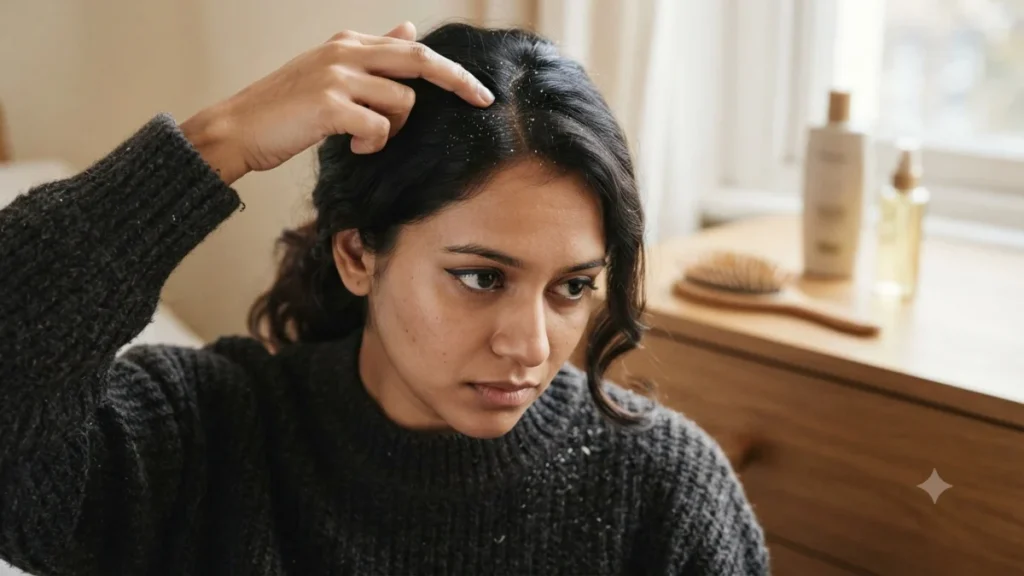
As soon as the month of November starts, the weather has started getting colder. The effect of cold winds blowing in the morning and evening is now visible on the skin and hair also. Especially in winter, the problem of dandruff troubles many people. Its common symptoms are constant itching in the head, appearance of white layers on the shoulders and dryness in the scalp.
The problem of dandruff may increase in cold and low humidity weather. The reason for this may not only be dryness of the scalp but also yeast present on the skin, excess oil, method of hair care and some skin related problems. So the question is how to get rid of dandruff in winter and which remedies really work?
Why does the problem of dandruff increase in winter?
In winter, scalp skin can become dry due to low humidity in the environment. Apart from this, the problem of Seborrheic Dermatitis also increases in some people during cold weather. Many reasons may be responsible behind this.
- Dryness of the scalp: Cold and dry air can reduce the moisture of the skin. Due to this, itching and white scaly layers start appearing on the head.
- Washing hair with hot water: Too hot water can strip the scalp of its natural moisture and oil. This may increase dryness and irritation.
- Role of yeast: A yeast called Malassezia, which is naturally present on the scalp, is linked to dandruff and inflammation in some people.
- Hair products: Some shampoos, hair gels and sprays can cause scalp irritation or allergies.
- Stress: Mental stress can also increase the symptoms of dandruff and seborrheic dermatitis.
- Negligence in cleaning hair: Accumulation of oil and dead skin on the scalp can make dandruff more visible.
Keep in mind that dandruff is not always caused by dry scalp or lack of cleanliness. Understanding its reason is important for proper treatment.
Which remedies are effective to get rid of dandruff?
When troubled by dandruff, people often try home remedies. However, scientific evidence of the effectiveness of every home remedy is not available. According to dermatologists, proper hair care routine and anti-dandruff shampoos are more reliable options to control dandruff.
- Use of mild shampoo: Clean hair regularly. Choose a mild shampoo according to your scalp and hair type.
- Anti-dandruff shampoos: Shampoos with active ingredients like ketoconazole, selenium sulfide, salicylic acid, or zinc pyrithione can help control dandruff.
- Aloe Vera Gel: Some people may find relief from scalp itching with aloe vera. However, it is not considered a proven treatment for dandruff. Do a patch test before use.
- Avoid very hot water: Use normal or lukewarm water to wash hair.
- Keep the scalp clean: Do not allow excessive oil and hair styling products to accumulate in the hair.
- Reduce stress: Get enough sleep and include regular exercise or yoga in your daily routine.
How correct is it to use coconut oil, lemon and vinegar?
To remove dandruff, remedies like applying lemon mixed with coconut oil, applying curd-honey pack and using apple cider vinegar are quite popular. But there is not enough scientific evidence to completely eliminate dandruff with these measures.
Especially lemon juice and vinegar not diluted in the right amount can cause irritation to sensitive scalp. Similarly, tea tree oil may cause allergy or irritation to some people. Therefore, one should avoid applying them directly on the scalp.
Take care of your diet to avoid dandruff
A balanced diet is essential for the health of hair and scalp. Include green vegetables, seasonal fruits, pulses, eggs, nuts and adequate protein in your diet. Despite feeling less thirsty in winter, keep drinking enough water. However, dietary changes alone do not guarantee cure of dandruff.
When is it necessary to contact a doctor?
If dandruff does not reduce for about four weeks despite using anti-dandruff shampoo regularly, consult a dermatologist. Severe itching, redness, swelling, pain, wounds or hair fall at many places in the scalp should not be ignored.
Sometimes a problem that looks like normal dandruff can also be caused by psoriasis, eczema, seborrheic dermatitis or fungal infection of the scalp. Its proper treatment can be decided only after proper examination.