
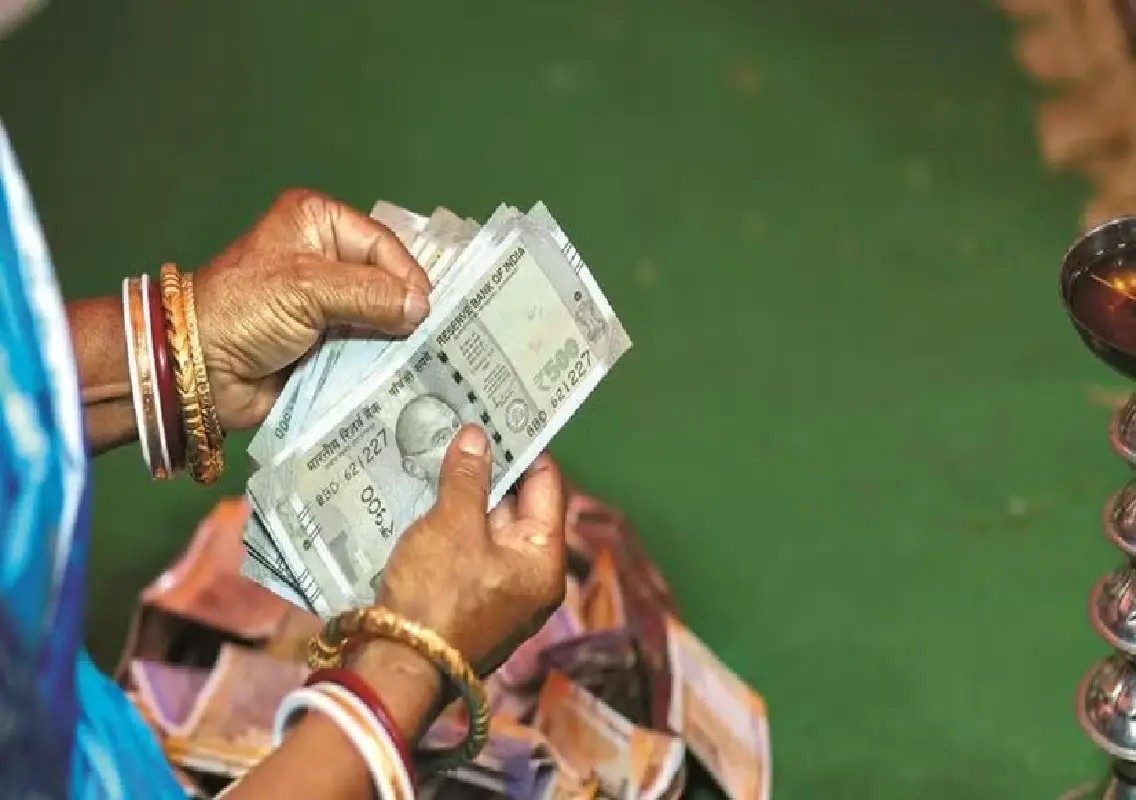

New Delhi: Women entrepreneurs in India are increasingly entering the formal financial system, driven by microfinance, government-backed schemes, and digital lending platforms. However, despite this progress, access to advanced business credit products remains significantly limited, creating a structural imbalance in the financing ecosystem.
A recent report by NITI Aayog highlights that only 4.3 per cent of women-owned enterprises are able to access cash credit or overdraft facilities—key financial tools required for scaling businesses.
Rising inclusion, but limited depth
Over the past decade, initiatives such as self-help groups (SHGs), Pradhan Mantri Mudra Yojana loans, Jan Dhan financial inclusion, and digital lending channels have expanded access to formal credit for women.
These efforts have enabled millions of women—especially in rural and semi-urban areas—to access loans for the first time. However, much of this borrowing is concentrated in small-ticket loans, often used for consumption or micro-enterprises.
While this marks a positive shift in financial inclusion, experts note that it does not necessarily translate into long-term business growth, as women entrepreneurs remain excluded from higher-value, flexible credit products.
The missing middle in financing
A key challenge lies in accessing working-capital finance such as overdrafts, cash credit, and secured commercial loans. These products are essential for expanding operations, managing cash flows, and scaling enterprises.
Industry experts point out that traditional lending systems favour businesses with predictable income streams, formal documentation, and collateral—criteria that many women-led enterprises struggle to meet.
Santosh Agarwal, CEO of Paisabazaar, noted that lenders often perceive self-employed borrowers as higher risk due to volatile cash flows, seasonal income patterns, and limited formal credit history.
Similarly, Adhil Shetty, CEO of BankBazaar, explained that facilities like overdrafts require audited financials, GST records, and collateral—conditions that many small or home-based businesses cannot fulfil.
Structural barriers remain
Experts say the issue goes beyond access to credit—it lies in how creditworthiness is assessed.
Many women entrepreneurs lack ownership of land or property, which are commonly used as collateral in traditional lending. Additionally, women-led businesses often operate informally, with limited GST registration, weaker bookkeeping practices, and incomplete transaction records.
Manasa Rajan of Jupiter Meta Labs highlighted that reliance on collateral and GST turnover structurally disadvantages women who run home-based or informal businesses.
Neha Juneja, co-founder of IndiaP2P, added that most women-led enterprises operate within the informal economy, making it difficult for them to meet conventional lending criteria despite often demonstrating strong repayment behaviour.
Role of digital lending
Digital lending and alternative underwriting models are emerging as potential solutions. These models use non-traditional data such as bank statements, GST filings, and UPI transactions to assess creditworthiness.
Digitisation tools like eKYC and eSign are enabling lenders to evaluate borrowers more efficiently. According to experts, this shift from collateral-based to cash-flow-based assessment could improve access for women entrepreneurs with strong digital footprints.
However, challenges remain. While digital models are effective for small loans, scaling them for larger working-capital finance is still limited.
Experts caution that most banks have yet to adopt these alternative models at scale, restricting their impact on bridging the financing gap.
Need for structural reforms
Industry stakeholders emphasise the need for reforms that go beyond basic financial inclusion. Suggestions include expanding credit guarantee schemes to cover working-capital products and formally recognising cash-flow-based underwriting methods.
Loveena Kansal of Mega Corporation Limited stressed that the issue is not a lack of creditworthiness, but a mismatch in credit design. She noted that women entrepreneurs require financial products tailored to their business realities.
Improved transparency, better data reporting, and stronger formalisation of small businesses are also seen as critical steps toward enabling deeper financial integration.
Conclusion
India has made significant strides in bringing women into the formal credit system. However, true empowerment will depend on enabling access to the right kinds of financial tools—not just entry-level loans.
Without systemic changes in lending practices, underwriting models, and product design, women entrepreneurs may remain financially included but constrained in their ability to grow and scale their businesses.

Comments are closed.