

68
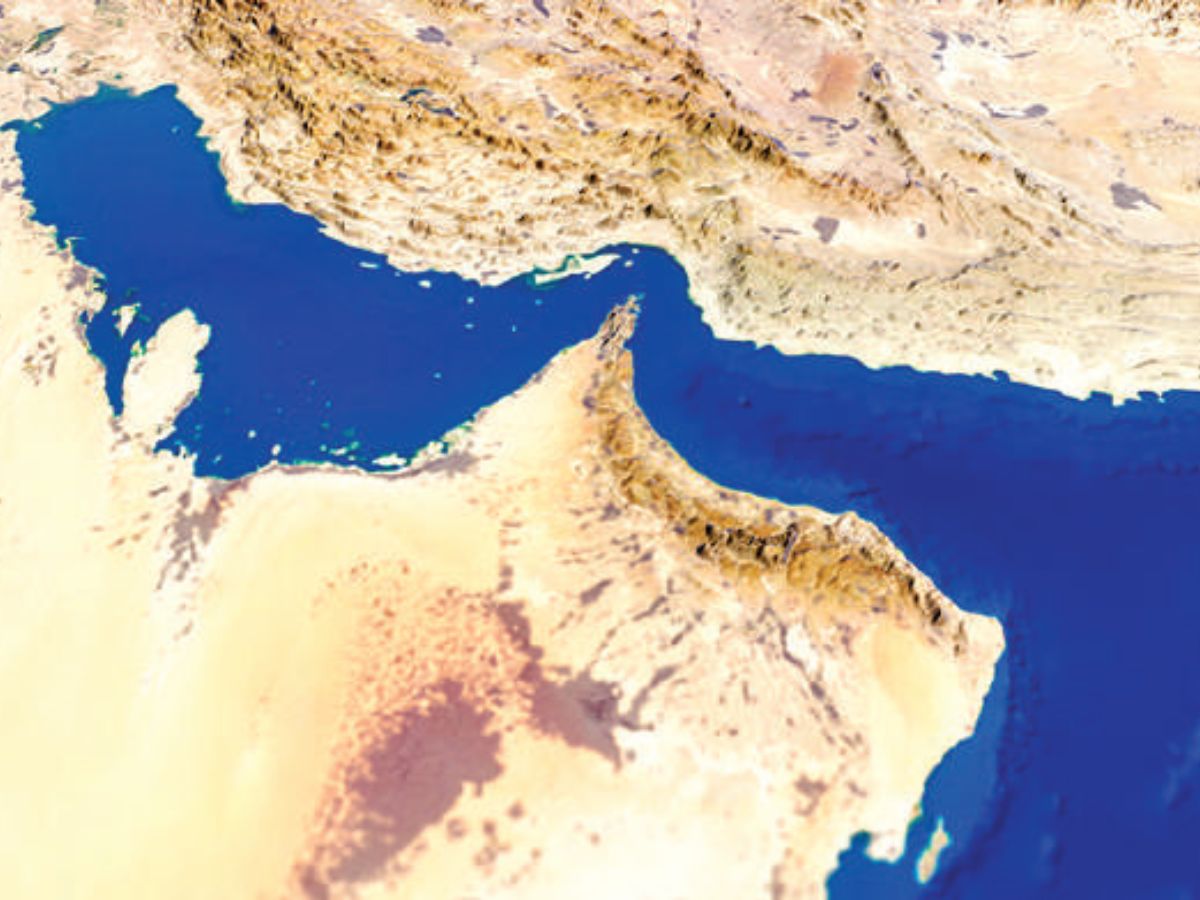
France and Britain announced an initiative to reopen the Strait of Hormuz, and invited other countries to join. 38 immediately did, including India. Before the first (virtual) meeting of the group could take place, the Strait was opened by Tehran, although at the time of writing, reports are coming that the IRGC has gone back on its promise and Iranian gunboats have attacked at least two supertankers belonging to India. In fact, Iran went on to close the Strait of Hormuz on Saturday as an apparent response to the US blockade of its ports, plunging the peace process into deep uncertainty.
The IRGC (Islamic Revolutionary Guard Corps) had initially stated that the Strait of Hormuz was once again open for non-military shipping, “as long as the Israel-Lebanon ceasefire lasts”. President Trump subsequently made clear that he had warned Israel that the country was “prohibited from bombing Lebanon”. Commercial interests are working quietly to ensure that the ceasefire lasts and the Strait remains open. Facing a midterm election in November that is critical to ensure that the next two years of the Trump 2.0 Presidency succeed in making the changes to policy sought by the White House, President Trump may voice belligerence, but is unlikely to once again come into combat with the clerical regime in Iran. The inflation and uncertainty caused by what the Democrats are describing as “Trump’s War” are making not just the US President but the entire Republican Party more and more unpopular with voters. Even the cheerleaders of the US President, known as the MAGA coalition, are mostly opposed to a war from a President who said he opposed war while he was on the campaign trail. In a few days, if the Israel-Lebanon and US-Iran ceasefire holds, the Strait may return to its pre-conflict situation and supply bottlenecks decrease.
The Gulf states are eager for the war to end as they are aware that the steep rise in petroproduct prices caused by the war is leading to an acceleration in the ongoing move to switch from petrol and diesel fuel to electric where automobiles are concerned. They discovered to their dismay that the US military could not protect them against IRGC strikes, sorties that shook the nerves and confidence of local populations. Protests began to multiply, especially in Bahrain. Such a shock was not there even during the conflicts with Iraq under Saddam Hussein, and doubts began to crop up not just within the population of the Gulf countries but their rulers about the stability of the security umbrella that the US was supposed to give them. Saudi Arabia signed a currency swap deal with China, directly slapping the White House in the face, which had been voluble that “no switch from the (US) dollar would go unpunished”.
Meanwhile, the European countries active in helping Ukraine from 2022 onwards were dismayed at the rise in oil prices and the windfall this was providing to the Russian Federation. To less biased countries, Russia emerged as a more dependable source of petroproducts than the Gulf countries, albeit for no fault of their own. India faced a shortage of fertiliser, not just a spike in petroproduct prices and a fall in availability. From the days of the Green Revolution decades ago, India had been self-sufficient in foodgrains. A shortage of fertiliser caused by the closure of the Strait of Hormuz would affect that.
Oddly, more than the IRGC, it is Israel that is becoming less liked by longtime supporters. As many as 40 US Senators belonging to the Democratic Party have signed on to a measure that would substantially reduce US military aid to Israel. Reduce not merely the supply of offensive but defensive weapons as well.
Anti-Jewish sentiment is spiking throughout Europe and in some other parts of the world. Attacks on members of the Jewish community have risen to a level not seen since the 1940s. To pin the responsibility of actions taken by the Netanyahu government against its regional foes is illogical and wrong, yet such a misperception of “collective guilt” of the Jewish community is becoming widespread. It is difficult to imagine that a US President would order Israel to avoid hitting those who seek its destruction, or that so many influential US policymakers would go so far as to cancel meetings with the America Israel Political Action Committee (AIPAC), yet such is happening right now. Emboldened by what he sees as a weakening of the security linkage between Israel and the US, Syrian President Al Sharaa (formerly known as Al Jolani) is demanding that Israeli forces “totally withdraw from the Golan Heights”, which had been taken over by Israel in 1967. In such an atmosphere of internet-amplified hatred of Israel and the Jewish community, terror attacks within Israel may once again crop up. Within the region, countries once openly friendly to Israel are turning their diplomatic faces aside to assuage local opinion. The seeds of the present war were sown on October 7, 2023 by the Hamas terror attack on Israel, but the narrative being created glosses over that and focuses on the role of Israel in sparking the Iran conflict six weeks ago.
Still, the ceasefire is welcome news. While neither Hamas in Gaza nor Hezbollah in Lebanon has been completely demilitarised, the conflict has severely degraded their capabilities. In Iran, the IRGC is in a debilitated condition, despite the kamikaze drones and missiles the IRGC has in its stockpile. The clerical regime, faced by hyperinflation and shedding of jobs among the youth, is perched on a volcano of anger within the public that may erupt anytime, perhaps soon. The White House is not to be faulted even for steps such as possibly transferring US$20 billion in seized assets to the Iranian regime. That is far cheaper than the US$200 billion that President Trump indicated was needed to prosecute the war with Iran. Had the uncertainty grown, the move away from US treasury bills would accelerate, reducing the ability of the US government to enter into deficit financing on the scale witnessed during Trump 2.0. The world would gain were the present ceasefire and reopening of the Strait of Hormuz to continue. Otherwise, many more hundreds of millions in the poorer countries would cross the border from subsistence to starvation. Aware of such a situation, Prime Minister Narendra Modi and External Affairs Minister S. Jaishankar are spreading the message of peace being the mantra for ensuring plenty (of development). The days ahead will show if the present pause in the conflict becomes a dependable halt, or the US-Iran war flares up again.
However, if Iran persists with its belligerence, the US will be left with no other option but to launch a full-fledged attack on it.

Comments are closed.