Overall inflation also rose from 2.2% to 2.3% during the same period, according to data released by Singapore’s Department of Statistics on Wednesday.
The increase in core inflation offset the impact of a decline in private transport inflation in the city-state, which was ranked the world’s second-richest country by GDP per capita in 2025 by The Economist.
Specifically, private transport inflation fell from 8% in July to 7.5% in August due to slower increases in car prices.
Services inflation rose from 1.7% to 2%, primarily driven by faster increases in airfares and end-to-end transportation services.
Inflation in retail and other goods increased from 1.4% to 1.8%, reflecting higher price increases in clothing, footwear, and personal care products.
|
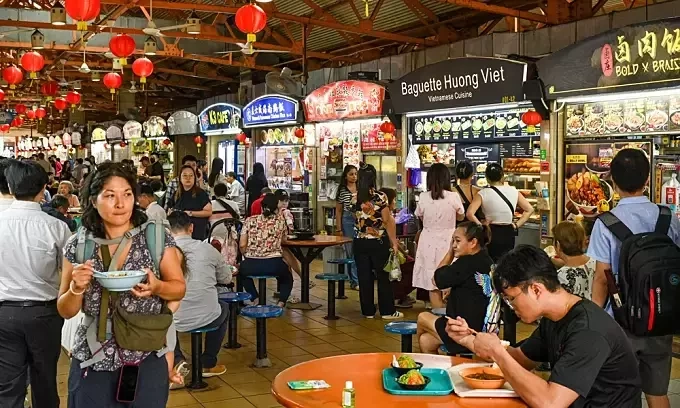
People buy food for lunch at a hawkers center in Singapore on Jan. 7, 2025. Photo by Reuters |
Food prices rose 2.3% year-on-year, up from 2.2% in July, mainly due to faster increases in catering services, although inflation in unprocessed food decreased. Notably, electricity and gas inflation remained high at 8.7%, unchanged from the previous month. Housing costs inflation remained at 0.8%.
In a joint statement on Wednesday, the Monetary Authority of Singapore and the Ministry of Trade and Industry said that high global energy prices had driven up electricity, gas, and transport costs in Singapore.
They warned that world oil prices remained high and volatile, while unfavorable weather conditions could reduce agricultural output and push up the prices of imported food in the city state.
They added that as higher input costs continue to spread through global supply chains, the prices of many goods and services imported by Singapore are projected to rise in the coming quarters, adding further pressure on domestic inflation.