
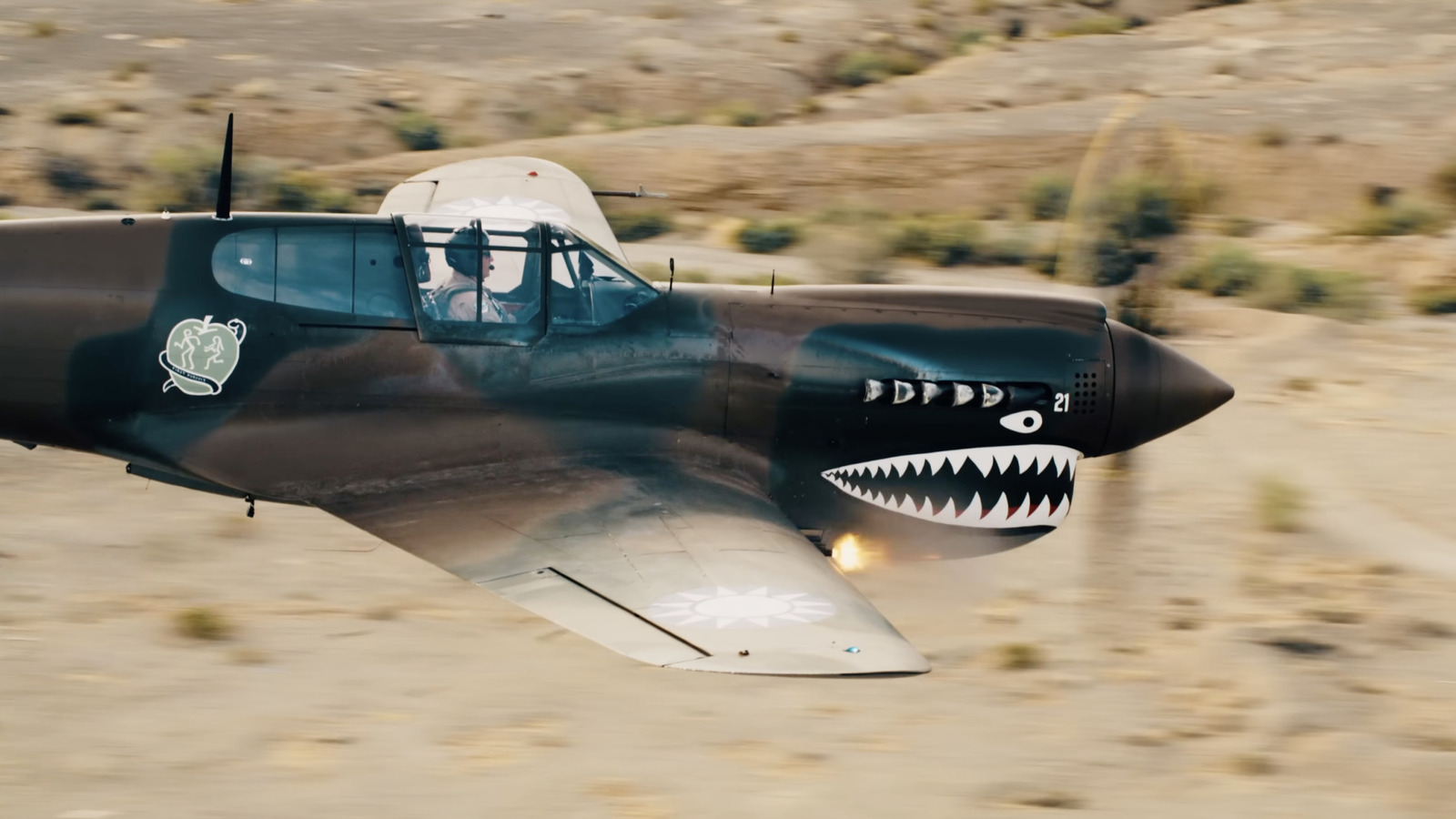

The Curtiss P-40 Warhawk was a staple of the early Allied air effort in World War II. It may get overshadowed by planes like the P-51 Mustang or the bizarrely shaped P-38 Lightning, but the Warhawk served in nearly every theater of the war and was already flying combat missions with Commonwealth forces in North Africa months before the United States formally entered the conflict. It ended production in 1944 before the war ended, but even then, 13,737 P-40s were built.
Given how many were produced, it’s not unusual to see a Warhawk in a museum these days, and it’s not hard to find a flying example if you frequent air shows. However, seeing one in full World War II battle-ready condition, guns and all, is a different story entirely, and it hasn’t happened in a long time — until now. The Soaring by the Sea Foundationan organization that preserves and flies historic aircraft, performed a gun-run in a P-40 for the first time in about eight decades.
A gun-run captured in high-definition
In its wartime configuration, the P-40 was equipped with six .50 caliber Browning machine guns and powered by an Allison V-1710 V12 engine. The Soaring by the Sea Foundation’s P-40 has been airworthy for years, but arming it took nearly two years of paperwork, permits, and engineering. Vintage Aviation News reported that the guns were recreated in-house using original 1940s armament manuals, and the foundation’s federal firearms licensing allowed it to legally build and fire the weapons.
All of that preparation allowed the P-40 to perform a full run, including firing its machine guns. Not only did it perform a run, but it also captured the occasion with the help of drones, helicopters, and an L-39 Albatros trainer jet equipped with a camera pod. This is a feat that would have been merely a concept in the mid-1940s.
Fighter jets of the late 20th and 21st century are faster, better armed, and more accurate than a piston-engined P-40, but even the slickest stealth fighter can’t hold a candle to just how effortlessly cool a World War II fighter plane is. That cool factor is ratcheted up a significant factor now that the guns actually work. There’s the obvious spectacle of the feat, but it could have historical significance. It shows how air missions were conducted in World War II in a tangible way that’s difficult to effectively communicate through static museum displays and most airshows.

Comments are closed.