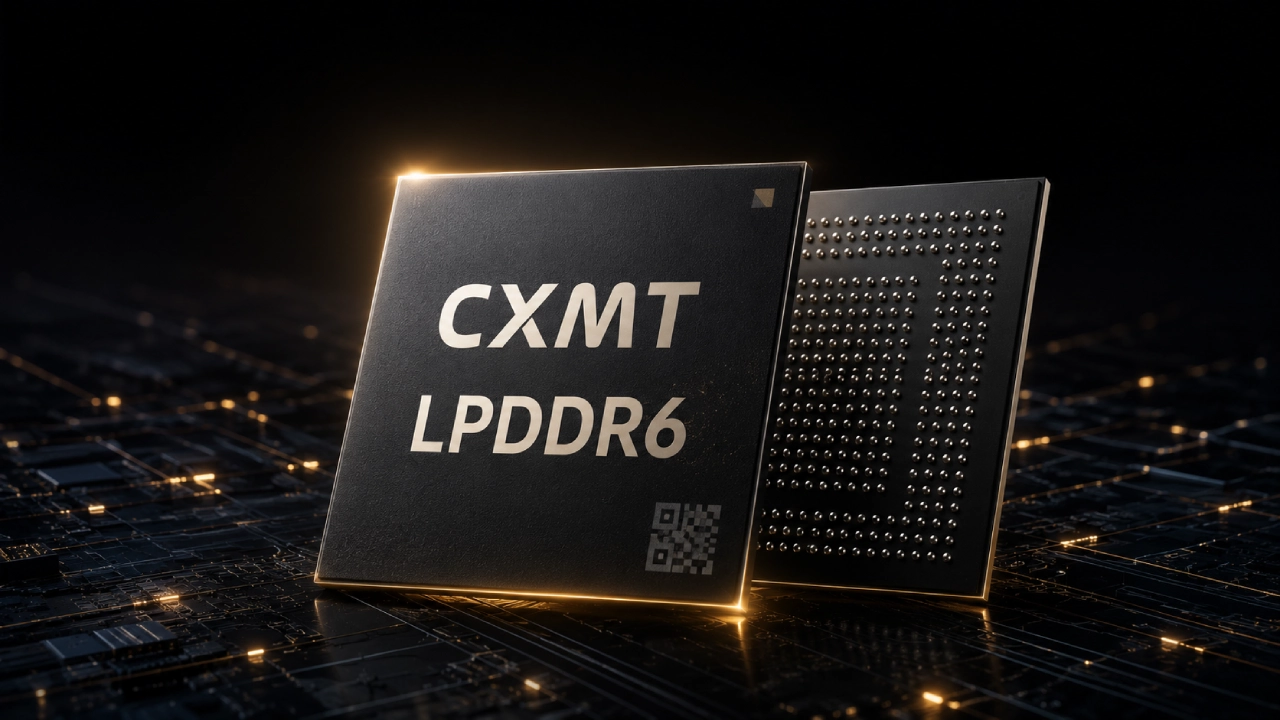
Xiaomi says its next foldable, the Xiaomi 18 Foldwill use LPDDR6 RAM. It will be made by ChangXin Memory Technologies, also known as CXMT. Xiaomi also expects the phone to arrive in September. This comes right after CXMT started mass-producing LPDDR6. The company has been shifting from LPDDR5 to the newer LPDDR6 line.
The Xiaomi 18 Fold is not only another foldable refresh. It is meant to show off a newer RAM step. It also hints at how much effort Xiaomi is putting into chip work. CXMT starts shipping LPDDR6 at scale. CXMT says it can reach peak transfer speeds of 12,800 Mbps. Some reports note capacities up to 16GB for the LPDDR6 chips. Xiaomi 18 Fold is set to bring a big change in memory
CXMT Starts LPDDR6 Production
CXMT has begun producing LPDDR6 after it moved into LPDDR5 earlier. CXMT claims the new chips can hit peak transfer rates of 12,800Mbps. Some reports also point to module sizes up to 16GB.
That is why the Xiaomi 18 Fold is worth watching. LPDDR memory helps the processor pull data quickly. When the generation improves, the phone can offer more bandwidth for tasks that need it.
For CXMT, the deal is also a key moment. Samsung, SK hynix, and Micron have long led the global DRAM market. CXMT has been trying to grow into a major memory maker. A Xiaomi tie-up gives CXMT a real phone platform for its latest memory work.
Xring O3 And LPDDR6 May Pair Up Well
Xiaomi’s new chip, the Xring O3, is set to run with a new kind of memory. That chip was announced alongside news about Xiaomi’s next push in its own semiconductor work. Xiaomi introduced the Xring O3 earlier this week. It is made on a 3nm manufacturing process. The company expects it to power the Xiaomi 18 Fold.
This matters because Xiaomi is trying to line up two core parts of the phone. It is using its own processor and also leaning on a local memory solution. In other words, the phone stack is not relying only on one outside piece. The Xring O3 is built to support LPDDR6. So the chip and the memory are planned to work together. They are not treated as separate parts that just happen to fit.
A Move Towards More Control
The memory choice for the Xiaomi 18 Fold can mean more than a spec line. Xiaomi has been putting more money into chip work. The Xring line is part of that push. Reuters says Xiaomi has put over 20 billion yuan into chip development. It also reports the company grew its semiconductor design team to more than 3,000 people.
Using CXMT’s LPDDR6 with the Xring O3 points to a wider change. Xiaomi appears to want a more domestic supply chain for key parts. That does not mean it will stop buying from outside vendors right away. Still, more options for chips and memory could help as costs and supply conditions shift in the phone market.
Xiaomi 18 Fold: Expected September Release
Xiaomi 18 Fold is said to launch in September 2026. The company has now confirmed LPDDR6 memory as a key part of the setup. Xiaomi is also framing the handset as a showpiece for the Xring O3. With CXMT memory included, the foldable gets another “first” in its feature list.
Reports place the device in Xiaomi’s higher-end foldable line. The design is expected to use a wide folding form factor. Even so, most of the exact specs are still not confirmed by Xiaomi.
Because of that, what matters most may be how the Xring O3 and LPDDR6 work together day to day. Benchmarks and spec sheets can hint at speed. But real use will depend on sustained output, battery drain, heat control, and how well multitasking runs.
Why LPDDR6 Is A Big Deal
LPDDR6 matters as modern phones take on heavier tasks. People now expect more from AI features, camera modes, gaming, and running many apps at once. With more memory bandwidth, the phone can move data faster. That helps when the device is working with large AI models, sharp media, or tough apps.
For a foldable, the timing is even more important. The larger inside screen makes it easier to keep several apps open. That usually means more things happening at the same time.
Still, faster memory does not automatically mean a clear jump in daily speed. The chip, the software tuning, the cooling design, and the full hardware layout will decide what the user actually feels.
Final Thoughts
The Xiaomi 18 Fold looks set to matter for more than the folding screen. It is set to be the first phone to ship with CXMT LPDDR6 memory. That gives the next wave of RAM a lot of visibility right out of the gate.
There is also the Xiaomi Xring O3 processor. Together, these parts point to Xiaomi pushing deeper into its own key hardware. At the same time, CXMT moving into LPDDR6 mass production means more competition in the global memory market.
The real check starts in September, when the phone is due to launch. What happens after that will be the measure. If the Xring O3 and LPDDR6 pair delivers solid speed and good power use in daily life, this foldable could serve as a strong display for the next generation of phone hardware.