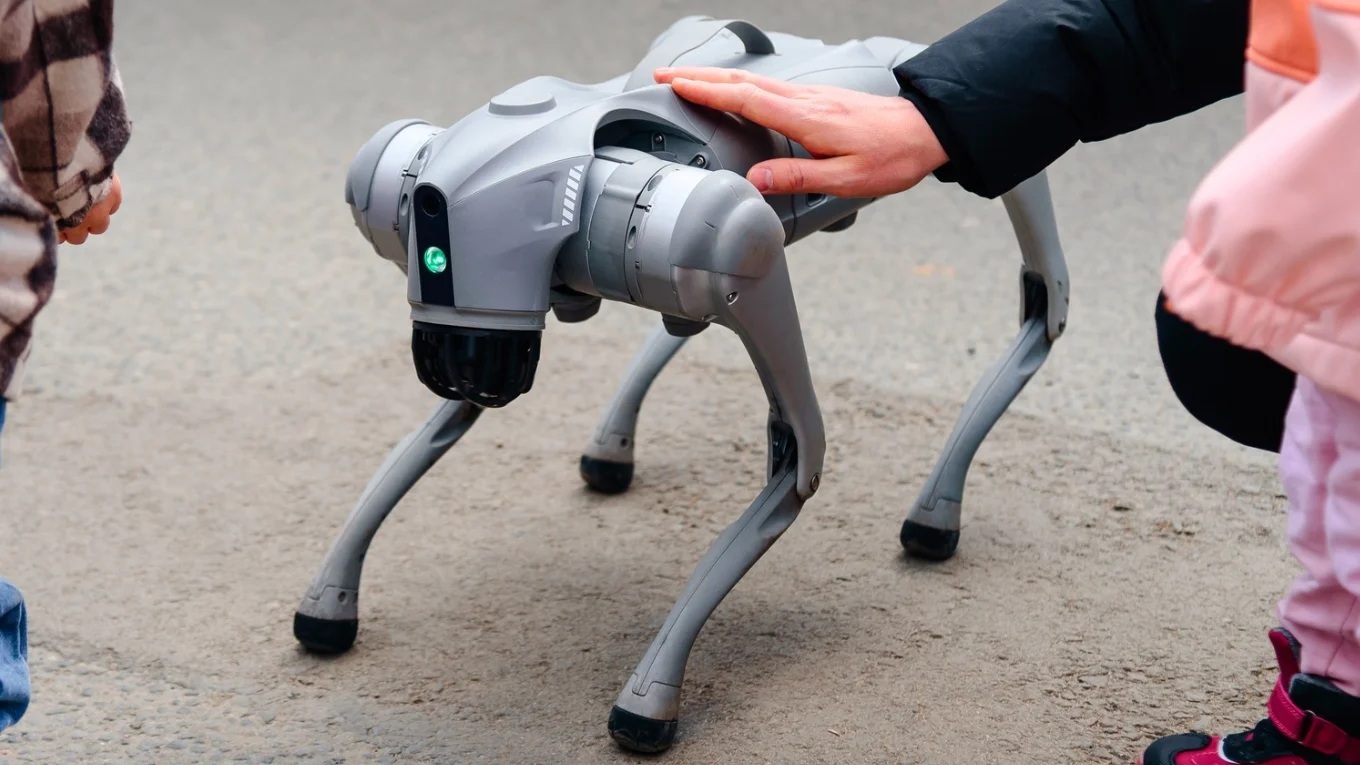
Thought you saw a Terminator-esque dog on the street lately? You might not be insane. A San Francisco-based start-up company, Dimensional, is now building and testing robodogs, and allegedly hiring human dog walkers to help train them.
By nature, the open-source operating system they’re developing for robots should eventually be publicly accessible and free for widespread use under certain licenses. But for right now, hired robot dog walkers, who explicitly don’t need any experience with robotics, are responsible for being each robotic dog’s figurative boots on the ground as it senses and records the sidewalks of one suburban enclave in Northern California.
This company is now paying $20 an hour for robot dog walkers.
It’s as dystopian as it sounds, with the announcement nestled in a since-deleted post in the Bay Area Jobs Facebook group. But, according to the company’s 26-year-old founder, Stash Pomichter, it’s true. They’re hiring human dog walkers to train robodogs to eventually exist autonomously in homes and cities as human helpers.
Facebook c/o The New York Times
“It’s honestly barbaric that humans are doing these physical tasks,” Pomichter told The New York Times. He believes their robodogs could ultimately be trained to lift heavy objects and handle household labor that people don’t want to do, or don’t have the capacity to do, on their own.
But for now, it’s only robodog walkers who need to be able to carry heavy objects. The job posting notes that applicants should be comfortable “safely handling equipment weighing about 33 pounds” in case their robotic pet overheats on a four- to six-hour stroll around the San Francisco neighborhood, ironically known as Dogpatch.
The same AI company is promoting a grant program for free robodogs.
The same company that allegedly posted the dog walker job posting above also boasts a Go Dimensional grant program on their website, which will give software developers, or more unsettlingly, people creating DIY projects, the opportunity to work on and program a free robot dog (aka Unitree Go2) with some engineering support.
“We take a hands-off approach,” the grant’s landing page says. “You build what you want, we help with any blockers.”
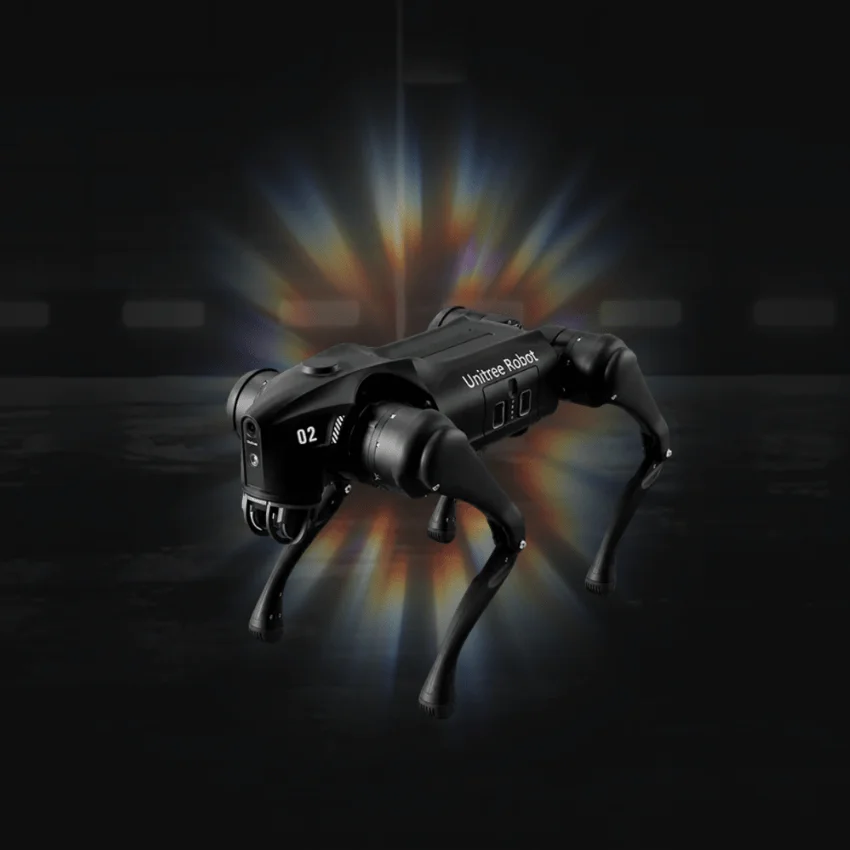 Dimensional.org
While this kind of hardware usually comes with a high-ticket price tag, this Dimensional program aims to give away robots, offering engineers a chance to “program atoms” as they serve as an inspiration for the rest of the world.
While the robot dog “walks, sees, maps rooms, patrols, and follows people,” according to Dimensional’s website, for now, it seems that it only does that with the guidance of a human handler.
This isn’t the first case of companies using humans as AI trainers.
From data annotation sites hiring workers to sift through chatbot outputs and choose the best responses to private chefs wearing recording devices to feed AI software, Dimensional’s use of human dog walkers for their robot dogs isn’t the first evidence of humans training AI or robots.
Researchers are even using human participants to attempt replication of behavioral patterns and visual perception cues. While there are plenty of empowering ways this kind of research could impact human behavior and health diagnoses, it’s impossible not to pose the question: are humans training AI that will eventually take their place, or worse, become their bosses?
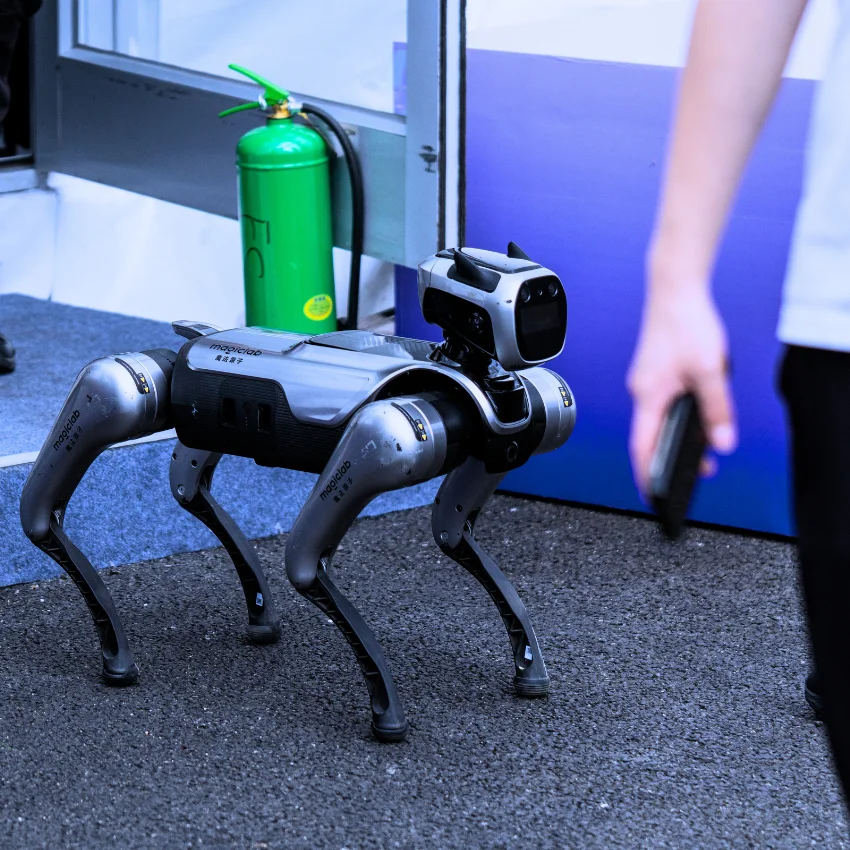
Considering some apartment complexes already have robot dogs patrolling as security guards, robots taking human jobs is no longer hypothetical.
Moral dilemmas around AI and robots are actively colliding with economic fears.
While most Americans and California natives are pessimistic about AI at best, with a Politico study suggesting local voters in the heart of tech country overwhelmingly believe advanced AI will eventually threaten human safety, with economic strain sweeping the state, these kinds of job postings can spark moral dilemmas.
 Andrea Aimar | Shutterstock.com
While some AI companies are still paying high-ticket salaries for human training and guidance (see Anthropic’s $345K job posting for a human writer), the fear that AI will eventually outwit human expertise and take more already-slim jobs in the market feels as present as ever.
So, does taking a job as a robodog’s companion for $20 an hour make you a bad person, and does it contribute to a growing fear that AI is taking over? Or is it even more insidious that AI companies rely on human trainers, paying them a higher rate than most jobs in the current market, despite the many complications it presents for humanity?
Robodogs might be cool in a fictional dystopian thriller, but in real life, they stir up questions few know the answers to. At what point will AI and robots no longer need human intervention? Is there a world where robots truly take over, trained by the human wit and expertise we once clung to as hope in a rapidly-evolving technological world?
No one really knows… except maybe some predictive AI bot.
Zayda Slabbekoorn is a senior editorial strategist with a bachelor’s degree in social relations & policy and gender studies who focuses on psychology, relationships, self-help, and human interest stories.