
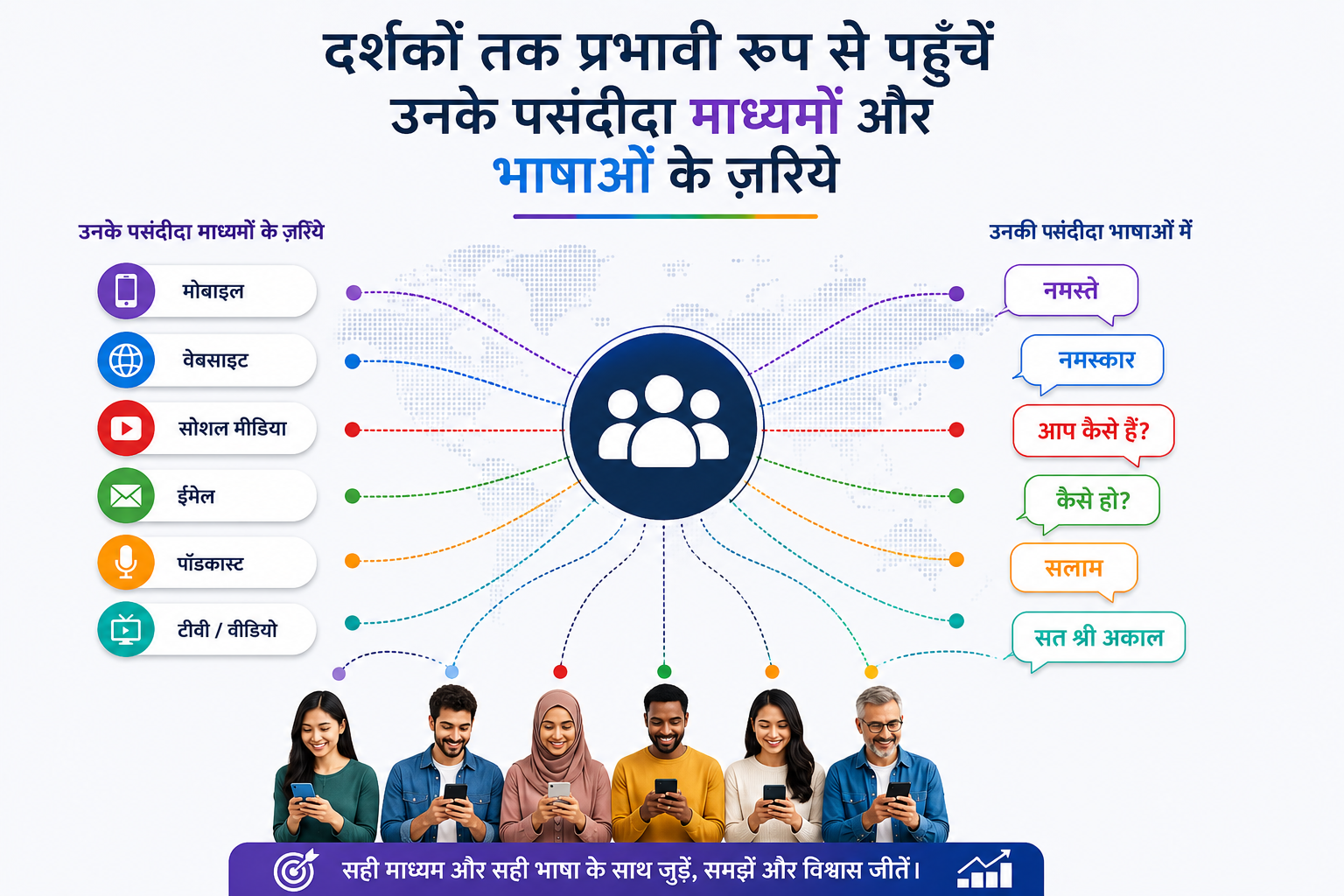

In the era of digital journalism, the biggest challenge before news organizations is not only to publish news, but also to effectively reach young readers and audiences through the medium of their choice and in their language. Changing technology and artificial intelligence (AI) have created new opportunities in this direction. Adopting this change, the world’s prestigious news publications have made multilingual content, video journalism and AI-based translation technology an important part of their strategy to connect with youth and global readers.
Made students the primary target
Based on research results, it is believed that students are the long-term readers and customers of the future. That’s why the leading media organization made Espresso, its concise news platform launched years ago, available for free to students around the world. The objective of this platform is to provide reliable and concise information about major world events in a short time. Media experts believe that if youth are exposed to quality journalism at an early stage, they remain with that organization for a long time.
Video became the first choice of Gen
In the digital age, the youth are increasingly attracted towards video based content. In view of this, many media organizations did not limit their video journalism to just news, but paid special attention to creating videos that explain complex international issues in a simple, factual and attractive manner. The video department of these institutes produces news as well as explanatory videos on topics like geopolitics, economy, science, climate change, artificial intelligence and global policies. These videos make effective use of data visualization, animations, maps and graphics, making even difficult topics easy to understand.
AI broke the language barrier
Nowadays, AI based translation technology is being used to strengthen multilingual journalism. Under this experiment, its content is also being made available in languages like Spanish, German, French and Mandarin.
The special thing is that not only subtitles but also AI based voice cloning and lip-sync technology is being used in the video content. This presents videos naturally in the local language and improves the viewer’s experience.
However, before publishing each translation, major organizations also get it reviewed by experts of the respective language so that the factual and linguistic quality is maintained. If any word or sentence needs correction, the AI system automatically updates the video based on the revised script.
Multilingual expansion on social media
Nowadays, social media platforms have also had to change their strategy to increase their reach to the young audience, under which dedicated channels have been launched in Spanish language, where news and analysis are made available in the local language while video content is published on YouTube, Instagram and other digital platforms. The Institute believes that presence on different platforms can effectively reach audiences across age groups and regions.
S
Special emphasis on transparency
Amid the growing debate over the use of AI, The Economist has made transparency an important part of its policy. Organizations clearly indicate which video content has been translated or generated with the help of AI. This maintains the trust of the audience and also sends the message of responsible use of technology.
Focus on depth, not breaking news
Under the new concept, the editorial strategy is based on in-depth interpretation of complex topics rather than delivering fast breaking news. After any significant event, organizations produce analytical videos that attempt to explain why the event is important, what its broader impact will be, and how readers should understand it.
Apart from this, various institutions also regularly publish investigative videos, data based reports and special series. Many of his videos remain relevant over a long period of time and continue to reach new audiences.
Lessons for Indian media
Digital news consumption is growing rapidly in India. Millions of new internet users have been added to watch and read news in Indian languages including Hindi. In such times, multilingual publishing, AI-based translation, quality video journalism and data visualization also present new possibilities for Indian media organizations.
Experts believe that if AI is used in conjunction with editorial oversight, fact-checking and transparency, it can improve the quality of journalism and help news organizations reach new readers globally.
conclusion
Successful media organizations in the digital age will be those that can strike a balance between technology and credible journalism. Experience based on research results indicates that artificial intelligence can become not a substitute for journalists, but an effective tool to enhance their capabilities. Multilingual content, explanatory videos and transparent AI use are becoming important elements shaping the future of journalism.

Comments are closed.