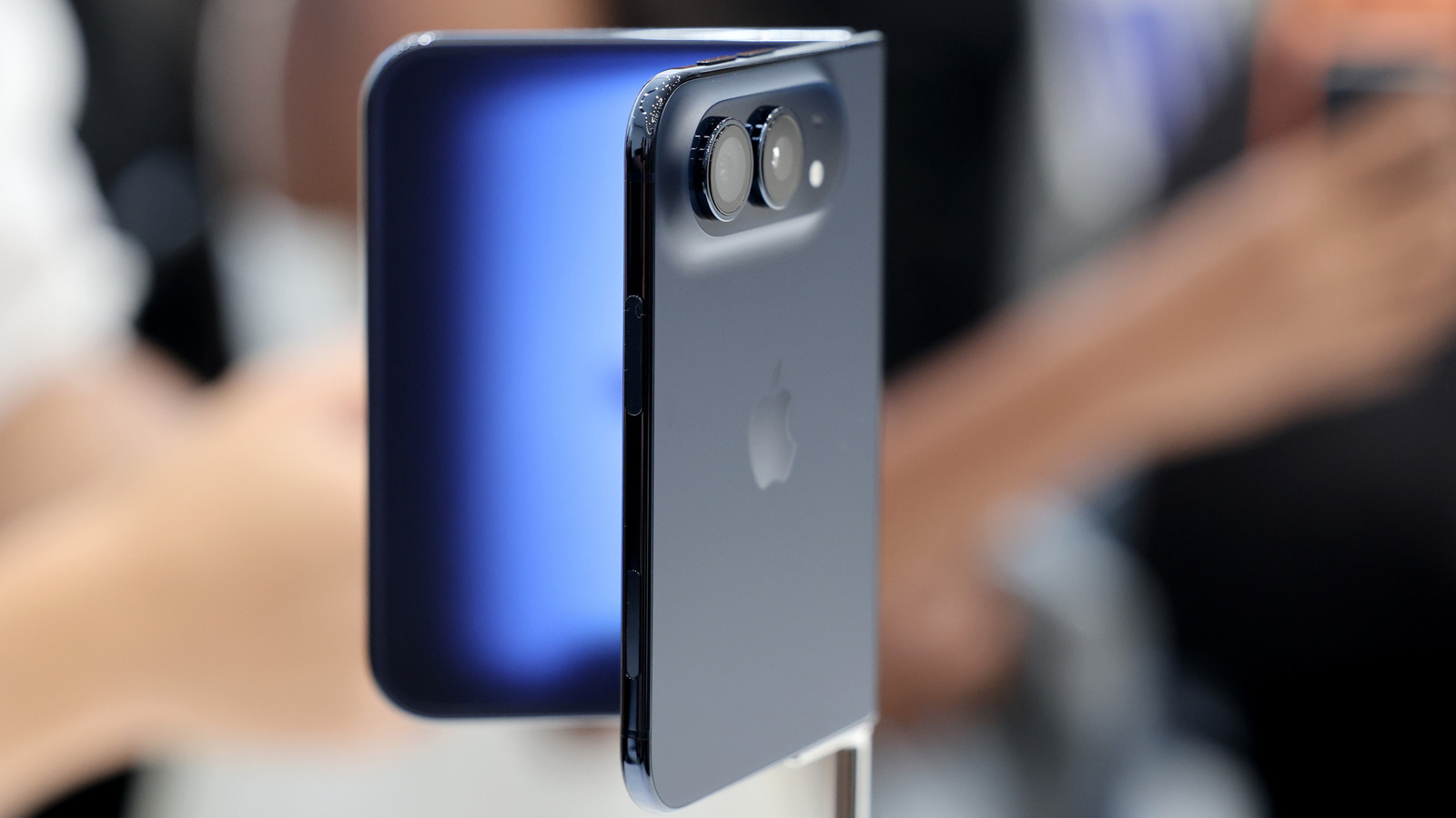
After Samsung, Motorola, and Google, it was time for Apple to put forward its folding phone to the world. Apple’s first folding iPhone is arguably the most interesting handset the company has shipped since the iPhone X. The company calls it the iPhone Duo, and it opens into a 7.6-inch screen that’s 50% bigger than an iPhone 18 Pro Max. Plus, the Duo folds down to something you can actually carry and runs on the same A20 Pro chip as this year’s flagships.
But a foldable body means trade-offs, and Apple made a few real ones to fit everything into a 5.2mm-thin frame. Several camera and security features available on the iPhone 18 Pro are simply not on the Duo. And while none of this makes the Duo a bad phone, you should know what you are giving up for that absurd amount of money it asks.
This is what Apple left off the iPhone Duo, compared to the iPhone 18 Pro, and what the Duo gives you instead. While some of these differences barely matter, a couple of them are worth knowing before you press that buy button.
A dedicated telephoto lens
The iPhone 18 Pro comes with a telephoto camera. It is a 100mm lens with true 4x optical zoom. Apple also pulls a 12MP, 200mm shot from that same lens at 8x, bending the light path with a tetraprism design, allowing it to still fit in the iPhone 18 Pro’s slim body. When you put it all together, you get a 16x optical-quality zoom range from the latest iPhone.
However, the telephoto lens is missing entirely from the much pricier iPhone Duo. Its camera setup includes a 48MP main camera and a 48MP ultra-wide lens. The only zoom trick it has is a 2x crop pulled from that 48MP main sensor. That’s fine if you want to take a slightly tighter portrait shot, but it doesn’t give you a real reach.
If you love shooting sports games, concerts, or wildlife from a distance, you will notice that gap the first time you try the iPhone Duo.
The Action button
The popular ring/silent switch was replaced with the Action button on the Apple iPhone 15 Pro series. Fast-forward to now, and Apple has kept the Action button right where it was, and it’s still a one-press shortcut that will send you straight to the camera, a Shortcut you created, or turn your phone into silent mode. After setting it up, reaching for it feels natural.
Unfortunately, you don’t get that convenience on the iPhone Duo, because it misses out on the Action button altogether. What you get instead is volume controls, a Camera Control button (which is actually good for this size of phone), and a side button that doubles as fingerprint sensor and power button. You can still get to the camera rapidly using the Camera Control button, so it is not a total loss. However, a single-press customizable button is the better option.
Face ID
Ever since Apple got rid of Touch ID with the iPhone X, the default way of unlocking an iPhone has been to look at it and let Face ID do the magic. The iPhone 18 also uses Face ID. Apple still believes it is a more secure option, and it lets you unlock your iPhone, pay, and log into apps without touching the screen at all.
But on the iPhone Duo, you are back to pressing a button. Apple re-introduced Touch ID, but this time instead of a separate button, it lives in the side button. That is not automatically worse, since plenty of people genuinely prefer a fingerprint press over holding a phone up to their face. For those who have gotten used to glancing at their screen to unlock it, switching to the folding iPhone means relearning an old habit.
LiDAR Scanner
The iPhone 18 Pro still carries a LiDAR Scanner among its sensors, which is the same laser depth sensor Apple has been using since 2020. It helps speed up autofocus in low light and power AR apps. Additionally, the LiDAR sensor has also grown into a genuinely useful tool for turning real rooms and objects into 3D scans, something Read has put to the test using the app Polycam.
But you won’t find a LiDAR sensor anywhere on the Duo, even if it’s Apple’s most expensive phone ever. Most people won’t notice it, and night mode and portraits still work fine with the regular cameras. But if you are a person who leans on AR measuring apps, does any object scanning, or shoots a lot in low light, the missing LiDAR scanner on the Duo could genuinely hurt you.
Apple ProRAW
Apple introduced ProRAW in 2020 alongside the launch of the iPhone 12 Pro models. What ProRAW does is it blends RAW-level editing room with the iPhone’s own image processing, and it has been a staple on all iPhones since the iPhone 12 Pro and Pro Max. ProRAW is built right into the iPhone 18 Pro’s camera, which also captures DNG files alongside the usual formats.
On the iPhone Duo, when you open the camera settings, you will notice that the format list stops cold at HEIF and JPEG. There is no ProRAW and no DNG. If you are just posting to Instagram and social media apps (which is what the majority of users do), none of this will matter to you. But if you edit your pictures in Lightroom, or shoot for clients who expect maximum flexibility in post, this is a real limitation worth knowing about.
ProRes and ProRes RAW video
The iPhone 18 Pro supports video formats like HEVC (H.265), H.264, ProRes, and ProRes RAW. The last two are codecs built by Apple for professional video and photo editing. On top of this, it can even sync with external cameras through genlock, which is used to sync separate video equipment together.
The iPhone Duo, on the other hand, records in HEVC and H.264 only. For a phone that costs $2,000 and above, that is pretty limiting. For everyday clips and social video posting, it’s enough to produce good-looking footage, but if you are shooting short films, ads, or anything headed for a color-graded professional edit, the iPhone Duo isn’t the right choice.
Spatial photos and video
Spatial videos came to iPhones with iOS 17.2 on the iPhone 15 Pro and Pro Max. Later, spatial photo was pushed with iOS 18.1. The latest iPhone 18 Pro can shoot both spatial photos and 1080p at 30 fps in SDR (Standard Dynamic Range) spatial video. Spatial video and photo are formats built specifically for watching back in 3D on Apple Vision Pro.
Sadly, none of the two formats shows up anywhere in the Duo’s camera or video specs. Though, Apple had a clear idea behind it: They wanted the spotlight on the iPhone Duo’s own tricks, such as Duo Preview and Duo FaceTime, which are features that only work because the phone is foldable.
Still, if you happen to own a Vision Pro and want to continue capturing 3D footage and photos, know that the iPhone Duo won’t do that job. You need an iPhone Pro for it.
Full manual Pro camera controls
Years have passed, but the iPhone remains arguably the undisputed king for video recording on smartphones. Open the Camera app on an iPhone 18 Pro, and you get real manual control — you can adjust aperture, shutter speed, white balance, and you get a live histogram.
The iPhone Duo’s camera app, on the other hand, gives you customizable widgets for things like white balance and focus, but skips that full manual control with aperture and shutter speed. Most iPhone users are casual shooters, so they likely won’t miss manual controls on the iPhone Duo.
However, if you are the type who shoots in Pro mode out of habit and sets their own exposure before pressing the shutter, you’ll need to adjust to the new workflow Apple designed for the Duo.
The 18MP Center Stage front camera
One of the biggest reasons why I got the iPhone 17 Pro (even though I already had a Galaxy S26 Ultra) was the Center Stage front camera. It is so much more convenient to take group selfies, as it lets you capture a wider perspective. This year, Apple bumped the iPhone 18 Pro and Pro Max’s front camera to 18MP, and paired it with an f/1.9 aperture and autofocus for sharper selfies and calls.
The iPhone Duo splits that job across two cameras instead: a 12MP Center Stage camera on the outer display at f/2.2 and a separate, lower-resolution camera tucked under the inner display. Apple genuinely did show some clever piece of engineering with the Duo, letting you click a selfie in the closed position and still video-call with the phone unfolded. The cameras are just not as good as the 18MP sensor the iPhone Pro carries.
Variable aperture on the primary camera
The Android world has seen variable aperture multiple times in the past, and this year Apple decided to add this function to the iPhone 18 Pro and Pro Max models. The iPhone 18 Pro’s 48MP main camera can physically shift its aperture between f/1.48 and f/4.0, allowing you to better control the depth of field of pictures and how much light is pulled into the lens.
The iPhone Duo’s main camera stays fixed at f/1.6, which by all means is a perfectly capable aperture. It is just not one you can adjust. Most people shooting on Auto will never feel the difference, and people have been clicking amazing photos without variable aperture on smartphones for years.
Still, the iPhone Duo can’t match the iPhone 18 Pro’s flexibility in tricky lighting conditions, nor can it deliberately control the depth of field of pictures on its main lens.