
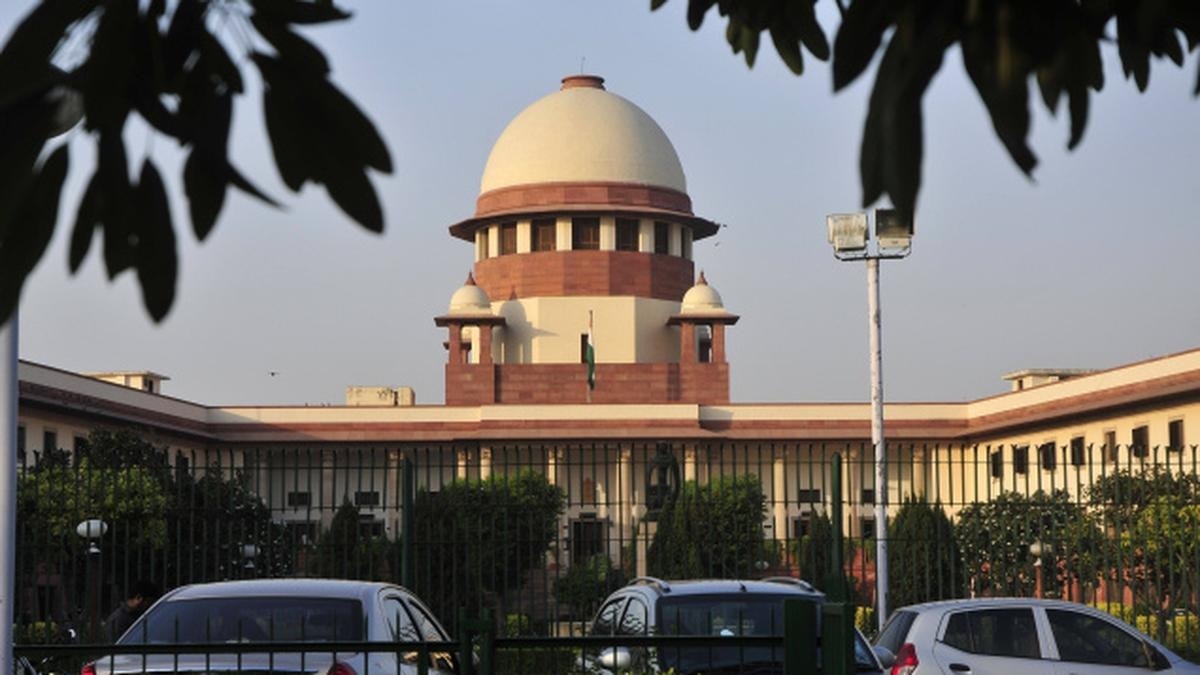
‘If both parents are IAS officers then why reservation for children?’ Supreme Court raised questions on creamy layer

The Supreme Court on Friday (May 22) while hearing the reservation benefits related to the creamy layer of Other Backward Classes (OBC) made important remarks asking that if the parents have reached high positions and are economically prosperous, then why should their children be given the benefits of reservation.
The bench of Justice BV Nagarathna and Justice Ujjal Bhuyan was hearing a case related to Karnataka. During this, Justice Nagarathna said that if both the parents are Indian Administrative Service (IAS) officers, are earning good income and have progressed socially, then there is a need to seriously consider to what extent it is appropriate to give reservation to their children.
He said in his oral remarks, “If both the parents are IAS officers then why should there be reservation? Education and economic empowerment leads to social mobility. If children continue to get reservation even after this, we will never be able to get out of this system. Parents studied, got good jobs, earned good income and now children also want reservation. They should now come out of reservation.”
In the case the court was hearing, a decision of the Karnataka High Court was challenged. The petitioner belonged to the Kuruba community, which is categorized as Backward Class II(A) in Karnataka. He was selected in the reserved category for the post of Assistant Engineer (Electrical) in Karnataka Power Transmission Corporation Limited.
However, the District Caste and Income Verification Committee considered him to be under the creamy layer and refused to give him a caste validity certificate. The committee said that both his parents are government employees and the annual income of the family is more than the prescribed limit. According to officials, the annual income of the family was estimated to be around Rs 19.48 lakh.
In this case, earlier a single bench of the High Court had given its verdict in favor of the petitioner and said that while determining the creamy layer, the salary of the parents should not be included in the income. But later the Division Bench overturned this decision and said that the salaries of government employees will also be included in the income.
During the hearing, advocate Shashank Ratnu, appearing for the petitioner, argued that the salary of government employees should not be made the basis for determining the creamy layer. He said that salary and agricultural income should be kept separate and income from business and other sources should be taken into account.
He also said that if only salary is made the basis then drivers, peons, clerks and lower level government employees may also be left out of reservation. He also suggested that the position of the parents, like whether they are in Group-A or Group-B service, should also be considered.
Responding to this, Justice Nagarathna said that it is necessary to maintain balance in this matter. He said that social and educational backwardness can be accepted, but when the family has moved beyond the benefits of reservation and has reached higher positions, then the question of continuing reservation should be considered.
“If both the parents are IAS officers, hold high positions in government service and are in good standing, then social mobility is clearly visible. In such cases where exclusion from reservation is being challenged, this also has to be kept in mind,” he said.
Also read:
Petrol becomes costlier by 87 paise and diesel by 91 paise, fuel prices increased for the third time this month
IN-SPACe ready to transfer PSLV technology to Indian private companies
Heat havoc across the country; All India’s among the world’s 50 hottest cities
Big gas explosion in coal mine in Shanxi, China, 82 workers died

Comments are closed.