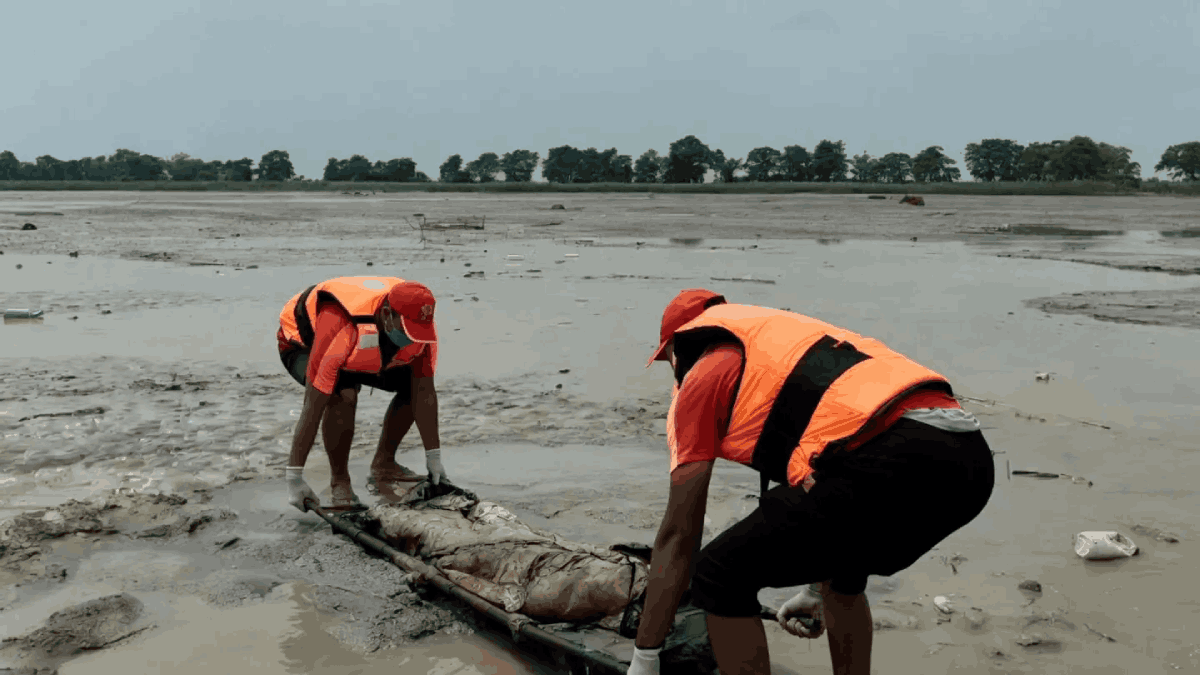
Rescue and relief operations are underway after the flash floods in Nepal, and 734 bodies have been recovered so far. Most of the bodies have not been identified and cannot be cremated. Because of this, corpses have begun to rot, and the foul smell emanating from the rapidly decomposing corpses now poses a serious threat of epidemic spread in the affected areas. Meanwhile, the Nepal government is preparing to cremate the unidentified dead bodies. The DNA sample of every unidentified dead body will be kept safe.
After the terrible flood in Nepal on Wednesday, relief and rescue work is going on continuously. Security personnel are searching for missing people. However, due to the large number of dead bodies recovered from the affected areas during this period, there is a serious risk of large-scale infection and spread of the epidemic. So far 178 dead bodies have been found in Chitwan district alone. These include 74 men, 41 women and 8 children. Out of these 8 children, 6 are boys and 2 are girls. Chitwan Chief District Collector Ganesh Aryal said that safe disposal of bodies amid the ongoing search operation has become a big challenge for the administration.
Since Chitwan's hospital does not have space to keep the bodies, they have been kept in a government office. Most of the bodies found on Thursday are decomposing very rapidly. A foul smell started coming from the room where the bodies were kept for identification. Due to this, there is a fear of spread of epidemic diseases in the area. The District Administration is now taking further action in coordination with the Central Government to prevent this potential threat of epidemic diseases and to dispose of the bodies quickly and properly.
Nepal's Home Ministry is working with the concerned districts to formulate a strategy for immediate management of dead bodies to prevent the spread of infectious diseases from the decomposing bodies. According to Home Ministry's deputy spokesperson Ram Acharya Subedi, dead bodies are being found in affected districts like Rasuwa, Nuwakot, Dhading, Gorkha, Chitwan and Nawalparasi. The government is considering whether the dead bodies should be cremated and managed locally or brought to a center in Kathmandu so that the process can be completed quickly.
The Department of Epidemiology and Disease Control has expressed the possibility of spread of infectious diseases due to low resources. Director of the department, Dr. Anuj Bhattachan said that until the dead bodies are identified, it is very important to keep them in cold storage. However, due to the sudden influx of large numbers of dead bodies, the existing refrigeration capacity is not enough. To solve this problem, the dead bodies found in Dhading have been shifted to Kathmandu and Pokhara so that they can be properly maintained and to prevent the spread of diseases in the area.
Also read-
- Digital arrest in the name of Mumbai ATS