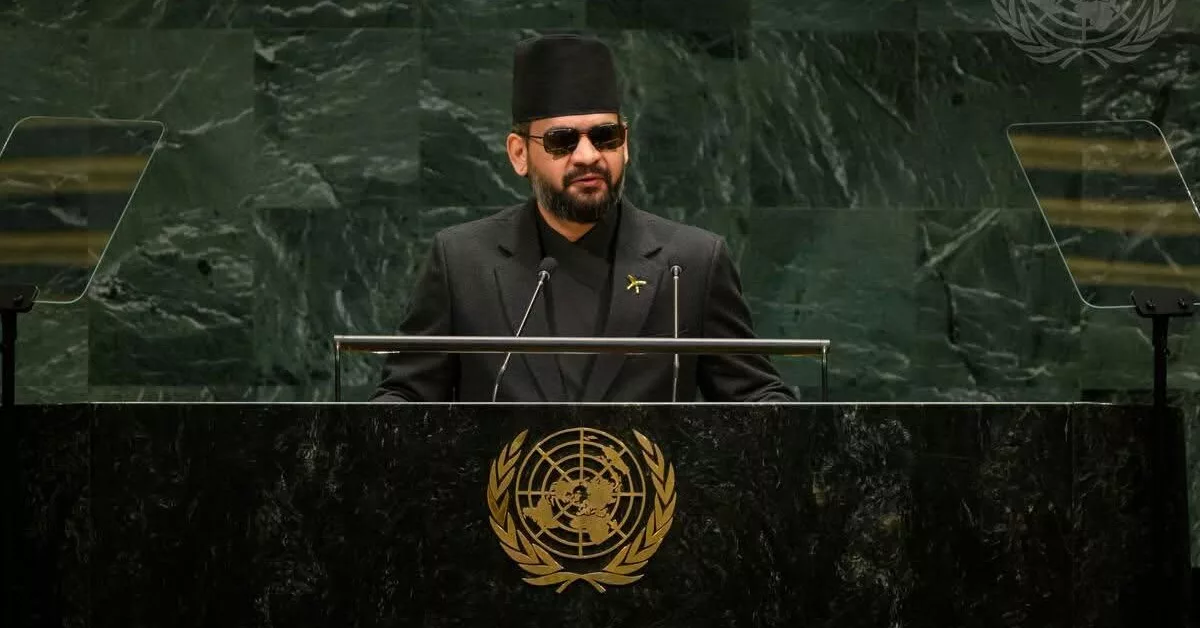
Nepal Prime Minister Balen Shah thanked India and China for help after the Bhotekoshi-Trishuli floods at the UN General Assembly. He said that Nepal, India and China need to come together to deal with the growing threat in the Himalayas. Shah said that Bhotekoshi flood is not only a disaster for Nepal, but is a warning of climate change for the entire world. Shah said the flood caused by the glacier destroyed roads, bridges, schools, homes and people's jobs. He appealed to the world to provide non-repayable aid, i.e. grants, not loans, to help rebuild poor countries affected by climate disasters.
Proposal to create a joint mechanism for the Himalayas with India and China
Shah said Nepal, India and China should work together to monitor the Himalayas and prevent disasters. He suggested creating a joint system in which:
- All three countries should share information received from satellite
- Dangerous glacial lakes should be monitored
- Flood early warning system should be strengthened
- At the time of disaster, all three countries should do rapid relief and rescue work.
- Shah said that the Himalayas should be made an area where countries share disaster related information and expertise with each other.
Shah said- Bhotekoshi flood is not only Nepal's problem
Nepal's Prime Minister said that the Bhotekoshi-Trishuli disaster should not be seen as a problem of only one country. He said that climate change is affecting the entire Himalayan region. Shah said, “This is not just Nepal's own problem. Ask Bangladesh, ask Bhutan, ask India, ask Maldives, ask Pakistan, ask Sri Lanka.” He said that this disaster has also affected the development work of Nepal. According to him, climate change is no longer just an environmental problem, but a major crisis related to development and people's lives. Glacier burst, sudden flood
In late August, a glacier broke near the border of Nepal and China's Tibet region. This was followed by landslides and sudden floods. The water and debris caused widespread devastation in the valleys below.
At least 1,450 people have died in this disaster. Several weeks later, relief and search operations are still underway. More than 6,000 people are missing in the area. Shah said many of them may never be found.
Shah said – The system is strong for war, weak for delivering food.
The Prime Minister of Nepal also raised questions on the priorities of the world. “We have built a good logistics system for the war, but our system for delivering food is weak,” he said.
He said that when roads, bridges and houses are destroyed by climate disaster in a poor country, just giving loans is not the right way to rebuild them. Nepal needs help of 10% of GDP
Shah said that after this disaster, Nepal needs help of about 10% of its GDP to rebuild roads, bridges, houses and other important things.
He appealed to the world to provide grant-based help. He said that poor countries should not be forced to take new loans to recover from this disaster.
Also read-
Rape cases increased 4 times in a decade