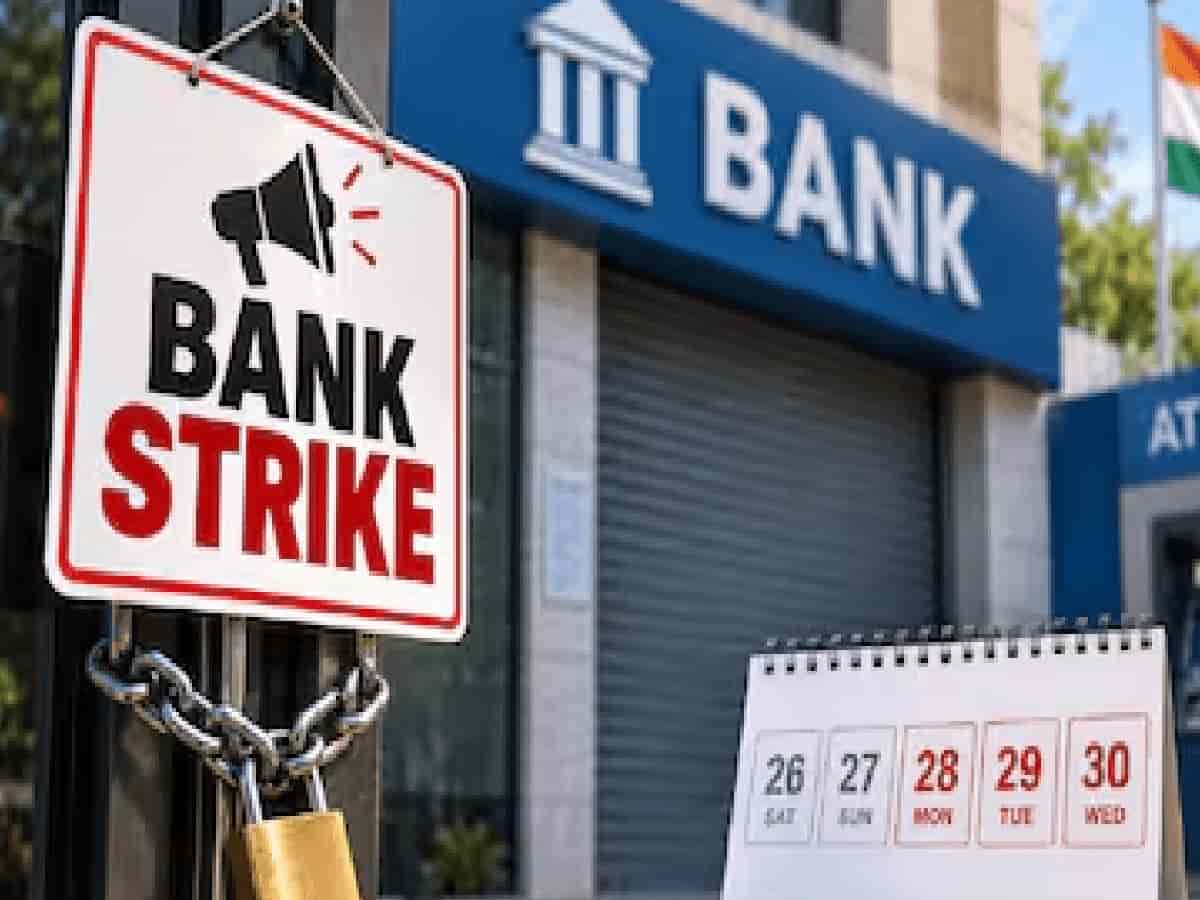
Salaried professionals across India could face month-end financial hurdles as the United Forum of Bank Unions (UFBU)—the umbrella body representing key bank employee and officer associations—has declared a nationwide three-day bank strike scheduled from September 28 to September 30, 2026. Taking place during the final three working days of the month and coinciding directly with the biannual half-year financial closing on September 30, the industrial action threatens to paralyze branch counters, clearance houses, and batch payroll disbursements. However, the exact impact will vary depending on company payroll cycles, interbank payment rails, and employer arrangements.
UFBU 5-Day Work Week Demand: Public Banks to Function on Sunday, September 27
The impending three-day shutdown marks an escalation following a single-day warning protest held earlier in the month:
Core Union Demands: The UFBU has called the strike from September 28 to 30 to press for long-pending institutional demands, primarily the formal implementation of a 5-day banking week across all scheduled commercial banks, following an earlier protest strike observed on September 11.
Half-Year Closing Conflict: The strike dates clash with September 30, which marks the critical half-year accounting and audit closing for the banking industry, magnifying the risk of transaction backlogs.
Government and RBI Counter-Measures: To prevent consecutive days of complete banking paralysis, the Union Government, in coordination with the Reserve Bank of India (RBI), directed all public sector banks (PSBs) and Regional Rural Banks (RRBs) to remain fully open and operational on Sunday, September 27. The central bank has greenlit the active functioning of branches, administrative offices, currency chests, and ATM replenishment channels throughout Sunday.
Impact on Monthly Paychecks: Central Employees Protected While Private Sector Awaits HR Clearance
The timing of salary credits will largely depend on whether employers rely on automated batch settlements or manual processing with affected lenders:
Central Government Staff Insulated: To shield public sector workers, industrial laborers, and pensioners from financial disruption, the Union Government issued directives on September 25 expediting the disbursement of September salaries, wages, and pensions ahead of the strike window.
Private Sector Payroll Dynamics: For corporate and private sector employees, the credit timeline depends entirely on when internal HR and accounts teams transmit payroll files. Companies that executed NEFT, RTGS, or internal bulk batch transfers prior to the weekend will see funds clear normally.
Potential Delay Windows: If corporate payrolls are processed between September 28 and 30 through participating state-owned or affiliated commercial banks, funds may remain uncredited until branches resume normal clearing operations on Thursday, October 1. Employees expecting month-end credits are advised to confirm payment transmission schedules with their human resources teams.