Many households clean regularly but tend to focus on visible areas, overlooking places where water can collect unnoticed.
Trays beneath appliances
Trays beneath refrigerators, portable air conditioners, dehumidifiers and water dispensers can collect water out of sight. Empty and scrub removable trays at least once a week, following the appliance instructions, and check for leaks or blocked drainage, as leakages and blockages collect water over time to form breeding sites.
Flower vases, plant saucers
Flower vases, water-grown plants and saucers beneath pots can hold water for days. Change vase water, scrub the containers and pour away water left in saucers after watering.
Note that simply changing the water won’t eliminate mosquito eggs attached above the previous waterline.
Also avoid overwatering potted plants so water does not sit in the saucers for long.
Also check other water-holding decorations or items such as small cups on altars or water trays used for keeping ants out. If water must be kept in them, follow local health authorities’ guidance on controlling mosquito larvae. Do not add chemicals or insecticides on your own to water used in the household.
Buckets, watering cans, seldom-used items
Buckets, basins, containers, watering cans, plastic boxes, children’s toys, and bottles left on balconies can collect rainwater.
Even a small cup resting at an angle, a bottle cap or a sagging plastic bag can hold enough water. Store unused items under cover or turn them upside down, and dispose of items you no longer need properly.
Do not leave a pet’s water bowl for days and simply top it up. Change the water and scrub the bowl regularly. Fish tanks, ornamental ponds and large water containers should be securely covered or managed according to local mosquito-control guidance.
|
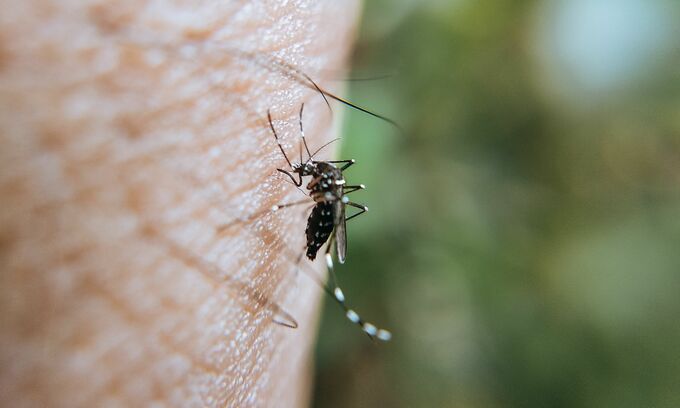
A yellow fever mosquito, capable of spreading dengue fevers and other disease. Photo from Pexels |
Gutters, balconies, rooftops
Leaves, trash, and mud can block gutters, leaving swathes of standing rainwater. Water can also collect in floor drains, gaps in awnings, covers draped over belongings, outdoor umbrella bases, and old tires.
After each rain, check balconies, rooftops, and yards, clear drains, pull covers taut, and remove standing water.
Tree hollows, leaf bases, and depressions in building materials can also hold water. If a water-holding object cannot be removed, cover or treat it with professional guidance.
Larvicides should be used only for water that cannot be emptied or securely covered, and product-label instructions must be followed.
Dark corners as mosquito resting places
Yellow fever mosquitoes, which transmit dengue, usually lay their eggs on the sides of water-holding containers. The eggs can remain after the water dries up and hatch when water returns. Simply pouring the water out is therefore not enough: containers should also be scrubbed, turned upside down, or securely covered.
The U.S. Centers for Disease Control and Prevention recommends checking and cleaning items that can hold water at least once a week.
Adult mosquitoes rest in dark, damp corners, behind curtains, under furniture or inside closets. Spraying these areas, however, does not replace removing standing water, where mosquito larvae develop. When cleaning, combine the search for standing water with fitting window screens, closing doors when mosquitoes are active, wearing long clothing and using mosquito repellents as directed.
Mosquitoes can bite during the day and at night, so sleeping under a mosquito net at night alone is not enough to prevent dengue. Families should spend about 10 minutes each week checking the kitchen, bathroom, altar room, balcony, and yard for stagnant water and scrubbing containers.
People can also help prevent dengue through vaccination as a dengue vaccine has been approved in Vietnam: speak with a doctor or vaccination provider to assess whether it is suitable and discuss the appropriate schedule. Do not rely solely on vaccination, however, and limit risks by controlling larvae, removing standing water, avoiding mosquito bites, or watching for early signs of illness.