
Renault India is gearing up to launch the new Duster Strong Hybrid E-Tech 160 in India on October 17, 2026. The company has already announced that the upcoming hybrid SUV will offer an ARAI-certified mileage of 29 kmpl, making it more fuel-efficient than its key rivals, including the Maruti Suzuki Grand Vitara, Toyota Urban Cruiser Hyryder and Maruti Suzuki Victoris. Bookings for the new Duster hybrid have also commenced. Apart from its claimed mileage, the SUV gets several key highlights that could help it stand out in the strong-hybrid SUV segment.
The first major highlight of the new Duster hybrid is its 1.4 kWh battery pack. The SUV gets a strong-hybrid powertrain that combines a 1.8-litre naturally aspirated petrol engine with two electric motors. Interestingly, the battery is considerably larger than the 0.60 kWh unit used in the Toyota-Suzuki strong-hybrid system offered with the Grand Vitara, Hyryder and Victoris.
The larger battery is expected to help the Duster run on electric power more frequently, especially in stop-start city traffic. Renault claims that up to 80 percent of urban driving can take place in electric mode. However, this does not mean that the SUV can cover 80 percent of a journey in one continuous stretch using battery power. The system switches between petrol and electric power depending on driving conditions, while regenerative braking and the petrol engine help recharge the battery.
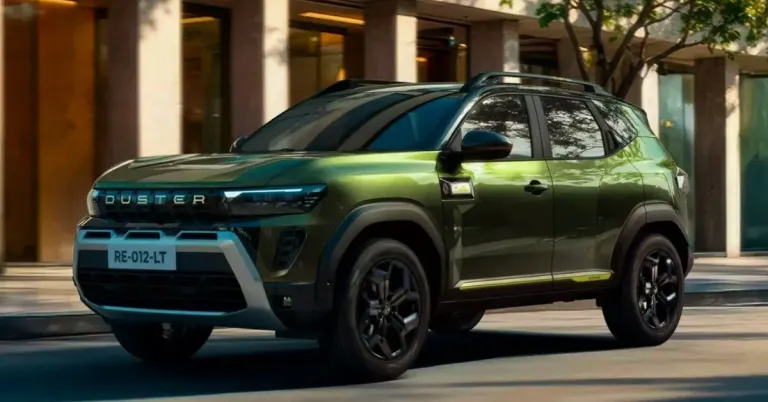
The second major highlight is its claimed fuel efficiency. Renault has confirmed an ARAI-certified mileage of 29 kmpl for the Duster Strong Hybrid E-Tech 160. This is higher than the claimed mileage of its three key rivals, with the Maruti Suzuki Victoris Strong Hybrid offering 28.65 kmpl, while the Grand Vitara Strong Hybrid and Toyota Urban Cruiser Hyryder Strong Hybrid offer 27.97 kmpl.
This puts the Duster at the top of this comparison in terms of claimed fuel efficiency. However, real-world mileage will depend on factors such as traffic conditions, driving style and speed. The final efficiency figures in everyday driving will become clearer once the SUV reaches customers.
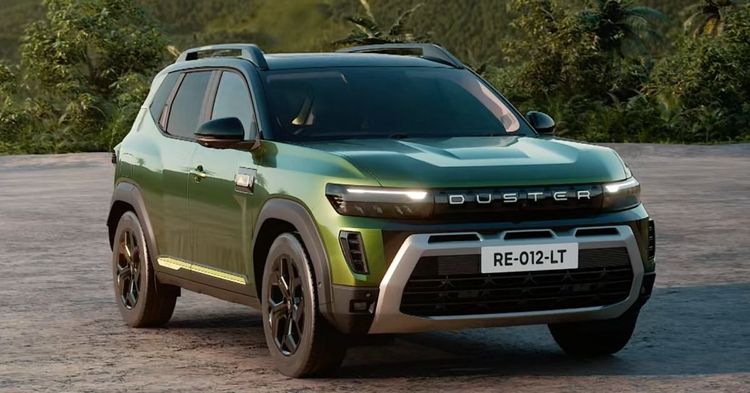
Apart from its claimed mileage, the new Duster hybrid also gets a more powerful hybrid system than its key rivals. The 1.8-litre petrol engine works alongside two electric motors, including a 49 hp traction motor and a 20 hp starter-generator. The combined system output stands at 160 hp and 172 Nm.
In comparison, the strong-hybrid versions of the Grand Vitara, Hyryder and Victoris produce around 116 hp from their 1.5-litre petrol-electric powertrains. This gives the Duster a considerable advantage in terms of combined system output.
The combination of higher claimed fuel efficiency and more power could make the Duster an interesting option for buyers who want a fuel-efficient SUV without compromising as much on performance. However, its actual driving performance will only become clear after a proper road test.

The new Duster hybrid also gets a larger petrol engine than its key strong-hybrid rivals. It uses a naturally aspirated 1.8-litre four-cylinder petrol engine with a displacement of 1,789 cc. Meanwhile, the Grand Vitara, Hyryder and Victoris use smaller 1.5-litre petrol engines paired with electric motors.
The petrol engine is part of Renault’s E-Tech hybrid system, which combines the engine, two electric motors and a 1.4 kWh battery pack to deliver a combined output of 160 hp. The larger engine capacity sets the Duster apart from its rivals, although engine displacement alone does not determine performance or fuel efficiency.
The hybrid will also become the third powertrain option in the new Duster lineup, joining the existing 1.0-litre and 1.3-litre turbo-petrol engines. It could help Renault attract buyers looking for an alternative to conventional petrol SUVs, particularly those who spend a lot of time driving in the city.
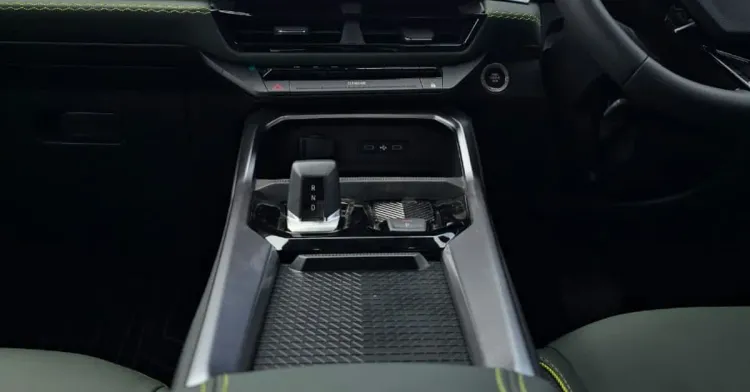
The fifth major highlight is the transmission. Unlike the Grand Vitara, Hyryder and Victoris, which use e-CVT gearboxes, the Duster hybrid gets a dedicated eight-speed hybrid transmission with fixed ratios. The system manages how the petrol engine and electric motor contribute power to the wheels.
While an e-CVT offers a largely step-free driving response, Renault’s transmission can shift between its fixed ratios. As a result, engine rpm is expected to rise and fall more like it does in a conventional automatic gearbox. Drivers may also notice gear changes as the system switches between electric drive, petrol-engine drive and a combination of both.
Renault says its E-Tech hybrid system draws from its Formula 1 experience. However, whether the eight-speed transmission offers a better driving experience than the e-CVT systems used by its rivals will only become clear after the production-spec SUV is driven.