
The Indian electric motorcycle market is soon going to get crowded. We are saying this because, in the coming months, we will be seeing the launch of not one or two but five new electric motorcycles. So, if you have been waiting for an electric bike instead of a scooter, here are five exciting models that are expected to arrive in India over the next couple of years.
Royal Enfield recently launched the Flying Flea C6 as its first electric motorcycle. However, the company has already confirmed that the next model under the Flying Flea brand will be the S6. Now, unlike the C6, which has been designed as a retro-inspired roadster, the S6 will be positioned as a scrambler which will be able to tackle broken roads and light off-road trails.
The Flying Flea S6 will use the same L platform as the C6, and it is expected to get a 19-inch front wheel and an 18-inch rear wheel. However, instead of alloy wheels, it will feature wire-spoke rims along with higher ground clearance and longer suspension travel.
Royal Enfield is also expected to offer a dedicated off-road riding mode, lean-sensitive ABS, traction control, connected technology, and other modern electronic aids. It will come powered by the same 3.91 kWh battery pack as the C6. The Flying Flea S6 is expected to make its global debut around EICMA 2026, with the India launch likely to follow around the same time. It is expected to be priced at around Rs 3.4 lakh (ex-showroom).
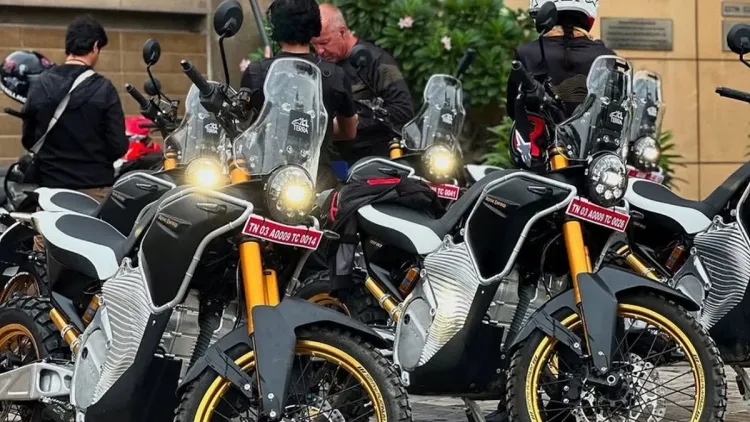
Apart from the Flying Flea range, Royal Enfield is also developing an electric version of the Himalayan adventure motorcycle. Currently known as the Him-E, this motorcycle has already been showcased by the company and has also been spotted testing on multiple occasions.
The Him-E is expected to become one of the most powerful motorcycles Royal Enfield has ever produced. Reports have suggested that it will feature a massive 14 kWh battery pack paired with a 74.5 kW electric motor sourced from dirt-bike specialist Stark Future. This setup is expected to produce around 100 PS and offer a top speed of approximately 120 kmph. Real-world riding range is expected to comfortably cross 200 km.
Design-wise, the Him-E takes inspiration from both the current Himalayan and the upcoming Himalayan 750. It will get a rugged adventure bike design with a tall windscreen, circular LED headlamp, long single-piece seat, wire-spoke wheels, and a large bash plate underneath. Interestingly, prototypes have also shown sustainable flax fibre composite body panels as well.
The Him-E is also expected to get fully adjustable upside-down front forks, an Ohlins rear monoshock, 21-inch front and 17-inch rear wire-spoke wheels wrapped in Bridgestone Battlax AdventureCross tyres. The bike is also expected to offer four riding modes, including Eco, Tour, Off-road, and Rally, along with a 7-inch TFT display supporting Bluetooth connectivity and Google Maps navigation. The Him-E is expected to launch towards the end of 2026, with prices likely to range between Rs 7 lakh and Rs 8 lakh.
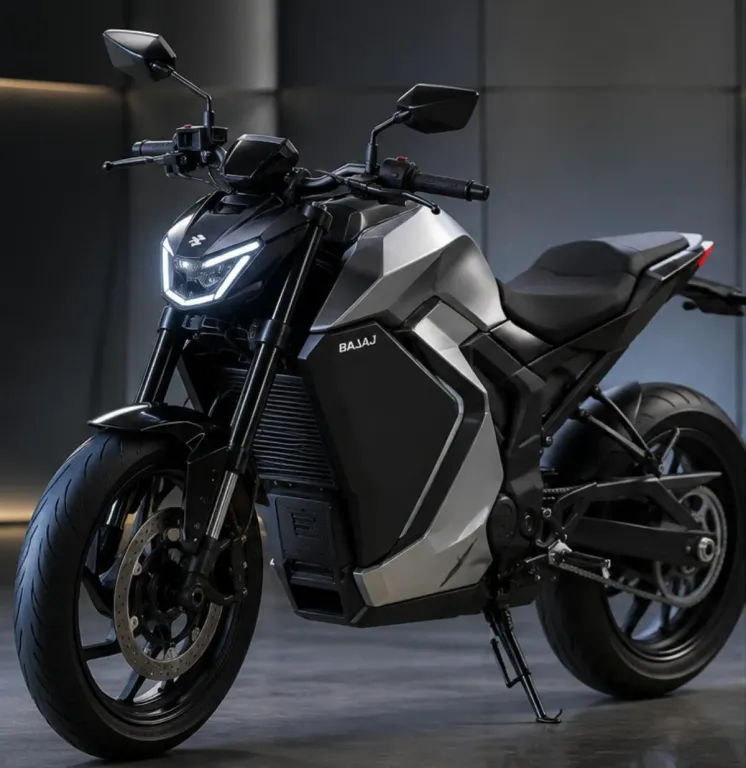
Bajaj Auto has also officially confirmed that it is developing its first electric motorcycle. The announcement was made during the company’s FY27 earnings call. It has revealed that development is progressing steadily. The electric motorcycle will first be introduced in international markets before arriving in India. At the moment, Bajaj has not revealed any technical specifications or design details.
The company has confirmed that the motorcycle is expected to launch during FY2028. Once launched, it will compete with offerings from Royal Enfield, Revolt, Oben, and other upcoming premium electric motorcycles. Bajaj has also revealed that electric vehicles now contribute around 30 percent of its domestic business, while Chetak demand continues to exceed production capacity.
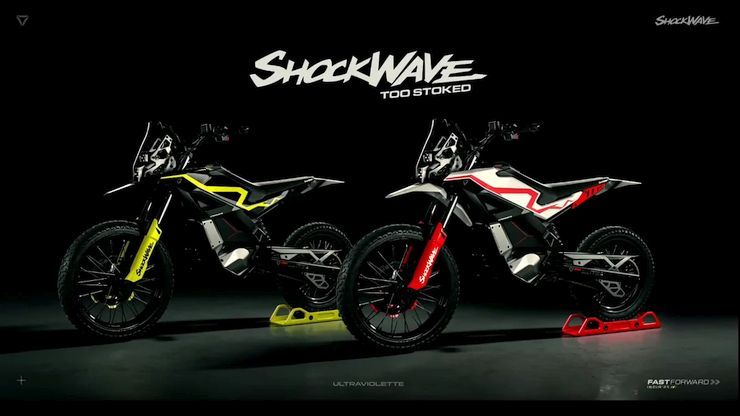
Ultraviolette has already taken the wraps off the Shockwave, which is currently the most affordable motorcycle from the Bengaluru-based EV manufacturer. It has been designed as a lightweight dual-purpose motorcycle with Dakar-inspired styling, which makes it suitable for both city riding and light off-road use.
Powering the Shockwave will be a 3.5 kWh battery pack, which will come paired with a mid-mounted electric motor that will make 10.8 kW. The company claims an impressive 505 Nm of torque at the rear wheel. The Shockwave can sprint from 0 to 60 kmph in just 2.9 seconds and offer a claimed top speed of 120 kmph.
Ultraviolette claims an IDC-certified range of 165 km. However, the real-world range is expected to be over 100 km. One of its biggest highlights is its low kerb weight of just 120 kg. The motorcycle will also get long-travel suspension, including telescopic front forks with 200 mm travel and a rear monoshock offering 180 mm travel.
It will also feature switchable ABS, four-level traction control, six-level regenerative braking, LTE-based e-SIM connectivity, Bluetooth support, and a digital instrument cluster. The Shockwave has been introduced at an introductory price of Rs 1.49 lakh (ex-showroom) for the first 2,000 customers. However, the deliveries will take place in the coming months.
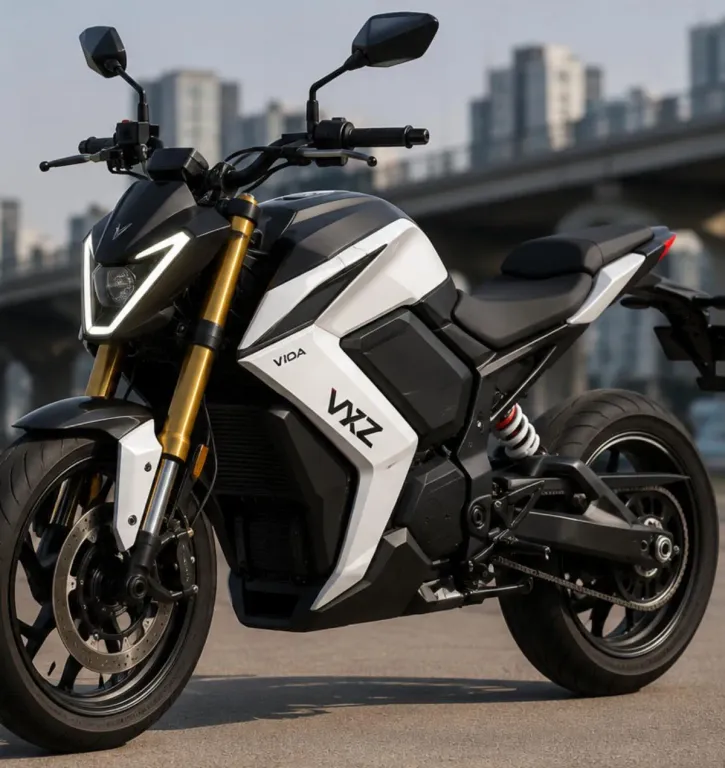
Hero MotoCorp is also preparing its first electric motorcycle under the Vida brand. It will be called the VXZ, and this motorcycle was first showcased as a concept at EICMA 2025 and has recently been spotted testing in production-ready form.
The Vida VXZ is being co-developed with Zero Motorcycles and will be positioned as a sporty streetfighter. It will feature a sharp diamond-shaped LED headlamp with Vida’s signature V-shaped DRLs, muscular tank extensions, a stepped seat, and five-spoke alloy wheels.
The bike will feature upside-down front forks, a rear monoshock, disc brakes at both ends, and a belt drive instead of a traditional chain drive. Although Hero has not revealed its powertrain details yet, the motorcycle is expected to deliver performance comparable to a 150-200 cc petrol bike. Its launch is expected sometime during 2026-27.