
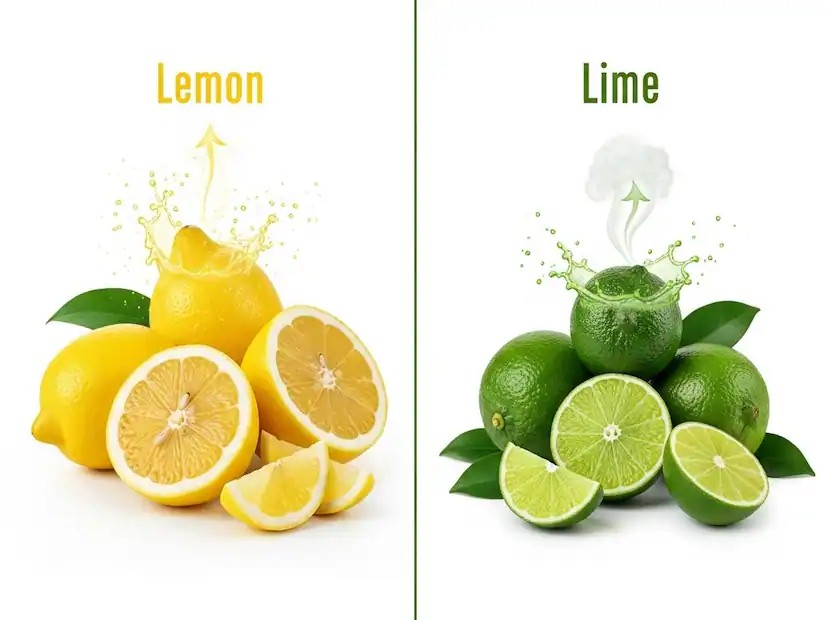

Though often confused as the same, lemon and lime differ in taste, nutrition and usage; here’s what you should actually choose
From squeezing it into warm water in the morning to adding it to refreshing summer drinks, citrus fruits are an essential part of daily life. But many people still confuse lemon and lime, often calling both by the same name.
In reality, these two fruits, though from the same citrus family, are quite different in taste, size, nutrition and culinary use.
Colour, Size And Appearance
The easiest way to identify the difference is by colour. Lemons are bright yellow when ripe, while limes are typically green. In terms of size, lemons are usually larger and oval-shaped, whereas limes are smaller and more round.
Another noticeable difference is the skin. Lemons have a thicker and slightly rough peel, while limes have thinner and smoother skin.
Taste: Sour Vs Tangy
Both fruits are sour, but their flavor profiles differ. Lemons have a slightly sweet and tangy taste along with their acidity. Limes, on the other hand, are sharper, more acidic and intensely tangy.
This is why lemons are often used in desserts and beverages, while limes are more common in savory dishes, chutneys and cocktails.
Which Has More Vitamin C?
When it comes to health benefits, both lemon and lime are excellent sources of vitamin C and antioxidants. However, lemons contain slightly higher amounts of vitamin C compared to limes.
Vitamin C plays a key role in boosting immunity, improving skin health by aiding collagen production, and reducing inflammation in the body.
Nutritional Value and Benefits
Apart from vitamin C, both fruits contain important nutrients like potassium, folate and vitamin B6. They are low in calories and help support digestion.
Lemons are often preferred for immunity-boosting drinks, while limes are valued for their strong flavor and digestive benefits.
Historically, citrus fruits like limes were even used by sailors to prevent scurvy, a disease caused by vitamin C deficiency.
Uses in Cooking
Lemon zest, due to its thicker peel, is widely used in baking and sweet dishes to enhance flavour. Limes are more commonly used in spicy recipes, salads, marinades and pickles because of their strong tangy taste.
Ultimately, both lemon and lime have their own unique roles in the kitchen and in health. Choosing between them depends on your taste preference and the dish you are preparing.
The Bottom Line
While lemons and limes may look similar, they are not the same. Lemons are slightly sweeter and richer in vitamin C, while limes are more acidic and flavourful for savory dishes. Including both in your diet can offer a range of health benefits and enhance your meals in different ways.

Comments are closed.