
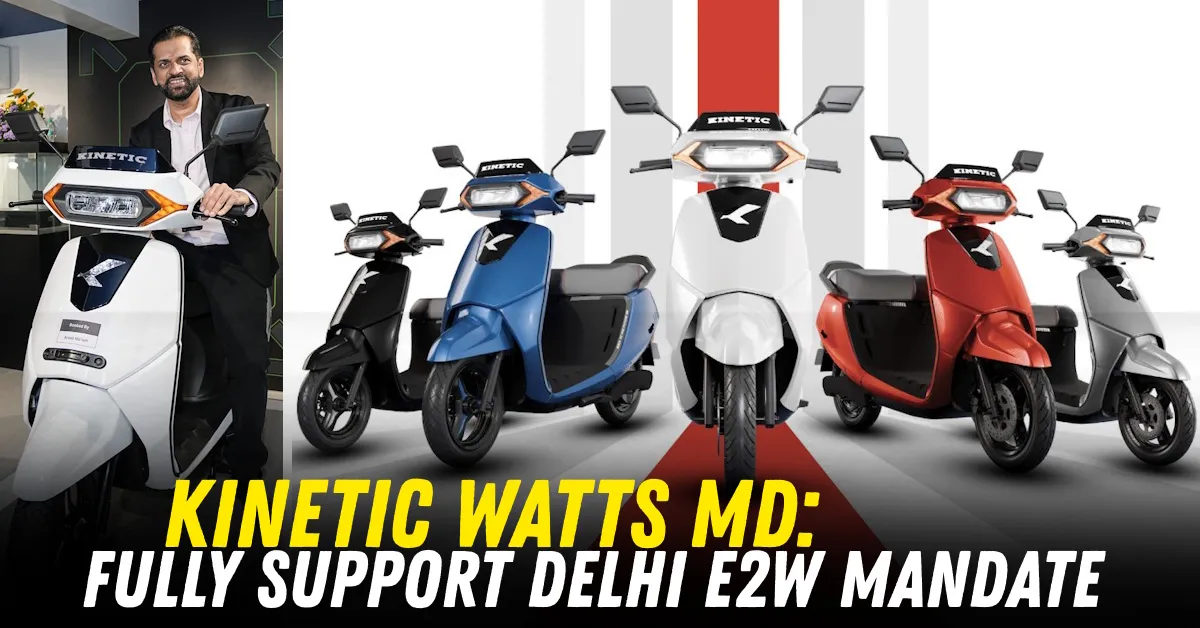

Ajinkya Firodia – MD of Kinetic Watts and Vice Chairman of the Kinetic Group, has come out strongly in support of the Delhi government’s proposed move to phase out petrol-powered two-wheelers by 2028. The executive has called the policy a “bold and forward-looking” step that could accelerate India’s transition to cleaner mobility while tackling the capital’s worsening air quality.
Firodia drew parallels with the shift to BS4 emission norms, when regulatory push forced the auto industry to adapt quickly. Despite initial resistance, the transition eventually led to cleaner vehicles and better outcomes for consumers. According to him, the proposed EV policy represents a similar inflection point, one where decisive policymaking could once again push the industry toward innovation and long-term sustainability.
He emphasized that Delhi’s pollution crisis makes such aggressive steps necessary. With two-wheelers forming a significant chunk of daily traffic, electrification could play a major role in reducing emissions. Firodia also highlighted how electric scooters are already well-suited for urban commuting, given that most users travel just 30–40 km a day, while modern EVs comfortably offer real-world ranges of 80–120 km per charge.
Beyond emissions, he pointed to larger strategic benefits. Reducing dependence on petrol imports could strengthen India’s energy security, while EVs themselves open the door to better technology, connectivity, and user experience.
If implemented, Delhi’s policy will effectively ban new registrations of petrol-powered two-wheelers by 2028. This would make the capital one of the first major Indian cities to fully transition this segment to electric mobility.
On the positive side, the impact could be significant. Cleaner air, lower noise pollution, and reduced fuel consumption are obvious gains. A strong policy push could also boost EV manufacturing, charging infrastructure, and local supply chains.
However, the move is not without its challenges.
One of the biggest concerns is pressure on the electricity grid. A sharp rise in EV adoption will require substantial upgrades in power generation, distribution, and charging infrastructure. Without this, peak demand could strain the system, especially during summers when electricity consumption is already high.
Another potential side effect is registration migration. Buyers could simply register their petrol two-wheelers in neighbouring NCR towns such as Gurugram, Noida, or Ghaziabad, and continue using them in Delhi. This loophole could dilute the policy’s intended impact unless enforcement is tightened across the region.
Affordability and charging access also remain key concerns. While EV prices are gradually coming down, upfront costs are still higher than comparable petrol scooters. For many buyers, especially in lower-income segments, this could become a barrier unless subsidies and financing options improve.
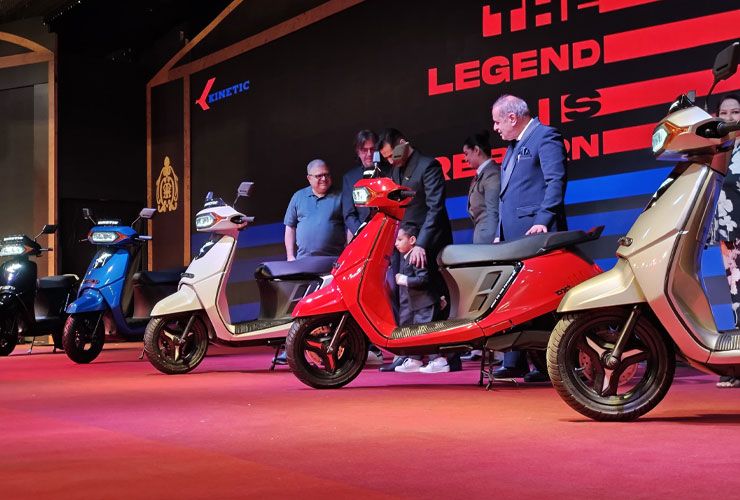
Firodia also used the opportunity to highlight Kinetic’s own push into the EV space through Kinetic DX. The electric scooter is built with 99 percent localisation and aims to deliver performance and features comparable to traditional ICE models.
The company is banking on a mix of reliability, familiar brand recall, and modern technology to attract Indian buyers. With connected features, improved efficiency, and a focus on everyday usability, the DX is positioned as a practical urban commuter.
As Delhi moves closer to a decisive shift away from petrol two-wheelers, products like the Kinetic DX could play a key role in shaping how smoothly that transition unfolds.
Comments are closed.