
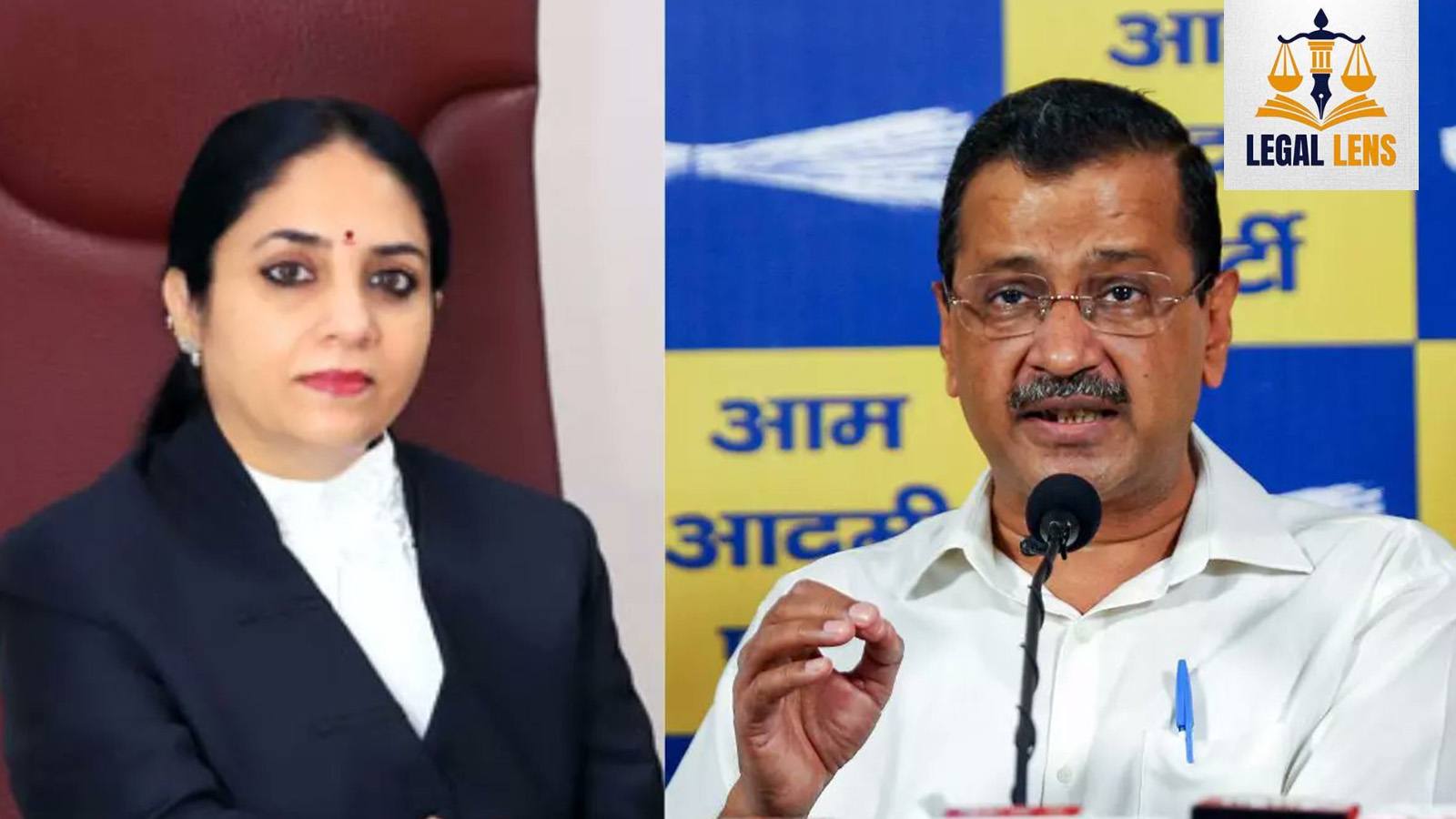

In the middle of a Delhi High Court hearing on April 13, Sanjay Hegde reached for the Ramayana. The senior advocate, representing former Delhi Deputy Chief Minister Manish Sisodia, offered the judge an image. Sita had to prove her purity by walking through fire. Not because Lord Rama doubted her, but because the people did. A modern judge, Hegde suggested, might be placed in the same situation. No one accuses her of bias. But public perception is such that she should step back.
Also read | ‘Attack on institution’: Jolt to Kejriwal as Delhi HC judge refuses to recuse
Justice Swarana Kanta Sharma disagreed. In a 115-page order on April 20, she thanked the senior counsel for the analogy and turned it inside out. Why, she asked, should a judge give Agnipariksha at the mere asking of an accused? The accused before her, she noted, had been discharged by a trial court but not acquitted. The order’s concluding section is titled, in plain words, “Whether this Court must give an Agnipariksha?”
The case for recusal
The litigant asking her to walk through fire was Arvind Kejriwal, former Delhi Chief Minister and AAP national convenor. Five of his co-accused, including Sisodia, had joined his application. The case before her is the CBI’s challenge to a trial court order of February 27. That order discharged Kejriwal and 22 others in the Delhi excise policy case. A discharge means the trial court found no basic case even to put the accused on trial. The CBI wants that order set aside so the trial can begin.
Kejriwal had asked Justice Sharma to recuse. Recusal is simply a judge’s decision to step aside from a case. A litigant asks for it when he has reason to fear the judge cannot decide his matter fairly. The law does not require them to prove actual bias. It is enough if a reasonable outsider, knowing the facts, would have serious doubts. That standard is called reasonable apprehension of bias. It has been the Indian position at least since a 1987 decision of the Supreme Court.
Kejriwal appeared in person at the April 13 hearing, speaking in a mix of Hindi and English. He told the judge that he held her in the highest respect, and was not alleging actual bias. He had, however, four concerns. The first was ideological. Between 2022 and 2025, Justice Sharma had attended four programmes of the Akhil Bharatiya Adhivakta Parishad, a lawyers’ body affiliated to the RSS. The second was about her children. Her son and daughter are empanelled as central government standing counsel. Work is marked to them by Solicitor General Tushar Mehta, who was arguing the CBI’s case before her.
The third concern was the pace. March 9 was the first day of hearing the CBI’s appeal. On that day, Justice Sharma had issued notice. She had also recorded that the trial court’s discharge order appeared, at first glance, to be wrong. The trial court order ran to over 600 pages, on a record of 40,000. To be called “wrong-looking” within minutes, Kejriwal said, was not the gentleness a litigant expects at the start of a revisional hearing. The fourth concern was the pattern. Justice Sharma had heard every earlier stage of this prosecution. She had upheld Kejriwal’s arrest by the Enforcement Directorate. She had rejected Sisodia’s bail plea. She had rejected Kejriwal’s bail plea. A judge who had ruled uniformly against him was unlikely, he argued, to approach the final appeal with an open mind.
Justice Sharma rejects plea
Justice Sharma answered each concern at length. On the Parishad events, she said they were professional seminars, one of them on Women’s Day. Many judges attended such programmes. Kejriwal had pointed to no political statement of hers at any of them. On her children, she was sharper. The fundamental right of a judge’s family to pursue a legal career, she held, could not be taken away at a litigant’s asking. If the children of politicians routinely entered politics, how could the children of a judge be barred from practicing law? Kejriwal’s refinement was that the Solicitor General controls their allocation. Her reply: the Solicitor General allocates work to all panel counsel, not just to her relatives.
Also read | ‘Might be sympathetic to ideology’: What Kejriwal told HC seeking judge’s recusal
On the March 9 observation, she said it was provisional, made at the stage of issuing notice, and subject to change on full hearing. On the pattern of adverse orders, she rejected the premise. She had granted a co-accused, Arun Ramachandran Pillai, bail on three separate occasions. Another accused, Amandeep Singh Dhall, had been sent for hospital treatment of choice on her orders. And on the charge that her orders had been routinely set aside by the Supreme Court, she said the facts were otherwise. The top court’s bail to Sanjay Singh had come on the Enforcement Directorate’s own concession, with no comment on merits. Sisodia’s bail had come on delay. In Kejriwal’s arrest challenge, the Supreme Court had found sufficient reasons to believe, and referred only a narrower question to a larger Bench.
All of this, however, sits behind a harder question. The test for recusal is not whether the judge can produce a list of favourable orders she has passed. It is whether a reasonable outsider, informed of the whole picture, would have serious doubts. Through much of the 115 pages, though, Justice Sharma uses language of a different kind. The litigant, she repeats, has produced no “proof”, no “material”, and no “evidence” of bias. He has offered “insinuations”. He has failed to rebut the presumption of her impartiality. To lawyers who have followed recusal jurisprudence, that framing sounds less like the perception test and more like the test for actual bias. Perception is what a reasonable outsider makes of the facts. It is not something a litigant can be asked to prove. That shift of burden is likely to be argued at the Supreme Court.
The order leans heavily on former Supreme Court Judge Justice Arun Mishra’s refusal in 2019. Senior advocates had argued that he should not sit on a Constitution Bench reconsidering his own earlier land acquisition judgment. Acceding to the plea, he held, would let a litigant pick his Bench. Legal predisposition, he said, was not bias. But the comparison does not quite fit. Justice Mishra had been accused of carrying a view from a separate earlier case into a fresh hearing. Justice Sharma is hearing a revision petition in which her own interlocutory observation, made weeks earlier, forms part of the running record. The applicants argue she has already indicated where the revision will land. Justice Mishra’s reasoning does not reach that situation. The order does not quite engage it either.
Challenge to recusal order
The order is sternest on Kejriwal’s attempts to find another forum. In March, his team had moved the Supreme Court twice on the same day. One of the petitions challenged the March 9 order. The other asked for the case to be transferred from her Bench to another. When the second petition made no progress, it was quietly withdrawn. Kejriwal did not mention the withdrawal at the next hearing. The judge had to ask. She called this an attempt to mislead the court. Read in another light, it is what a litigant who believes the forum is set against him tries to do.
On a charge of rushed proceedings, Justice Sharma said her roster of MP/MLA cases had been assigned by the Chief Justice on December 31, 2025. She had not been handpicked to hear Kejriwal. That is correct. But Kejriwal’s question was narrower. The same Bench had ruled adversely on him at every earlier stage. Why, on his separate request, had the Chief Justice not reassigned the appeal to another single judge? That is a question of judicial administration. The order does not engage it.
Also read | Kejriwal seeks recusal of Delhi HC judge in excise policy case, cites apprehension of bias
One feature of the order is its length. Most recusal orders in Indian judicial history have been short. A judge at ease with her impartiality has generally needed little space to say so. A refusal running to 115 pages, answering every allegation line by line, engages the litigant on his own ground. Thoroughness is a virtue in a judgment on the merits, but in a decision on recusal, it can be a double-edged sword.
Kejriwal’s lawyers have said they will take Monday’s order to the Supreme Court. The underlying case, on whether he and 22 others were rightly discharged, is still to be heard on the merits. But the recusal question will travel with it. Kejriwal has now faced the same judge at arrest, at bail, at interim relief, and will next face her at the final appeal. Whether that sequence, taken together, gives a reasonable outsider cause for doubt is the question the senior counsel’s Agnipariksha image finally came down to. Justice Sharma has answered it for herself. The Supreme Court will now be asked the same question.

Comments are closed.