
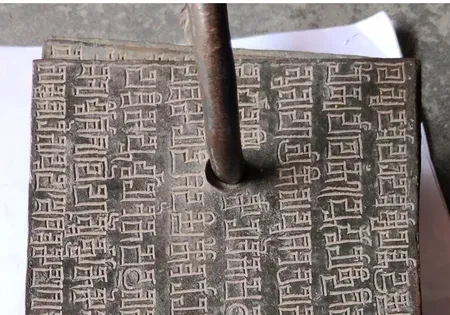
2000 year old copper plate found in Malhar, Chhattisgarh, enthusiasm increased among historians

Bilaspur/Raipur. The news of finding about 2000 years old copper plate from Malhar area of Bilaspur district of Chhattisgarh has filled historians and archaeologists with enthusiasm. This copper plate weighing about three kilograms can not only give a glimpse of the administrative system of ancient India, but can also bring to light many untouched aspects of the social and cultural life of that period.
This important discovery has come to light under the ‘Gyan Bharatam’ campaign of the Ministry of Culture of the Central Government, whose objective is to find and preserve ancient manuscripts and historical documents scattered across the country. This copper plate, which is safe with Malhar resident Sanjeev Pandey, is now under the supervision of experts, where the work of cleaning it and reading the letters is going on.
According to experts, Pali language has been used on the copper plate, which has been the main language for propagating Buddhism especially in ancient times. At the same time, it is carved in Brahmi script, which is counted among the oldest scripts of the Indian subcontinent and which later led to the development of many modern scripts including Devanagari. The design and style of the letters indicate that this copper plate may be from the Mauryan period or later, i.e. around the first century BC.
Historians believe that such copper plates were used at that time to record land donations, royal orders or religious declarations. In such a situation, after complete translation of this document, it will be clear which ruler or administrative decision is mentioned in it. There is a possibility that it may be related to the Maurya or Satavahana period.
Malhar, known as ‘Prasannapur’ in ancient times, has been an important cultural and trading center of the South Kosal region. This discovery further strengthens the historical importance of this area. Experts believe that if this copper plate is scientifically examined and studied in depth, many important facts related to the governance system, social structure and religious traditions of that period can come to light.
At present, experts associated with the Archeology Department and ‘Gyan Bharatam’ campaign are engaged in the conservation and digitization of this heritage. This discovery not only highlights the rich heritage of Chhattisgarh, but can also prove to be an important step towards saving India’s ancient knowledge tradition.

Comments are closed.