

125
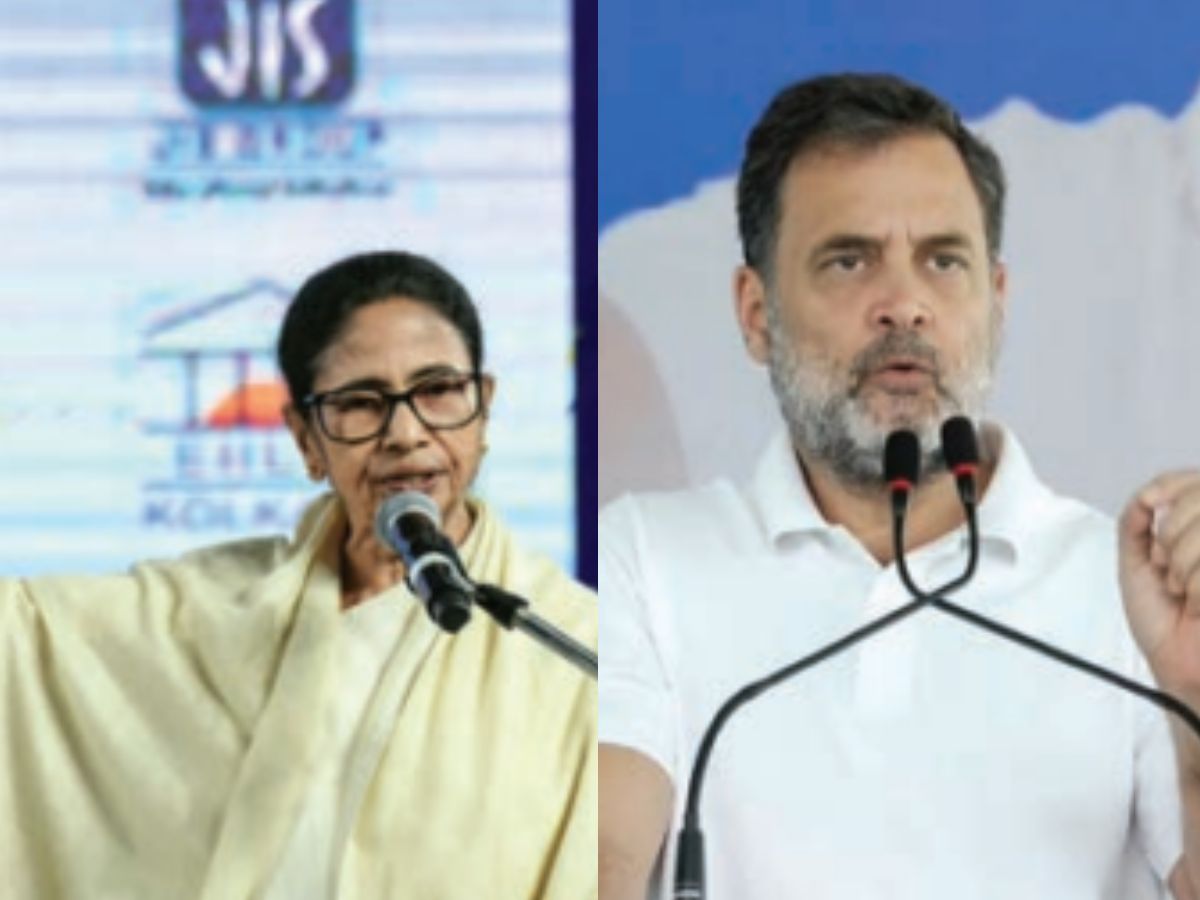
Kolkata: The highly anticipated West Bengal Assembly elections have laid bare clear fault lines within the opposition INDIA bloc, as its constituent parties pursue markedly different strategies on the ground. While the Congress has opted to contest on its own in a number of constituencies, several other alliance partners have lined up behind Chief Minister Mamata Banerjee and her party, the Trinamool Congress (TMC), resulting in a divided opposition front across the state.
Senior Congress leader and Leader of Opposition in the Lok Sabha, Rahul Gandhi, deepened this rift during his campaigning in the first phase of polling. Speaking at a public rally in Raiganj in Uttar Dinajpur district, Gandhi not only took aim at the Bharatiya Janata Party (BJP) but also launched a pointed critique of Banerjee and her administration.
He contended that West Bengal’s once-thriving industrial sector had been steadily dismantled, first under the Left Front government and later during the tenure of the TMC. Gandhi also flagged concerns regarding the law-and-order situation, alleging that there was a serious deficit of accountability within the state machinery.
Taking his criticism a step further, Gandhi maintained that governance lapses and increasing political polarisation under Banerjee had, in effect, opened the door for the BJP’s expansion in Bengal.
In a message shared on social media, he argued that had there been a “clean government,” the BJP would not have found space to grow, while simultaneously projecting the Congress as the only force capable of taking on the saffron party in an ideological contest.
On the other hand, several key leaders within the INDIA bloc have openly backed Banerjee, highlighting the alliance’s inconsistent approach in the state. Jharkhand Chief Minister Hemant Soren and Rashtriya Janata Dal (RJD) leader Tejashwi Yadav have been actively campaigning in support of the TMC ahead of the second phase of polling.
Yadav held multiple roadshows across crucial constituencies including Jagaddal, Bhatpara, and Khardaha, expressing strong confidence that voters would once again place their faith in Banerjee and return her to office for a fourth consecutive term. He pointed to what he described as overwhelming public support and trust in the TMC leadership as clear signs of an impending victory.
In a similar vein, Soren delivered sharp attacks against the BJP during his campaign speeches, asserting that Bengal’s progress should be shaped internally rather than influenced by external forces. He stressed the need to safeguard the state’s cultural identity and social fabric, while accusing the BJP of practising divisive politics. Soren also voiced confidence that the electorate would continue to back the TMC under Banerjee’s leadership.
Further reinforcing support for the TMC within the INDIA bloc, leaders such as Akhilesh Yadav and Uddhav Thackeray have also extended their backing to Banerjee, according to sources within the party.
Political analysts believe that this absence of unity within the opposition alliance could play a decisive role in shaping the election outcome. A divided INDIA bloc is likely to result in multi-cornered contests in several seats, which may fragment anti-incumbency sentiments as well as minority votes.
Experts suggest that such a situation could work to the BJP’s advantage, drawing comparisons with trends seen during the 2019 general elections.
He added, as Bengal moves into the remaining phases of polling, the internal contradictions within the INDIA bloc have introduced an added layer of complexity to an already high-stakes contest, ensuring that the state remains one of the most closely watched political battlegrounds in the country.

Comments are closed.