


Renault has laid out a clear product roadmap aimed at rebuilding scale in the local passenger vehicle market. Under its futuREady India strategy, the company plans to expand to a seven-model line-up by 2030, up from the four-model portfolio it now has after the Duster’s return.
Renault Group says India is expected to become one of its top three markets globally by 2030, and it is backing that ambition with two new platforms, a wider powertrain mix, and a stronger localisation push. In the short term, though, the company’s priority is not full electrification. It is volume recovery. That is why factory-fitted CNG models for the Kwid, Kiger and Triber are coming first, while the Bridger EV has been pushed to 2028.
That sequencing makes commercial sense when seen against current market numbers. Renault sold 42,018 passenger vehicles in FY26, up 11 per cent from 37,900 units in FY25. In March 2026 alone, its wholesales rose 77 per cent year-on-year to 5,046 units.
Even then, Renault remains a small player in a record passenger vehicle market that touched 46.43 lakh units in FY26. The company therefore needs products that can move volumes quickly in price-sensitive segments, and right now CNG offers a much faster route to that than EVs.
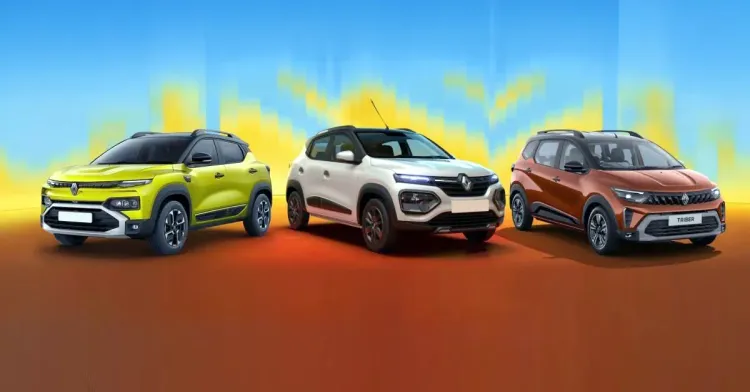
The immediate focus is on the Kwid, Kiger and Triber. Renault has already tested CNG demand through dealer-level retrofit kits. In early 2025, it launched approved retrofit CNG kits for all three models, priced at Rs 75,000 for the Kwid and Rs 79,500 for the Kiger and Triber.
Those kits were initially rolled out in five states that together accounted for 65 per cent of the market Renault was targeting. The next step is clearly more serious: proper factory-fitted CNG integration on the updated RGEP architecture, including the dual-cylinder underbody layout.
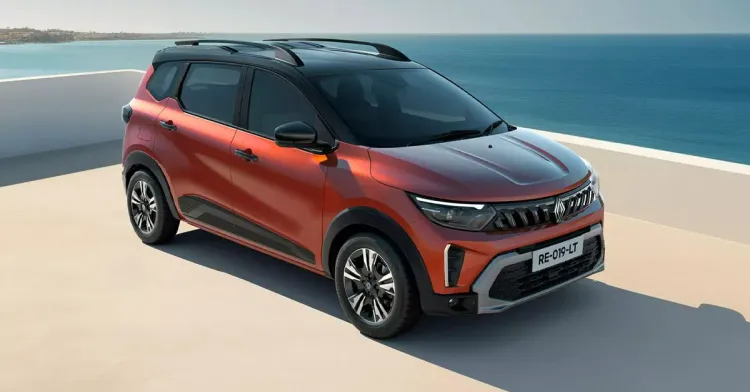
That packaging change matters because boot-space loss has been the biggest weakness of many CNG cars. Renault is trying to solve exactly that. On the Triber especially, luggage space is not a side issue but a core selling point. The model has already crossed 2 lakh units in domestic sales, and in the first ten months of FY26 it sold 20,744 units. It accounted for about 65 per cent of Renault’s domestic sales between FY20 and January 2026. So protecting its practicality while adding a lower running-cost powertrain could materially widen its appeal.
The broader market is moving in Renault’s favour on this front. CNG’s share of passenger vehicle retail sales rose to 21.98 per cent in FY26 from 19.60 per cent in FY25. In absolute terms, that worked out to about 10.34 lakh CNG passenger vehicles sold in FY26. In March 2026, the share climbed further to 23.76 per cent. CNG has now grown larger than diesel in the passenger vehicle market and is roughly five times the size of the EV segment by share. At the same time, PNGRB data shows there were 8,622 CNG stations across 307 authorised geographical areas as of February 2026. That gives Renault a much broader fuel network to work with than it would have had even a few years ago.
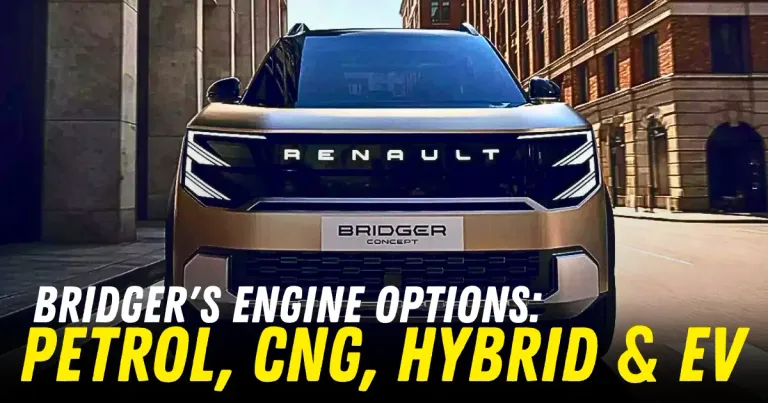
The EV delay, meanwhile, reflects a more cautious reading of the market. Electric passenger vehicle sales did jump 84 per cent in FY26 to 1,98,224 units, but that still translated to only 4.3 per cent of the total passenger vehicle market.
Public charging infrastructure is expanding, with 29,151 public EV charging stations installed across the country by February 2026, but mass-market EV adoption is still highly price-sensitive. Renault appears to have concluded that an imported or weakly localised EV launched too early would land in the wrong price band for its customer base.
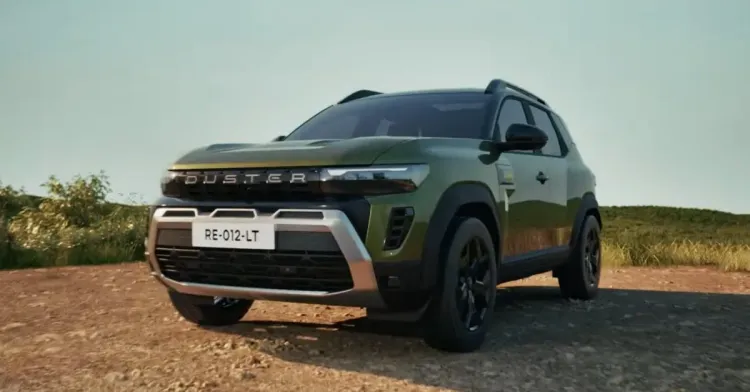
That does not mean the company is stepping away from electrification altogether. The new Duster and upcoming Bridger are both part of a multi-energy plan built around hybrids and EVs. The Duster itself shows why Renault is comfortable taking a staggered approach.
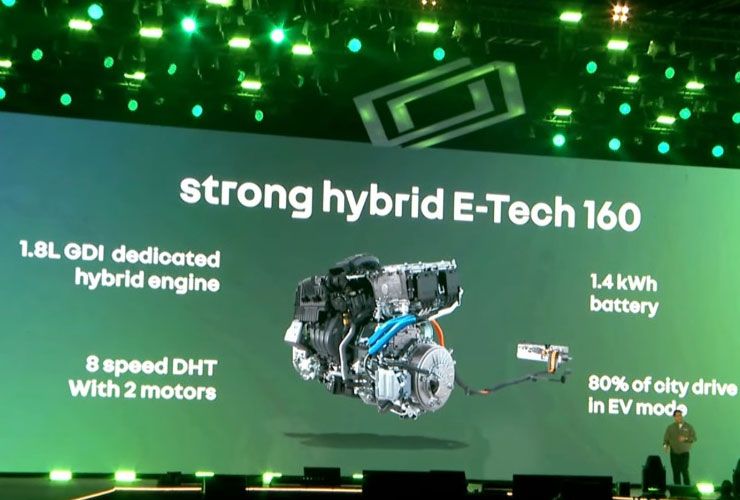
Its standard price runs from Rs 10.49 lakh to Rs 18.49 lakh, though early R Pass buyers got a lower effective entry price. More significantly, Renault has already said the Duster hybrid is effectively sold out for 2026 before launch, and about 39 per cent of metro bookings have been for the hybrid version. That gives Renault a working bridge between pure petrol-CNG products at the lower end and stronger electrification at the higher end.
So this is less a delay born of hesitation and more a sequencing decision. Renault needs mass-market volume first, and current fuel economics strongly favour CNG. EVs will come, but only after the company has used CNG, turbo-petrol and hybrid products to rebuild its base.
Comments are closed.