
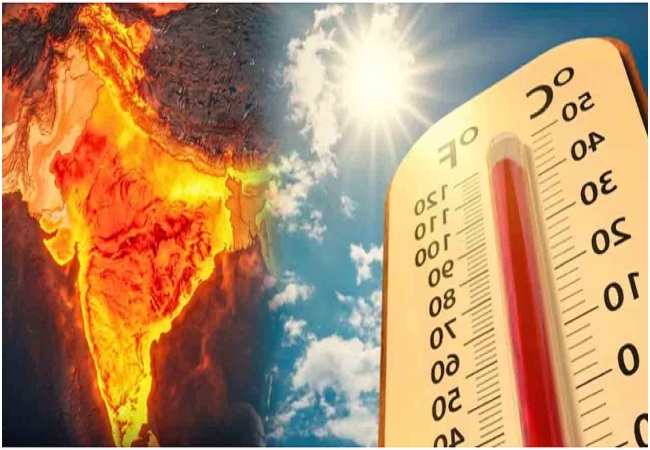
Global Temperature Rankings: 95 cities of India are among the 100 hottest cities of the world, why did this situation happen?

New Delhi. In the last days of April in India, the heat is blazing from ground to sky. India remains at the center in red color on the map of extreme heat in the world. At present the situation is that according to the real-time global temperature ranking, 95 of the 100 hottest cities in the world are from India alone. The entire country is scorching and has overtaken countries from Africa to the Middle East in the heat list. Let us understand why such a situation has arisen in the country.
Read:- TMC MP Mithali Bagh and driver injured, TMC said- BJP workers attacked after Amit Shah’s threat, Abhishek Banerjee reached hospital.
Data from AQI.in regarding heat in India shows the intensity and extent of the ongoing heat wave across a large part of the subcontinent. In many areas across the country, the mercury has crossed 40 degrees Celsius in April. It includes dozens of cities from central India to the Ganga plains. There are many places in the country where the mercury is close to 45°C.
https://www.aqi.in/weather/in/live-ranking
This list includes not only the big metropolitan cities of India but also small towns, which shows how widespread and deep the heat wave situation has become. The most affected states include Maharashtra, Telangana, Madhya Pradesh, Uttar Pradesh and Odisha. Many cities of these states feature prominently in the global ‘Top 100’ list. 19 out of the top 20 hottest cities are from India.
Warm nights are increasing the problem
Read :- Yogi said in Bengal – “On May 4, TMC goons will be seen making punctures on the roads.”
Along with this, the heat at night remains the most worrying. Due to this the temperature remains high even at night and the atmosphere is not getting time to cool down. This is called warm nights. The Indian Meteorological Department (IMD) has issued a heatwave warning in many areas and said that the situation is likely to remain the same for the coming few days.
Serious problem of urban heat island
Climate change and warming urban areas are also increasing the concern about heat. Indian cities are becoming urban heat islands. Along with Mumbai, cities like Delhi, Gurugram, Lucknow, Kanpur, Bengaluru, Cuttack, Jaipur, Bhopal are rapidly getting affected. High rise buildings and cement concrete houses are becoming serious. Houses built in cities made of concrete, asphalt and glass absorb heat throughout the day and slowly release it at night. The roofs of the houses are also made of cement.
In the last decade, warm nights have increased by 32 percent in Indian cities. Last year itself in 2025, by the end of February the night temperature had increased. At most places an increase of 3 to 5 degrees was recorded. Talking about the factor of increasing heat, 266 districts of India are in the category of very severe heat. Whereas 151 districts have come in serious and 201 districts have come in medium category.
Increasing danger and experts’ opinion
Read :- What did the video anchor read the statement of the attacker on TV? Trump got angry at the journalist, said- I am not a rapist, I have got a clean chit
Regarding such heat conditions, experts say that this time the situation is more worrying because this heat is not limited to one area but is spread in many states simultaneously. Climate shift is also a reason for this. According to experts, such patterns are now becoming more frequent, pointing to widespread climate change and rising baseline temperatures. The effect of urbanization is also important. Decreasing green cover in cities and the ‘urban heat island’ effect are also increasing the severity of heat.
Is there any hope of relief?
There is hope for some relief amid the scorching heat. According to forecasts, there is a possibility of thunderstorms and strong winds in parts of eastern and north-eastern India in the next few days, which may provide temporary relief. However, a large and permanent drop in temperatures is unlikely to occur unless the pre-monsoon system strengthens or the monsoon advances further. At present, India remains the hottest place in the world.

Comments are closed.