
New rules of waste management implemented across the country including Delhi, increased responsibility on bulk waste generators

New Delhi: Solid Waste Management Rules 2026 have now come into force across the country, which have replaced the old Solid Waste Management Rules 2016. Under the new rules, the waste management system has been made more strict and responsible. The definition of “bulk waste generators” has also been revised in the new provisions. According to this, if an institution meets certain standards, it will be considered a bulk waste generator and will have to bear the responsibility of disposal of its own waste.
According to the new rules, if any government or private institution has an area of 20,000 square meters or more, or consumes 40,000 liters or more water per day, or generates 100 kg or more waste daily, then it will be classified as a bulk waste generator. This category will include government departments, local bodies, public undertakings, commercial establishments, educational institutions, residential societies, hotels, markets and large event organisers. Under the new rules, it will now be mandatory for these institutions to separate, process and dispose of the waste generated in their premises themselves.
Under the new rules, the responsibility of waste management has now been made more strict than before. There is a provision in the Solid Waste Management Rules 2026 that those institutions which are not able to dispose of the waste at their own level will have to obtain a special certificate from the municipal body. For this, a provision has been made for “Extended Bulk Waste Generator Responsibility (EBWGR)” certificate, which will certify that the concerned institution is following the set standards for managing its waste or is disposing of it under any authorized system. This certificate will be issued by local bodies like Municipal Corporation of Delhi (MCD). Its objective is to ensure that large institutions cannot escape the responsibility of managing waste and the process remains transparent.
Who will come under the scope?
Such government or private institutions whose area is 20,000 square meters or more, such institutions which consume 40,000 liters or more of water per day, along with this (as per other provisions) if a large amount of waste is generated every day, will also be included in this category.
Scope expanded in new rules
Under the new Solid Waste Management Rules 2026, the scope of waste management has been expanded and now the process of its implementation has also been expedited. The Municipal Corporation of Delhi (MCD) in Delhi has started implementing these rules. MCD Commissioner has sent letters to many big government and semi-government institutions, instructing them to ensure waste management as per the new rules.
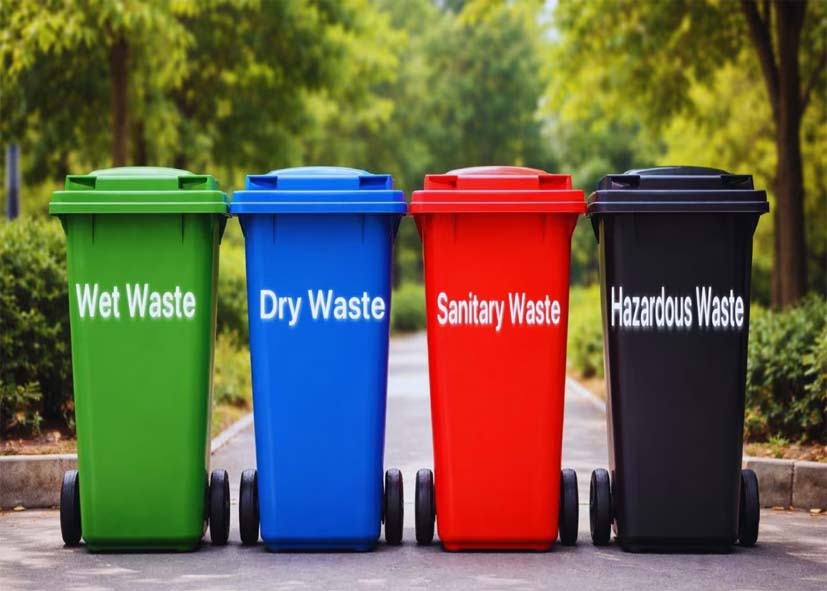
These include about a dozen institutions including DSIIDC, Directorate of Agricultural Marketing, Secretariat of Higher Education Department of National Capital Region, Delhi Metro Rail Corporation and Indian Railways. Under the new instructions, it will be mandatory for all these institutions to separate the waste generated in their premises into wet and dry. Besides, they will also have to make arrangements for disposal of waste as per the new standards of solid waste management.
Follow the LALLURAM.COM MP channel on WhatsApp

Comments are closed.