
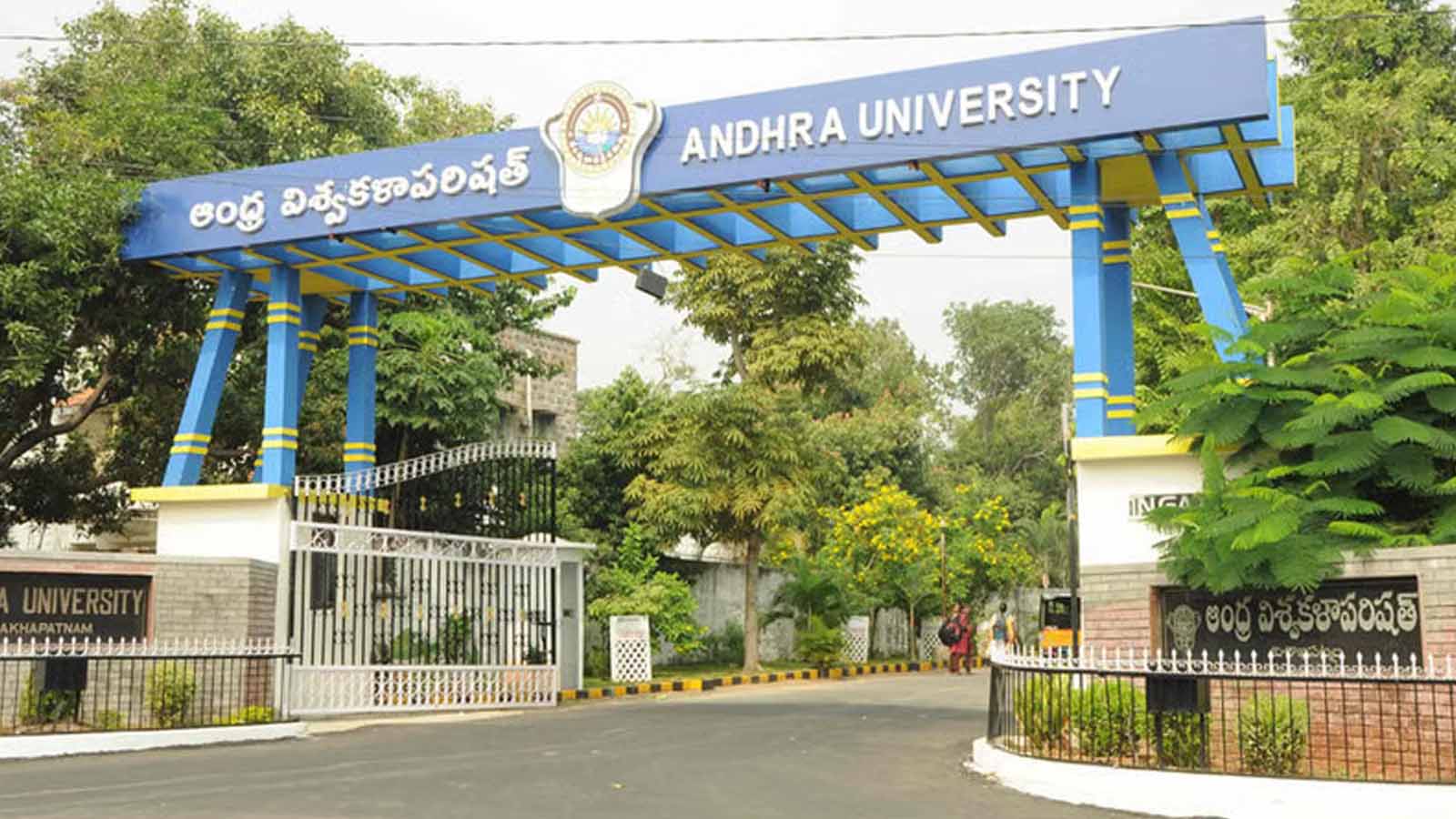

While several universities in Andhra Pradesh have celebrated or still are, their golden jubilees and centenary celebrations, the question that still lingers is whether they can truly impart quality education? What puts these institutions’ capacity under scrutiny is that they have received little backing from the state’s political power centre, irrespective of the party that occupied them over the past three decades.
Also read: In Andhra, a school bears testimony to the toil of mothers who wanted education for their kids
This week, the Andhra University in Visakhapatnam completed its centenary. While the state government celebrated the occasion with pomp and grandeur, it did not erase doubts raised over the actual measures that have been taken for the institute’s development.
Shortage of teaching faculty
One of the major challenges that the university faces is a shortage of teaching staff members. A number of educationists in Andhra Pradesh expressed the view while speaking with The Federal that unless these vacancies are filled, such institutions of higher education would only be left with a glorious past, not a future. Sources in Andhra University also seconded the thought, saying while its required faculty strength is 1,200, there are only 130 of them at work currently.
It’s not that attempts were not taken to address the issue. But the recruitment process hit a roadblock after many candidates alleged that the procedures adopted did not comply with the University Grants Commission (UGC) regulations and they moved the courts. One professor told this website on the condition of anonymity that a primary reason for the universities’ current predicament is that they don’t have institutional autonomy.
State education minister speaks
That several teaching positions have remained unmanned across Andhra’s universities has been confirmed by none other than Nara Lokesh, the state’s education minister and the son of the chief minister, N Chandrababu Naidu. Recently, while responding to Borra Gopi Murthy, an independent member of Andhra Pradesh’s Legislative Council, he cited figures to say that the state’s varsities have 3,371 teaching positions at the moment that need to be fulfilled. The minister also spoke about the legal and other issues.
“The court has found fault with the 2023 notification. We will issue a fresh notification in strict adherence to reservation norms. We are currently assessing the exact number of personnel required. The governor also participated in discussions during the recent meeting of the university vice-chancellors (VCs). We expect to gain clarity on this matter following the completion of this audit,” Lokesh said in his response.
Also read: How government school mergers hit Dalit, Adivasi, girl students hardest
“We are currently seeking legal counsel regarding the allocation of weightage to contract employees. Furthermore, we have constituted a Group of Ministers to take a decision regarding the age limit for candidates. Within just 150 days, our government has successfully filled 16,000 teacher vacancies. We will issue the notification within three months.”
Among several problems plaguing the higher educational institutions’ smooth functioning are allegations of increasing political interference and the university VCs losing grip of the administrative reins. Political considerations behind appointments are believed to have crippled the university officials’ capacity to ensure that the institutions run independently. One of the staggering aspects of appointments is that since 2006, not a single recruitment has taken place with the state’s universities.
Academic standards suffer
This has resulted in an adverse effect on the academic quality. As the universities depend on guest and contract faculties, the prime focus remains on teaching the subject and key fields such as research and publications remain virtually non-existent. No patents are secured.
Besides quality, finances are another cause of concern. According to one professor from Andhra University, who did not wish to be named, funds provided by the state government are not sufficient, and the state universities survive primarily on the revenue generated from self-financed courses.
On the hiring fiasco, the examination conducted in 2018 by the Andhra Pradesh Public Service Commission (APPSC) for the recruitment of assistant professors has been embroiled in controversies and is currently under the jurisdiction of the Supreme Court.
K Srinivasulu, general secretary of the APPSC Assistant Professor Qualified Candidates Association, stated that justice would equally be served to them if the officials of the state higher education department took a similarly appropriate decision regarding the assistant professors, mirroring the affidavit they submitted affirming the continuation of professors.
Also read: Protest in Bengaluru over ‘magnet’ school plan; activists warn 40k govt schools at risk
“Officials must clarify under what principle of justice they adopt a favourable stance toward professors—whose posts were sanctioned via a specific government order (GO)—while simultaneously adopting an adverse stance toward assistant professors, whose posts were sanctioned under that very same GO,” he told The Federal.
“It is an unprecedented occurrence in a democracy for higher education department officials within the current ruling coalition to oppose job notifications that were originally issued by the previous TDP (Telugu Desam Party) government (2014-19). I urge the government’s top leadership to dedicate adequate time to this matter, engage in discussions, and take a decision that ensures justice is delivered to assistant professor candidates alongside the professors.”
Govt only after poll promises, says professor
The Andhra University professor minced no words, saying the government’s posturing only appears to be only promising jobs for the sake of votes, rather than actually providing them. According to him, the previous YSR Congress government had issued a notification on the matter towards the end of its tenure, and the succeeding NDA government led by the TDP has not taken concrete steps even after two years since coming to power. How contract teachers could be expected to teach effectively when they don’t have either job security or adequate remuneration, he asked.
UGC mandates a 1:2:4 ratio of professors, associate professors, and assistant professors per department. Faculty shortages violating this ratio have caused universities to lose funding from the science and technology department, Rashtriya Ucchathar Siksha Abhiyan, Council of Scientific & Industrial Research, and the UGC. Though the AP State Council of Higher Education was legislatively established to liaise between the government, universities, and UGC, GO 3 transferred its powers to the Commissionerate of Higher Education — a move educationists warn undermines institutional autonomy.
Also read: How Kerala is rewriting India’s higher education playbook
As universities are allegedly failing as knowledge centres, with faculty vacancies exceeding 50 per cent across departments, a voice is growing to fuel support for privatisation. However, V Anji Reddy of Acharya Nagarjuna University in Guntur warned that private universities produce technicians, not scholars, and argued that education must remain in the public domain.
Dr K Kishore Kumar Reddy, a senior contract lecturer at Sri Venkateswara University, Tirupati, warned that politically driven attempts are underway to replace veterans with 15-20 years of experience holding NET, SET, and PhD qualifications — the very credentials that secured the university’s NAAC accreditation — leaving them with no alternative employment prospects. Dr Reddy is one among those allegedly targeted.
Funds dry up, independence curtailed
A Jagannadha Rao, a retired registrar of Nagarjuna University, alleged that since the 1990s, university funds have been restricted solely to salaries and pensions, forcing institutions to introduce self-financing courses and expand distance education for revenue.
“Since the 2005-06 academic year, the UGC discontinued the practice of providing a 25 per cent matching grant for the construction of buildings and laboratories. Furthermore, since VCs are often appointed through political patronage, they have lost the independence to assert their demands,” he said.
What is the government thinking?
Kona Sasidhar, Andhra Pradesh education department secretary, announced that a recruitment notification for 1,500 teaching posts will be issued on May 15, excluding the 1,100 posts currently under the Supreme Court’s purview. He stated that University Academic Councils have been directed to decide on the recruitment process, and the state government will comply with the apex court’s verdict.
(This article was originally published in The Federal Andhra Pradesh.)

Comments are closed.