
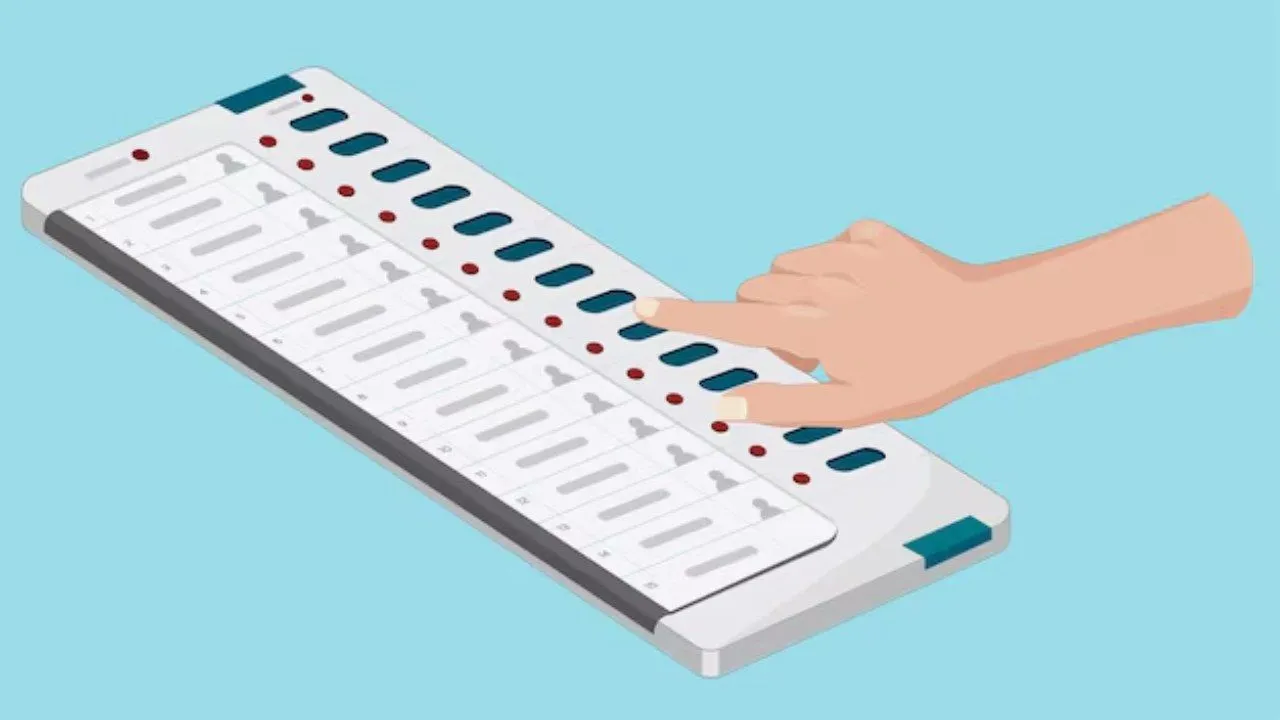
From paper to digital, EVM changed the game of elections, know how this machine works and what are its advantages and disadvantages.

What is an EVM: Election results will be revealed today in West Bengal, India, while this process has now been made faster and transparent. By the way, now the election process in the entire country has been shifted from paper to EVM. If we talk about this, till the 1990s only paper ballots were used in Indian elections. In this manner, it was also possible for half a million people to engage in criminal activities related to the elections, due to the manual voting mechanism being used. To correct this problem, emphasis was laid on changing the system and from here the era of Electronic Voting Machine i.e. EVM began.
What is EVM and why was it needed?
Electronic Voting Machine i.e. EVM is a portable electronic machine which is used to conduct elections. EVMs are also used for local elections like municipalities along with Parliament.
Along with this, if we talk about this technology, the microcontroller design of EVM makes it safe. In which a person can cast only 1 vote, which eliminates the scope for invalid or fake votes. Due to which the counting of votes is accurate and fast.
technology that came years ago
In 1989, the Election Commission of India created EVM in collaboration with Bharat Electronics Limited i.e. BEL and Electronics Corporation of India Limited i.e. ECIL. After which, for the first time in 1999, EVM was used properly in the Goa State Assembly elections.
How does EVM work? understand in simple language
The use of EVM is mainly divided into two parts which are balloting unit and control unit. Which are connected by a cable. During voting, the officer handles the control unit and the voter presses the button on the balloting unit. Along with this, this machine runs on 6V alkaline battery, which means voting can be continued even when there is no electricity.
What is the voting process?
The voting process has been kept very simple for the people, in which they do not need to take help from anyone:
- The officer activates the machine
- The voter presses the blue button in front of the candidate
- Vote is confirmed by red light and beep
- Confirmation can also be seen from the ballot slip
Benefits of EVM: Why is it a game changer?
With the advent of EVM, the election process has become fast and reliable. Which includes many benefits. Such as:
- Saving time in both voting and counting
- Very less possibility of fake voting and tampering
- A person can cast only one vote
- Possible to use anywhere due to battery operation
- NOTA button provides additional options to voters
Officials say that since the introduction of EVM, crores of printed ballot papers have been saved, the estimated number of which is said to be more than 10,000 tonnes.
What are the disadvantages of EVM?
If any technology has advantages, it also has disadvantages which raise questions on it.
- Names of candidates are in the state language only
- One machine can record maximum 3840 votes
- Only maximum 64 candidates can be fed
But experts do not consider these disadvantages as a problem for the elections, because these shortcomings do not affect the election process.
Also read: Bank account is getting emptied due to photo, new game of AEPS Face Fraud, save your hard earned money like this
Price and Life: How durable is this system?
When EVM was introduced in 1989, its price was kept at Rs 5,500, which has today been increased to more than Rs 50,000. At the same time, the shelf life after its use is said to be around 15 years, which directly means that even after investing money, there is a promise of reliable use for a long time.
thing worth noting
Since the introduction of EVM, India’s electoral system has been made modern, faster and more secure. Due to which, firstly, rigging has been curbed, on the other hand, transparency has also been strengthened. But since the advent of this technology, debates are still going on as to how safe it is here. But one thing is clear that EVM has changed the picture of elections in India by making a big change in the electoral system.

Comments are closed.