
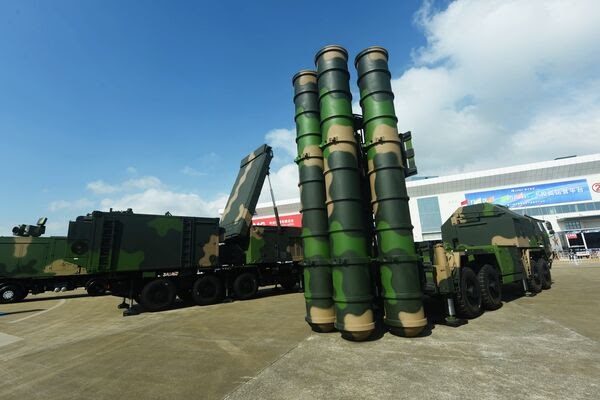

New Delhi. Amidst the changing strategic equations in Asia, China has taken a big step towards strengthening its defense preparedness. According to reports, Beijing has deployed its state-of-the-art HQ-29 air defense system in the Tibet region bordering India. It is believed that this step has been taken in view of India’s increasing missile capability, especially long-range ballistic missiles.
What is the specialty of HQ-29 system?
The HQ-29 air defense system is considered to be China’s advanced anti-missile system. Its biggest feature is that it has the ability to destroy ballistic missiles in the air itself. Apart from this, it can also target satellites present in Low-Earth Orbit (LEO). According to the report, recently the launcher and interceptor missiles of this system were seen being transported by train.
When did it appear for the first time?
China first presented this system publicly in a military parade held in Beijing in September 2025. However, experts believe that its development had started much earlier and it was inducted into the army as early as 2025.
Meaning of deployment in Tibet
The deployment of this system in Tibet region is considered very important strategically. This area is close to the India-China border, so the presence of missile defense system here provides additional security cover to China to protect against possible attacks.
Impact of India’s Agni missiles
Defense Research and Development Organization (DRDO) chief Sameer V. Kamat has recently indicated that India is ready to develop the new generation missile system Agni-6 and it is awaiting approval. It is believed that its range can be up to 12,000 kilometers and it will be capable of carrying multiple warheads simultaneously.

Comments are closed.