
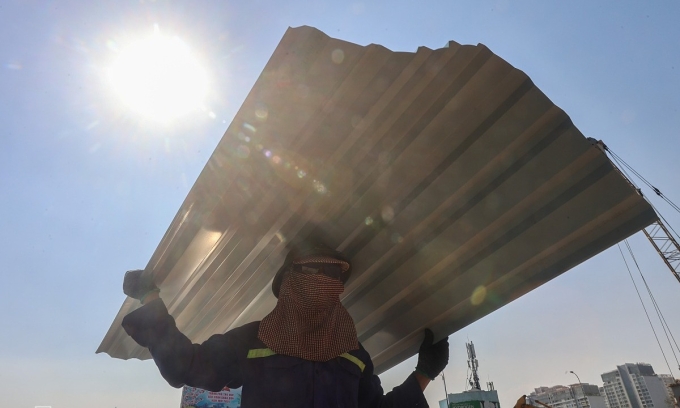

A report released last month by the ASEAN Centre for Energy (ACE), a Jakarta-based regional intergovernmental organization that supports energy cooperation among the 10 ASEAN member states, projected much higher average temperatures along with an increase in the frequency of extreme heat days in the coming years.
Major cities in the region are all exposed to extreme heat with temperatures significantly exceeding the historically normal range, typically staying above 34 C by 2030, 35 C by 2040, and 36 C by 2050. This poses acute risks to human health, productivity, and energy systems by 2050.
Bangkok ranks among the most exposed cities in terms of both heat levels and severity. By 2050, it could experience as many as 120 extreme heat days each year, defined as temperatures exceeding 35 C, nearly three times the current average of about 45 days.
Across the region, heatwaves have already intensified significantly.
The area went from an average of just two to three significant heatwave events per year at the start of the century to four to six events annually between 2010 and 2019, with each typically lasting seven to ten days. From 2020 to 2024, cities saw as many as eight to 12 heatwave events per year, with some extreme cases persisting for three to four weeks.
ACE experts warn that by 2050, escalating heat could trigger public health emergencies, strain energy and water systems, and disrupt economic activity, particularly for vulnerable populations.
They also note that temperature projections may underestimate real-world risks in cities like Bangkok, where high humidity can make conditions significantly more dangerous for human health.
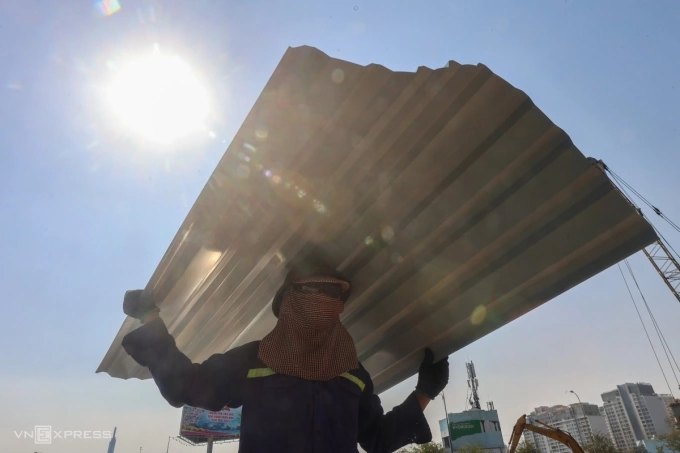 |
A worker at a construction site in Ho Chi Minh City on April 9, 2024, when the outdoor temperature exceeded 40 C. Photo by Read/Quynh Tran |
Urban planning failures
The study points out that ASEAN faces increasing heat risks driven by rapid urbanization, climate change, and rising energy demand. The urban population is projected to grow from 348 million, or 51% of the total in 2022, to 521 million, accounting for 66% of the population, by 2050.
By 2080, up to 1.1 billion urban dwellers in South and Southeast Asia could experience extreme heat lasting more than 30 days annually, whilst 1.2 billion people in the global south already lack adequate cooling.
Meanwhile, traditional monsoon patterns are becoming less predictable, with dry seasons extending longer and wet seasons becoming more intense but shorter. Rising temperatures combined with high humidity in tropical Southeast Asia are pushing wet-bulb temperatures beyond human tolerance thresholds.
Intense heat reduces outdoor worker productivity and drives electricity demand higher through increased air-conditioning use. Agricultural output is also at risk, with staple crops such as rice particularly vulnerable to heat stress during critical growth stages.
Benjamin Horton, Dean of School of Energy and Environment at the City University of Hong Kong, said: “Several urban planning failures are making many ASEAN cities particularly vulnerable to extreme heat. Cities have expanded rapidly with very high-density development, limited green space, and extensive use of dark, heat-absorbing materials.”
Horton, the former Director of the Earth Observatory of Singapore and a former Professor in Earth Science at the Asian School of the Environment in Nanyang Technological University (Singapore), added that regarding policies, it is “encouraging to see mitigation plans focused on renewable energy and electric vehicles.” However, there is still a major gap on adaptation.
“Urban form often prioritizes cars over people, reducing shade, walkability, ventilation, and access to cooler public spaces. Crucially, heat risk is still treated as a secondary issue, rather than a core design constraint, in land-use planning, housing, and infrastructure decisions,” he told Read International.
He took Bangkok out as an example, saying the Thai capital has “very few heat-specific adaptation measures: no widespread cooling centres, limited protection for vulnerable populations, and little integration of heat into emergency planning,” and as a result, people often cope by sheltering in air-conditioned malls or avoiding midday outdoor activity.
What could be done
Given the scale and urgency of ASEAN’s cooling challenge, the ACE suggested a coordinated regional response is essential.
“Aligning passive cooling strategies with the ASEAN Plan of Action for Energy Cooperation, national adaptation plans, and regional resilience frameworks will enable knowledge sharing, policy harmonization, and targeted financing across Southeast Asia’s shared tropical context,” it said.
For immediate action, the organization proposes establishing emergency cooling shelters in high-vulnerability neighborhoods and installing public shade structures in critical areas. Short-term efforts should also include cool roofing retrofits for schools and healthcare facilities, initiating city climate mapping, and enabling quick interventions in forecasted hot spots.
Medium-term goals, targeted for 2028 to 2035, focus on comprehensive urban forest expansion programs and building code reforms that mandate passive cooling features. The report also calls for the integration of green infrastructure in all new developments and incorporating wind flow analysis in urban developments at the neighborhood and district levels.
The long-term vision for 2050 urges the transformation of cities into climate-resilient, heat-adaptive urban environments. This requires integrating passive cooling principles into all urban planning processes and regional coordination on mitigating urban heat islands, which are metropolitan areas that are significantly warmer than surrounding rural areas due to human activity, infrastructure, and a lack of vegetation.
Horton shared the same ideas, suggesting that governments should “prioritize immediate, people-centred policies” by: expanding urban greenery and tree canopy; mandating heat-resilient building design and materials; creating publicly accessible cooling centers; protecting informal and outdoor workers; and integrating heat risk alongside flooding into urban adaptation planning.
“Without these measures, extreme heat will increasingly undermine public health, productivity, and liveability across ASEAN cities.”
Comments are closed.