
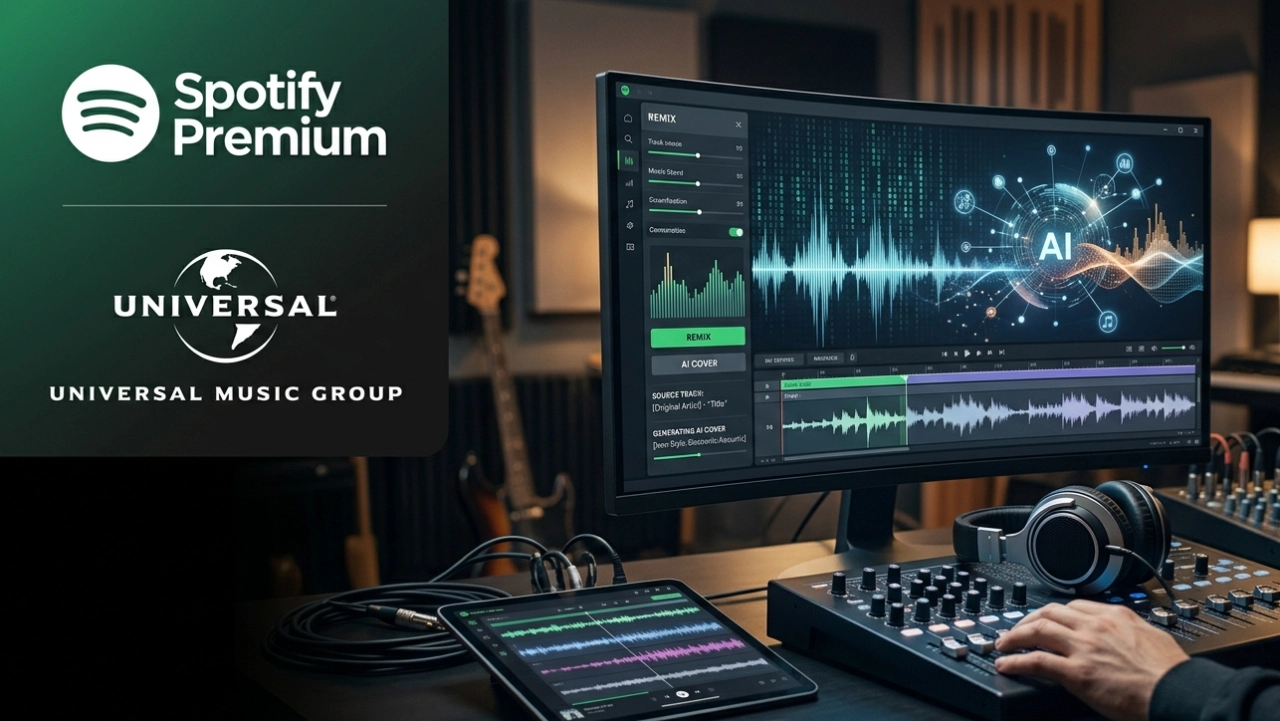

Spotify and Universal Music Group just announced a licensing arrangement so Premium members can legally create AI-generated covers and remixes, using the licensed catalogue.
Spotify and Universal Music Group have made an official announcement about a meaningful licensing agreement. The New Spotify AI Music Deal lets fans create AI-powered covers and remixes with licensed music from participating artists. Spotify says it will likely arrive as a paid add-on for Spotify Premium users, and yes, it’s being framed as one of the larger mainstream AI music collaborations so far. This deal also feels like Spotify’s first big move toward officially sanctioned, fan-made AI music creation.
Instead of viewing AI content as some external fad, happening outside the streaming world, Spotify looks ready to fold generative AI right inside its own platform, more or less. Both companies say the approach is built around “consent, credit, and compensation,” with songwriters and artists being paid when their material is used via the AI remixing tools, and it’s meant to be transparent.
What The New AI Music Feature Will Do
Per Spotify and UMG, the new feature lets Premium subscribers produce AI versions of songs through covers, remixes, and personalised re-imaginings of already existing music. While the full technical breakdown hasn’t been shared yet, reports hint that people might eventually be able to do a few things, like :
- Generate AI-powered song covers
- Remix tracks that are licensed.
- Make alternate versions, more or less like an alternate take.
- Try artist-inspired vocals and arrangements in some kind of new way.
- Personalize the music experience through generative AI.
Spotify says this will initially arrive as a paid Premium add-on, not something bundled with normal subscriptions. The companies still haven’t clarified pricing or given a precise release window.
Spotify is trying to make AI music feel “official”
This collaboration matters because it tries to fix one of the biggest hangups in AI music, which is licensing plus artist rights.
Over the past couple of years, AI-generated covers and remixes have kind of blown up everywhere online. And they often used the voices or the stylistic fingerprints of well-known artists, without permission. That situation caused major legal and ethical friction across the entire industry. Spotify and UMG appear to be working toward a setup where AI music creation is officially licensed, instead of living in legal gray areas.
Spotify co-CEO Alex Norström said:
“What we’re building is grounded in consent, credit, and compensation.”
Under the new model :
- Artists can opt in (or not)
- Rights holders get compensation
- AI-generated material becomes licensed material
- Fans get legal access to remix tools
The companies are basically framing the project as a more “responsible AI” route to generative music.
A Major Shift For The Music Industry
This agreement could turn into one of the most meaningful turning points in how AI fits into the music business. Until now, lots of the industry has approached generative AI cautiously, or even aggressively. Major labels have repeatedly criticized unauthorized AI music tools, trained on copyrighted songs and artist vocals. Still, this partnership kind of signals a shift from resistance toward monetization and, sort of, controlled adoption.
Rather than trying to halt AI-generated music altogether, companies may now attempt to assemble licensed ecosystems around it. Universal Music Group has already become one of the loudest voices pushing for “ethical AI” frameworks, involving artist consent and compensation. The Spotify agreement basically mirrors that strategy.
Why Artists May Still Have Concerns
Even if Spotify and UMG are emphasizing artist consent, the deal will likely keep triggering debate across the wider music industry. Critics of AI-generated music often say that :
- AI can reduce originality in music
- Synthetic covers could blur artistic identity
- Fans might have trouble separating human work from AI-generated content
- Generative systems could, eventually, replace creative labor
Some artists also remain wary about AI systems echoing their vocal style or musical identity, even under licensing frameworks.
At the same time, supporters reckon controlled AI systems might open fresh revenue lanes for musicians and labels, like, really new ones. The whole debate about AI-generated creativity is still doing that thing, where it moves fast and nobody’s fully settled yet.
Fans Responding To The New Spotify AI Music Deal
One of the most meaningful long-term ripples from this partnership is that fans may shift from passive listeners into kind of active music participants. Not just streaming songs, users might soon :
- Customize tracks
- Craft alternative versions
- Spin personalized remixes
- Engage with music in real time
And honestly, this could change how people experience streaming platforms at a pretty basic level. Spotify’s direction hints that the future of streaming may lean on interactive AI creativity, rather than only classic playback systems.
Conclusion
The fresh Spotify and Universal Music Group agreement is probably one of the biggest mainstream AI music partnerships announced so far. By enabling Premium users to produce licensed AI-generated covers and remixes, the companies are trying to put a lawful and commercially grounded frame around generative music creation.
The New Spotify AI Music Deal also suggests a broader shift across entertainment, where many firms are gradually stopping the straight-up resistance to AI-generated material and instead folding it into official business models. As AI music tools keep advancing, deals like this may start to reshape how artists, fans, and streaming platforms relate to music itself.

Comments are closed.