
US-Iran talks reach principled agreement on reopening of Strait of Hormuz and reduction of tensions

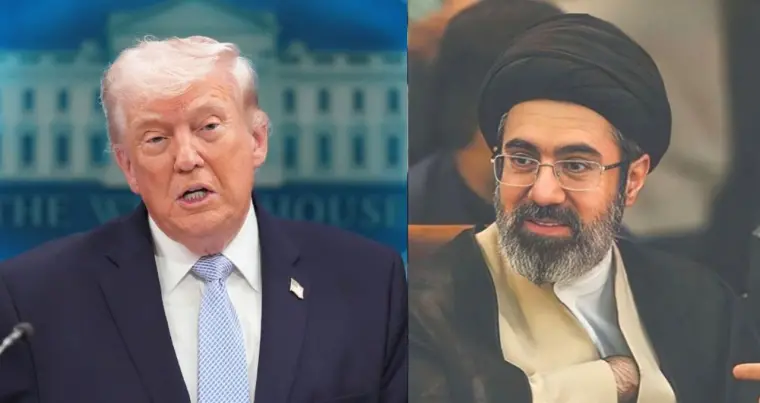
The two countries are close to an agreement in principle on reopening the strategically important Strait of Hormuz, as diplomatic talks continue toward a gradual end to long-running tensions and military confrontations between the United States and Iran, senior US officials said. However, this agreement has not yet been signed, officials clarified that it still requires official approval from US President and Iran’s Supreme Leader Ayatollah Ali Khamenei.
According to US officials, the proposed framework includes the complete reopening of the Strait of Hormuz, removing or controlling Iran’s enriched uranium reserves, taking phased military de-escalation measures to reduce tensions between the two countries, and implementing rules related to nuclear materials under international monitoring.
Information that discussions are ongoing at technical and political levels on the management and transfer of uranium reserves. Officials said that the US side wants this material to remain under US control or international monitoring.
US officials said that no official agreement has yet been reached on this proposal. Approval from the US President and Iran’s Supreme Leader is needed before the final form can be seen, adding that the process could take a few days or more as internal political discussions are ongoing in both countries.
According to the public announcement made by the US President, he said that he will not take any hasty decision and will move ahead only after a comprehensive review of all the issues.
A large portion of the world’s crude oil and gas is transported through the Strait of Hormuz, a key sea route for global fuel supply. According to the proposed agreement, Iran will agree to remove any restrictions or restrictions on this route, and there is a possibility of taking action to stabilize international shipping and fuel supplies. Efforts to reduce volatility in the international fuel market may also be a part of this, it has been mentioned.
Experts believe that if this route is opened permanently, there could be relief on world fuel prices.
The Iranian government has indicated that no major strategic decision will be implemented without the approval of the country’s top leadership. According to the latest announcement of the Iranian President, decisions related to national security will be taken under the authority of the supreme leadership, and the final decision-making power on foreign policy will rest with the centralized leadership. It was also mentioned that the talks with America are still in the initial and sensitive stage.
Additionally, Oman is reported to have sent Iran an official message to the United States, indicating that the mediation process is ongoing.
An Israeli official said that there is concern in Israel over this possible agreement. He said that if this agreement is implemented, there is a possibility of increasing regional strategic benefits for Iran. He opined that Iran may strengthen its geo-political position, may have the possibility of using the Strait of Hormuz as a pressure tool in the future, and may have a chance of affecting the regional balance of power.
Political discussions continued on this issue in America also. Democratic lawmakers raised questions about the war strategy and its consequences. A senior US lawmaker said that if the war ends, it would be a positive outcome, but the strategic mistakes made before it should not be ignored.
He said that the conflict had resulted in huge human and economic losses, that the United States had not fully achieved its stated goals, and that Iran’s military and political situation remained stronger than expected.
According to international political experts, this conflict is not only limited to the regional aspect but is also related to global energy security. Tensions in West Asia have affected the global oil market, resulting in continued volatility in fuel prices, which has had a direct impact on the economies of many countries, analysts said. Some experts believe that this conflict continued for a long time due to strategic miscalculations, resulting in a further worsening of the global energy crisis.
Although this agreement has not yet been finalized, the ongoing discussions between the two sides indicate progress in reducing tensions. It has been mentioned that there are chances that the agreement will get final approval and come into force in the coming days, the negotiations will continue for more time, changes will be made in the terms or the process may be slowed down or disrupted due to political differences.
If the agreement is successful, it could have a major impact on reducing long-running tensions in West Asia and could have wide-ranging implications for global energy and security issues, experts said.

Comments are closed.