
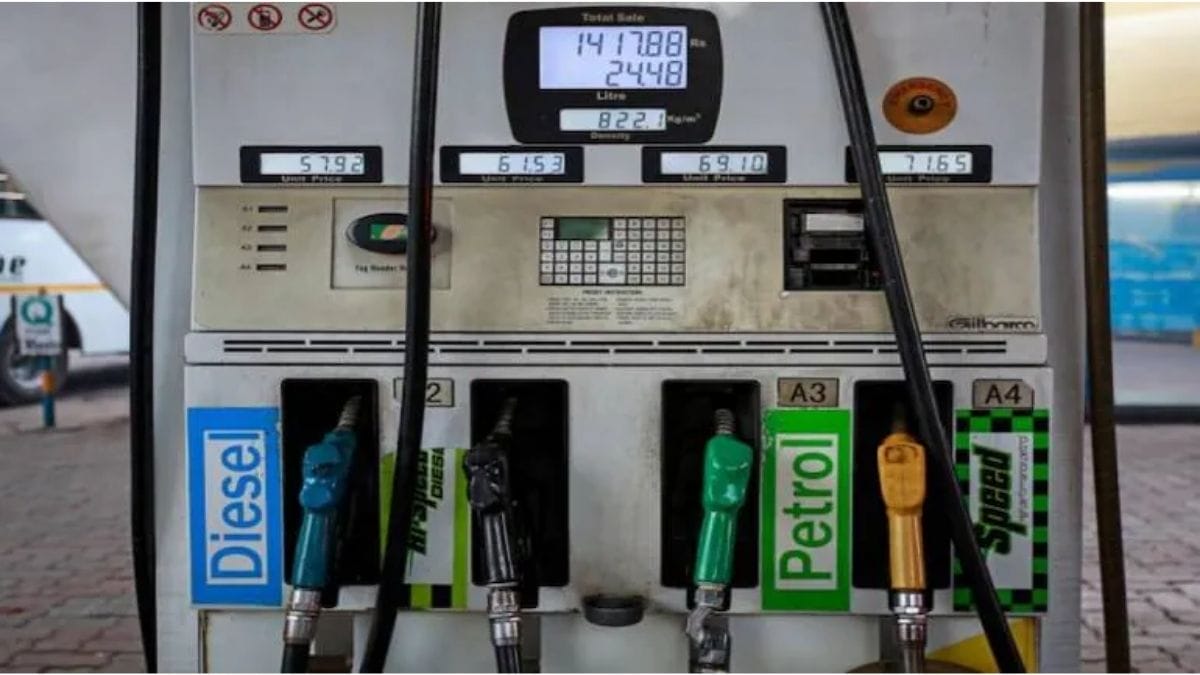
Petrol diesel price hike today May 25 2026: Delhi petrol ₹102.12, diesel ₹95.20, 4th hike in 12 days

Petrol has crossed ₹100 per litre in Delhi for the first time, after the fourth fuel price hike in 12 days pushed prices up by ₹2.61 per litre for petrol and ₹2.71 per litre for diesel on Monday, May 25. The hike comes ironically on a day when Brent crude fell over 5% to slip below $100 per barrel for the first time this month, underscoring the lag between global oil prices and domestic retail pricing in India.
Revised petrol prices across cities
| City | New Rate | Hike |
|---|---|---|
| Delhi | ₹102.12 | +₹2.61 |
| mumbai | ₹111.21 | +₹2.72 |
| Kolkata | ₹113.51 | +₹2.87 |
| Chennai | ₹107.77 | +₹2.46 |
Revised diesel prices across cities
| City | New Rate | Hike |
|---|---|---|
| Delhi | ₹95.20 | +₹2.71 |
| mumbai | ₹97.83 | +₹2.81 |
| Kolkata | ₹99.82 | +₹2.80 |
| Chennai | ₹99.55 | +₹2.57 |
Why prices are rising even as crude falls
The timing appears contradictory. Brent crude fell over 5% on Monday on hopes of a US-Iran deal, yet fuel prices in India went up. The explanation lies in the accumulated losses India’s oil marketing companies have been absorbing since the Iran war began on February 28.
Indian Oil Corporation, BPCL, and HPCL collectively were estimated to be losing more than ₹1,000 crore every day by selling petrol and diesel below cost while buying crude at post-war elevated prices. Over two months, those under-recoveries became unsustainable regardless of where crude moved on any given day. The government’s decision to hike was driven by the OMC balance sheet reality built up over weeks, not by Monday’s crude price.
Sourav Mitra, Partner at Grant Thornton Bharat, framed the situation clearly. The back-to-back hikes will offer partial relief to OMCs but not a full cushion, he said, adding that even if the Middle East situation stabilises it will take time for risks around the Strait of Hormuz to fully ease, keeping crude prices likely above $90 per barrel. Combined with a weakening rupee, OMC margins continue to face pressure and some further calibrated price revisions may still be required. The government will need to balance OMC financial health against the impact on consumers.
What this means for inflation
The diesel hike is the more consequential one for everyday households. Diesel powers India’s logistics network, freight transport, farm equipment, and last-mile delivery chains. A ₹2.71 per litre hike on diesel raises the operating cost of every truck, tractor, and delivery vehicle in the country. The price of milk, bread, vegetables, and packaged goods, which had already risen on previous hike-driven cost pass-throughs, faces another upward push.
The previous hike was announced on Saturday, May 23, with petrol rising 87 paise and diesel 91 paise. CNG prices in Delhi also rose by ₹1 per kg to ₹81.09 on Saturday. Monday’s hike is the fourth in the sequence that began in mid-May, with the cumulative increase in petrol prices now exceeding ₹7 per litre over the 12-day window.
The four-year context
Fuel prices in India had been stable since April 2022, with the government even cutting prices by ₹2 per litre ahead of the 2024 Lok Sabha elections. The current sequence of hikes is the first sustained fuel price increase in four years, and the pace, four revisions in 12 days, is unprecedented in recent memory. The combination of the Iran war supply shock, a rupee at record lows amplifying import costs, and OMC balance sheets under severe pressure has forced the government’s hand in ways that purely domestic political calculus would not have permitted.
This article is for informational purposes only and does not constitute investment advice. Please consult a qualified financial advisor before making any investment decisions.

Comments are closed.