
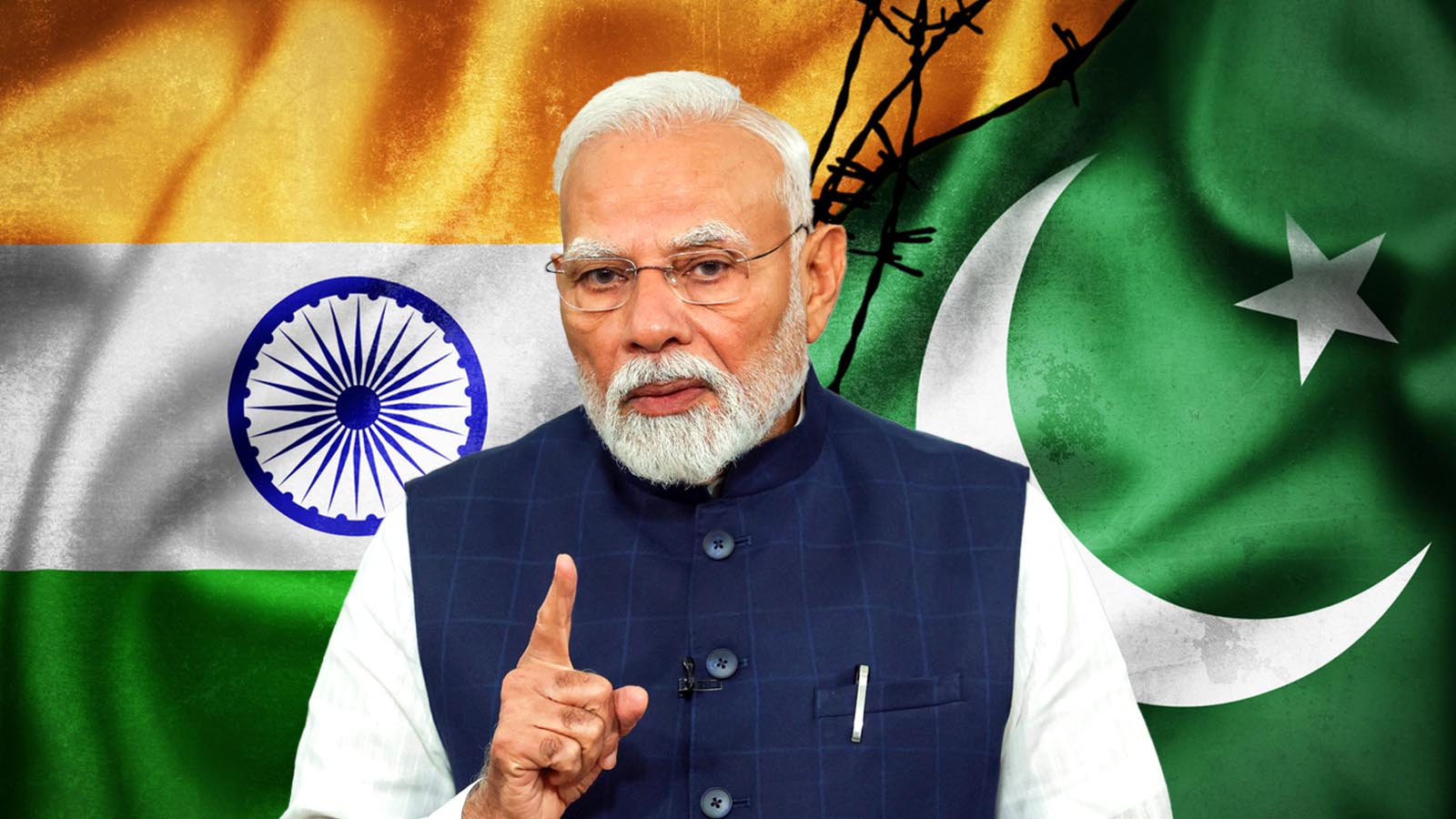

India’s Pakistan playbook has reached a dead end. The Modi government’s attempts to diplomatically isolate its arch enemy by projecting it as the global hub of terror have run their course. It is time now for New Delhi to reassess its strategy.
Today, Pakistan is riding the diplomatic high ground as a credible peace broker between the US and Iran. In fact, the Islamabad talks (April 11-12), with US Vice President JD Vance in attendance, was the first high-level engagement since the 1979 Islamic Revolution. Field Marshal Asim Munir is Donald Trump’s favourite general at the moment, and the US President showers lavish praise on him at every opportunity.
External Affairs Minister Subrahmanyam Jaishankar may mock Pakistan as a dalalbut that does not in any way detract its image in the global community. Instead, Islamabad has unexpectedly re-emerged at the centre of regional diplomacy, cultivating ties across rival power blocs and positioning itself as a useful intermediary in a deeply polarised world order.
Pakistan, a domestic political issue
The blame squarely rests with the government for making relations with Pakistan a domestic political issue. A hard, muscular approach to Pakistan is the BJP’s rallying cry, but chest-thumping and bombastic threats, while good for election rallies, are far removed from ground reality.
Catchy phrases like “water and blood cannot flow together” were frequently used when New Delhi decided to keep the Indus Water Treaty in abeyance to the sound of cheers.
Also read: Strategic balancing: How India is navigating the Iran crisis
The Modi government has fallen into a trap of its own making, and getting out of it is not easy. It has left little room to reset its approach to Pakistan.
Relations between India and Pakistan have been in a deep freeze since 2019, following terror strikes that New Delhi pins on Pakistan. While the world sympathised with India, few pointed accusing fingers at Pakistan. That especially happened after the Pahalgam attack last year. Just Israel and Afghanistan stood with India.
The bid to isolate Pakistan that began earlier has continued without having any visible effect on Islamabad’s standing in the world. “The current policy of projecting Pakistan as the epicentre of terrorism has not worked. The sooner it is realised, the better for India, and of course, for Pakistan too,” says retired ambassador KP Fabian.
Also read: What Hosabale’s dialogue pitch means for India-Pakistan ties
“The leadership in Pakistan, especially the military, might not be keen on any form of rapprochement. Nevertheless, India should do its best to prevent deterioration. The decision on the Indus Water treaty should be revised against some concession from Pakistan,” he adds.
Kargil War after Vajpayee’s Pak visit
Terror groups operating from Pakistan have, in the past, often played spoilsports to peace efforts. The late Prime Minister Atal Bihari Vajapee went to Lahore and signed the Lahore declaration with Nawaz Sharif. But Kargil happened a few months down the line.
The India-Pakistan impasse remains in place. But earlier this month, a remark by RSS General Secretary Dattatreya Hosabale that India must keep the doors for dialogue with Pakistan open, surprised all.
Prime Minister Narendra Modi attempted to repair ties in 2015, with an unscheduled stop in Lahore while returning from an official visit to Kabul. He met with then Prime Minister Nawaz Sharif, but this was followed soon afterwards by a terror strike on India’s frontline Pathankot airbase.
Also read: Lessons from Ukraine to Op Sindoor: How the new CDS must rebuild India’s war machine
Pakistan’s civilian and military leadership were not on the same page. The attack on the Uri army base in 2016, and then the suicide attack in 2019 that killed 40 CRPF personnel, led to a counterstrike by India on a Jaish-e-Mohammed training camp in Balakot.
Repeated failures
But New Delhi’s strong-arm tactics to make Pakistan pay a heavy price for every terror attack on India have had little impact. The Pahalgam attacks in April 2025 were followed by India’s revenge strikes codenamed Operation Sindoor.
Sindoor did little for India’s reputation. The government mishandled the information war, and enthusiastic TV anchors made a mockery of reporting.
Trump announced the May 10 ceasefire hours before officials in Delhi or Islamabad. He claimed that he had worked out a deal to end the conflict between the two nuclear-armed neighbours. India pushed back against American mediation, but Pakistan embraced it by thanking Trump and nominating him for the Nobel Peace Prize.
Impasse remains
As things stand today, the India-Pakistan impasse remains in place. But, earlier this month, a remark by RSS General Secretary Dattatreya Hosabale, that India must keep the doors for dialogue with Pakistan open, surprised one and all.
Also read | What Hosabale’s dialogue pitch means for India-Pakistan ties
Why this sudden about-turn from the RSS that has always taken a strident stand against Pakistan? Was the government floating the idea to gauge people’s reaction as it tries to reassess India’s policy?
Many felt there was pressure from the US to get India and Pakistan to normalise ties, as tension between the two nuclear-armed neighbours leads to instability in the region. Nothing is clear as of now.
But from all accounts, the Modi government does not yet have the political appetite for a policy reset, especially with Pakistan’s internal contradictions unchanged. The question is whether New Delhi can recalibrate its Pakistan policy without appearing politically weak at home.
(The Federal seeks to present views and opinions from all sides of the spectrum. The information, ideas, or opinions in the articles are of the author and do not necessarily reflect the views of The Federal.)

Comments are closed.