
India’s Big Strategy In The Race For Sixth Generation Fighter Jets Eyeing Partnerships With The Us And Europe

India is now taking strategic steps towards sixth generation fighter aircraft keeping in mind the future of air power. The Indian Air Force (IAF) has given clear indications that it wants to acquire cutting-edge technology through participation in an international program rather than developing a new platform entirely indigenously. Air Force Chief Air Chief Marshal AP Singh recently underlined India’s thinking in this direction and said that China’s rapid progress has made this need more important.
According to the information, China has already reached the stage of flight tests of two prototypes related to the sixth generation fighter aircraft. In such a situation, the Indian Air Force wants to strengthen its future combat capability by joining the advanced fighter aircraft programs going on globally.
India’s eye on FCAS and GCAP
At present many big programs related to sixth generation fighter aircraft are going on in the world. The US is working on the F-47 program initiated by President Donald Trump and the US Navy’s F/A-XX project.
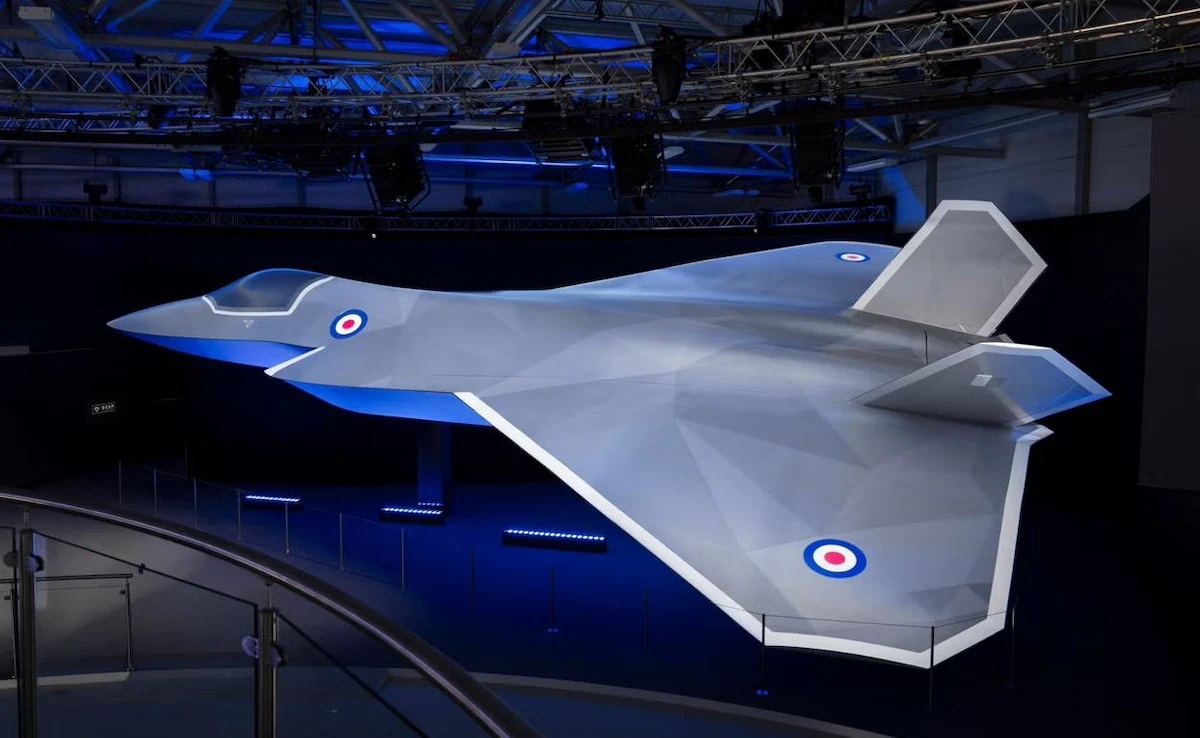
Two major projects are under discussion in Europe. The first is the Future Combat Air System (FCAS) being developed by France, Germany and Spain and the second is the Global Combat Air Program (GCAP) in partnership with Britain, Japan and Italy. India is seriously studying both these projects and is exploring the possibility of participation in either of them.
The Indian Air Force has formally conveyed to the Parliamentary Committee on Defense that it is keen to participate in these international programs. According to Airbus, the FCAS prototype could fly by 2028, while the GCAP prototype is likely to be unveiled by next year. However, both of these aircraft are unlikely to enter active service before the mid-2030s.
Challenges facing European projects
It will not be easy for India to choose options as many challenges exist even within European projects. The FCAS program has revealed differences between France and Germany over requirements and technical priorities. Airbus is also reportedly considering including Sweden as a potential partner.
On the other hand, French company Dassault has indicated that it may take the route of developing the aircraft independently if required. This will be the same strategy that gave birth to the first Rafale fighter aircraft. Such developments may impact both India’s decision and timeline.
What will be the features of the sixth generation fighter planes?
Sixth generation fighter aircraft are considered more advanced than the current fifth generation aircraft. These will include low visibility all around, digital based design and state-of-the-art software architecture. These technologies will increase the aircraft’s survivability, maintainability and battlefield effectiveness.
Technologies like stealth design, gallium-nitride based electronics and variable-cycle engines will be used in these aircraft. Their weapons may also include long-range missiles and, in the future, directed-energy based defense systems.
Artificial intelligence (AI), cyber warfare capabilities and high capacity network systems will be among the biggest features of these aircraft. This will greatly improve the speed and accuracy of decision making during war.
New synergy between man and machine
The human-machine interface will completely change in the sixth generation aircraft. These aircraft will be optionally manned, that is, they can be used with a pilot, with remote control or in completely AI based missions.
Helmet based virtual cockpit, 360 degree vision and AI supported situation awareness system will provide pilots with comprehensive battlefield information. This will improve both operational efficiency and safety.
Dual strategy with AMCA and Su-57
India’s indigenous Advanced Medium Combat Aircraft (AMCA) program is also progressing in parallel. It is also aimed to enter service around the same time as many of the world’s sixth-generation aircraft will be operational.
Apart from this, India is also in talks with Russia regarding Su-57 fighter aircraft. Experts believe that this strategy is an attempt to strike a balance between future needs and current security requirements.
Focus will be on technology transfer and strategic partnership
Technology transfer and domestic production have always been key priorities in India’s defense procurement policy. Therefore, in case of joining FCAS or GCAP, India will give special emphasis on issues like local production, integration of Indian systems and intellectual property rights.
Experts believe that India’s final decision will not be based only on its technical capabilities, but its strategic and geopolitical interests will also play an important role in it. The participation of Britain and Japan in GCAP is considered in line with India’s Indo-Pacific strategy, while FCAS can give a new direction to defense cooperation with Europe.
Also read:
India’s Rs 6,000 crore BrahMos deal with Vietnam confirmed
Severe dust storm wreaks havoc in Bikaner, darkness during the day, electricity and traffic system affected.
AAP Vadodara president Ashok Ojha arrested for making fake ‘IB call’; Party’s allegations took a reverse turn

Comments are closed.