
Canada’s Suburban Housing Map Is Changing as South Asian Families Shape the Next Growth Corridors – Obnews

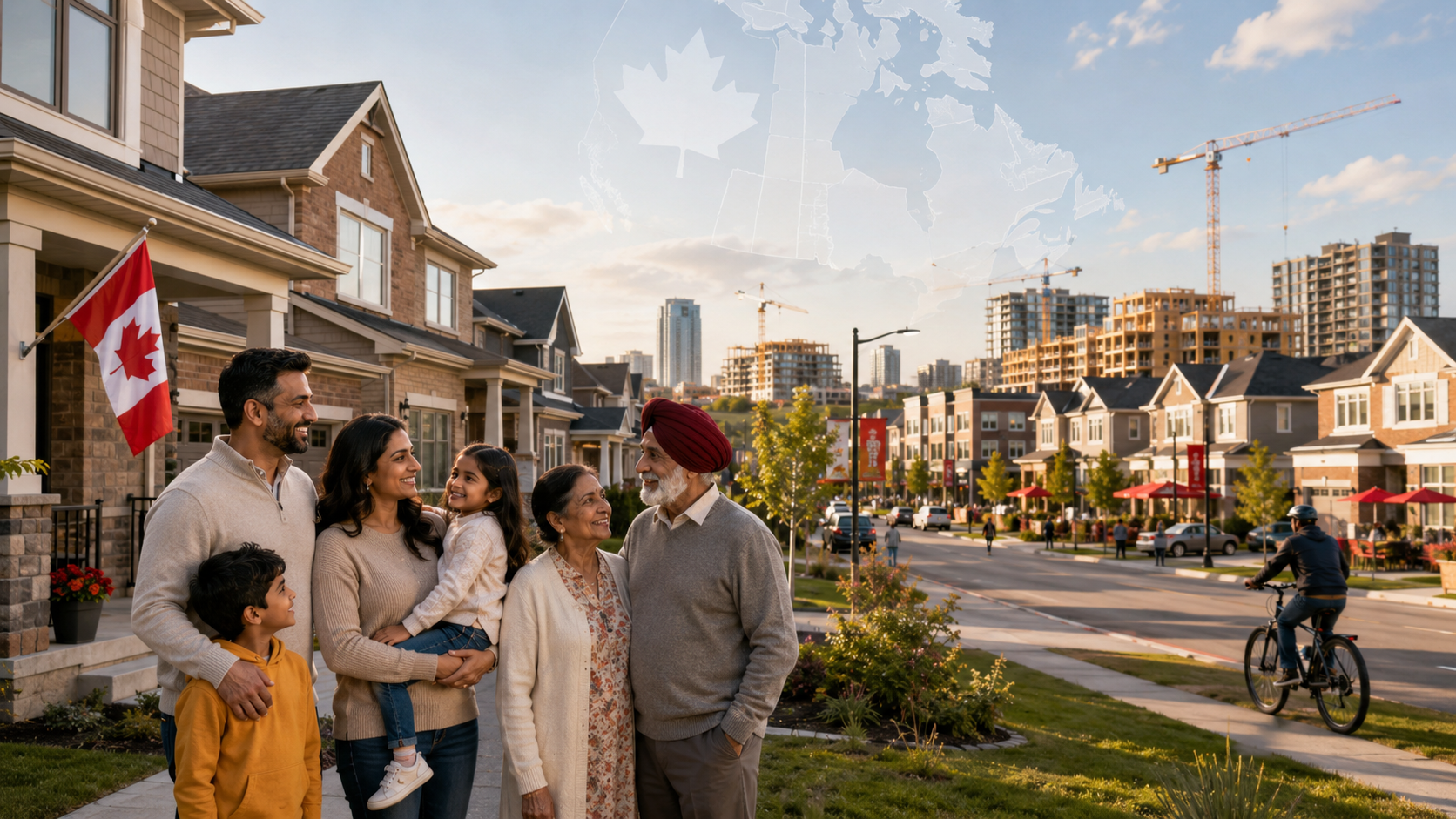
Canada’s housing future is increasingly being written outside the downtown core. As affordability pressures push families farther away from expensive city centres, suburban communities are becoming the centre of a major demographic, cultural and economic transformation. South Asian families are playing a defining role in that shift, influencing where new homes are built, how neighbourhoods are designed and which communities are emerging as the country’s next major growth hubs.
For decades, suburbs were often viewed as bedroom communities located on the edges of major cities. Today, they are becoming powerful economic centres in their own right. Communities such as Brampton, Milton, Caledon, Surrey and parts of the Greater Toronto and Vancouver regions are attracting families seeking more space, access to schools, transportation links and opportunities to build long term financial security. Similar patterns are also emerging around Calgary, Edmonton and Waterloo Region as households look beyond the most expensive housing markets.
The scale of the South Asian population is a major reason this shift matters. According to Statistics Canada, more than 2.57 million people identified as South Asian in the 2021 Census, making South Asians the largest racialized population group in the country. Statistics Canada projections suggest that the population could reach between 4.7 million and 6.5 million by 2041. This growth is not simply changing the cultural character of Canadian cities. It is reshaping the geography of housing demand.
The transformation is especially visible in communities such as Brampton, where South Asians represented more than half of the population in the 2021 Census. South Asians also accounted for approximately 38 per cent of Surrey’s population and 25 per cent of Mississauga’s population. These communities have become important centres for businesses, restaurants, professional services, places of worship, cultural events and family networks. As those networks expand, housing demand increasingly extends into neighbouring municipalities.
Affordability remains one of the strongest forces driving this movement. A detached home in the centre of Toronto or Vancouver is out of reach for many families, particularly younger buyers attempting to enter the market for the first time. Suburban and outer suburban communities can offer more space for the same investment, although prices have risen significantly in many of these areas as well. For buyers balancing mortgage costs, commuting times and family needs, the search for value is extending farther outward.

South Asian housing preferences are also encouraging a broader conversation about the types of homes Canada needs to build. Statistics Canada reported that South Asians were among the groups most likely to live in multi generational households. In many families, a home may need to accommodate grandparents, adult children and younger generations under the same roof. The traditional suburban home is therefore evolving, with greater demand for flexible layouts, additional bedrooms, larger kitchens, separate living areas and legal secondary suites.
This does not mean every South Asian buyer is looking for a large detached property. Younger professionals, students, newcomers and retirees require a wider mix of housing options, including condominiums, townhomes, rental apartments and smaller homes near transit. The most successful suburban communities will be those that offer different types of housing while maintaining access to schools, health care, parks, shopping districts and employment opportunities.
Builders and developers are increasingly paying attention to these changing expectations. In communities with large South Asian populations, housing design is becoming more closely connected to the realities of extended family life. Adaptable floor plans, finished basements, multiple gathering spaces and stronger connections between residential and commercial areas are becoming important considerations. Housing is not simply a place to sleep. It is often the centre of family life, community activity and financial planning.
The suburban shift is also creating new business opportunities. As families move into growing corridors, demand follows for grocery stores, restaurants, medical clinics, legal services, real estate professionals, financial advisers, contractors and entertainment venues. A new subdivision can quickly become the foundation for an entire local economy. In many parts of the Greater Toronto Area, South Asian entrepreneurs are not only purchasing homes. They are helping build the commercial ecosystems that make suburban communities more self sufficient.
Canada still faces serious housing challenges. According to the Canada Mortgage and Housing Corporation, housing starts increased in 2025, supported by rental construction and more missing middle housing. However, the future supply of ownership focused homes remains under pressure, particularly in Toronto and Vancouver. Rising construction costs, financing difficulties and slower condominium presales could limit the number of new homes entering the market in the years ahead.
The challenge for governments is to recognize that suburban growth cannot be treated as an afterthought. Municipalities will require better transportation networks, more schools, expanded health care services and faster approval processes for responsible development. Communities also need infrastructure that reflects the way people actually live. That includes safe streets, public transit, recreation facilities and housing designs that accommodate different generations and stages of life.
South Asian families are not the only group shaping Canada’s suburban transformation, but their growing influence is impossible to ignore. From Brampton to Surrey and from Milton to the expanding edges of Alberta’s largest cities, Canada’s housing future is becoming more diverse, more suburban and more connected to the needs of extended families. The next generation of Canadian neighbourhoods will not simply be larger versions of the past. They will reflect a changing country and the communities building their futures within it.

Comments are closed.