
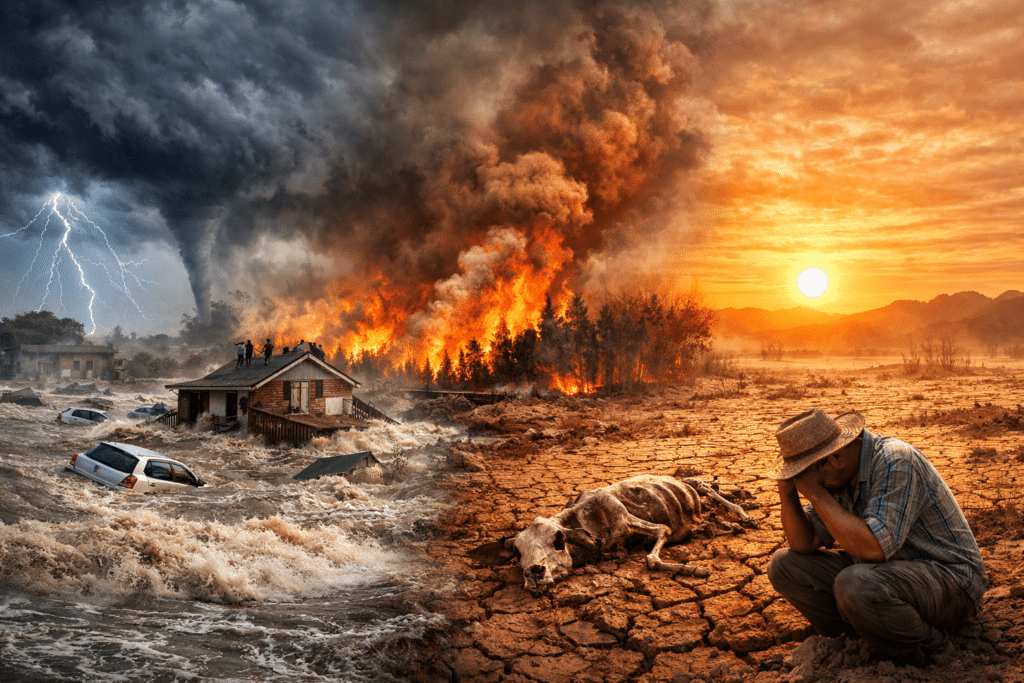

The Pacific Ocean is heating up, and the world is about to feel it. On June 11, 2026, NOAA’s Climate Prediction Center declared that El Niño conditions are now present in the equatorial Pacific, with sea surface temperatures exceeding the critical +0.5°C threshold.
Japan’s Meteorological Agency made a similar announcement days earlier. What started as a developing pattern is now official — and models suggest it will strengthen dramatically into the Northern Hemisphere winter of 2026-27.
This isn’t just any El Niño. Forecasters give a striking 63% chance that it will rank as a “very strong” event — potentially one of the most powerful since records began in 1950. While “Super El Niño” isn’t an official meteorological category, the term is being widely used for events that push the limits of historical norms.
What Is El Niño — And Why Should You Care?
El Niño is the warm phase of the El Niño-Southern Oscillation (ENSO), a natural climate pattern driven by changes in Pacific Ocean temperatures and winds. When warm water spreads eastward, it disrupts global atmospheric circulation.
Typical impacts include:
- Heavier rainfall and flooding in the Americas (especially Peru, Ecuador, and parts of the southern U.S.), eastern Africa, and the U.S. Gulf Coast.
- Droughts and wildfire risk in Indonesia, Australia, Southeast Asia, and parts of southern Africa and Central America.
- Warmer-than-average global temperaturesraising the odds that 2026 or 2027 could set new heat records.
- Shifts in hurricane activity: generally fewer in the Atlantic but more potential in the Pacific.
Stronger El Niños amplify these effects, often leading to higher food prices, disrupted agriculture, and increased extreme weather costs.
A Warming World Makes It Worse
This emerging El Niño arrives against a backdrop of long-term climate change, which has already made the oceans warmer overall. Scientists note that El Niño events are loading the dice for more intense heat, storms, and precipitation extremes.
The World Meteorological Organization (WMO) has urged governments to prepare now, emphasising that early action can save lives and livelihoods.
What to Expect in the Coming Months
- Summer/Fall 2026: Gradual strengthening with early impacts on tropical rainfall patterns.
- Winter 2026-27: Likely peak intensity, with the strongest global weather shifts.
- Spring 2027: Gradual fade-out expected.
Communities in vulnerable regions — from California farmers to Australian firefighters to East African herders — are already ramping up preparedness.
While El Niño is a natural cycle, its interaction with human-caused warming means the stakes are higher than ever. Stay informed, prepare for local impacts, and remember: this is nature’s reminder of how interconnected our planet’s climate truly is.
Comments are closed.