
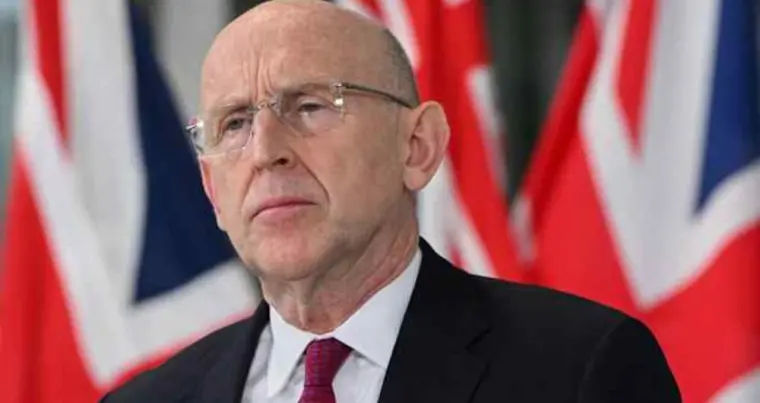

Britain’s Defense Secretary John Healey resigned, citing insufficient military budget. He accused the government of ignoring the needs of the army. This step has raised serious questions on the defense policy of the Starmer government.
London: A big development has come to light in British politics, Where Defense Secretary John Healy has resigned from Prime Minister Keir Starmer’s government. Healy said in his resignation that the proposed Defense Investment Plan is not sufficient to meet the security needs of the country.
London: His decision has not only exposed differences within the government, but has also raised questions about Britain’s defense preparedness in the changing global security environment.
Reason for resignation: Deep disagreement on military budget
John Healey made clear in his resignation letter that the current defense investment plan “falls far short” of the needs of the UK military and national security. He said that this is a very sensitive time and the country needs a strong defense structure amid increasing global threats.
Healy wrote that he did not receive the financial support he expected from the Prime Minister and the Ministry of Finance (Treasury), which led him to take this step.
He said that if defense planning is not given adequate resources, it will affect the preparedness of the army and may increase the risk in operational missions.
What was said in the letter?
In his resignation letter, John Healy wrote that the challenges of the new era in the defense sector require major investment. He said that in the review conducted within the government in January, it had become clear that the pressure on the defense sector is continuously increasing.
According to Healey, he worked closely with the Prime Minister and Chancellor on the issue, but the government was subsequently unable to provide a sufficient financial commitment.
He said many European countries are now balancing their military spending through multinational cooperation and common defense strategies, and Britain should also move in the same direction.
Ukraine war and Britain’s role in NATO
John Healey described Britain’s role in the Ukraine war as important during his tenure. He said Britain played a leading role in supporting Ukraine during the Russia-Ukraine conflict and has established itself as a strong voice in NATO.
However, he also said that this role can be effective only when the country has adequate defense resources.
“National security in danger” – Healy’s serious allegation
Healy warned in his letter that if the defense investment plan was not improved, it would not only affect the preparedness of the military but could also weaken the country’s security.
He said that in the current situation he has to take such decisions which can reduce the readiness of the army, which is not acceptable for him.
According to him, this situation could also pose a threat to the safety of the soldiers, which is a matter of grave concern amid the current global tensions.
increasing tension within the government
The resignation exposed deep divisions within the Starmer government over economic priorities and defense policy. There was a discussion going on about the defense budget for a long time, but now this controversy has come to the fore in public.
Political analysts believe that this incident is a major blow to the government, especially at a time when security challenges are increasing in Europe.
International context: growing security threats
This resignation has come at a time when tension has increased at the global level. The Russia-Ukraine war, instability in the Middle East and increasing defense pressure on NATO countries have forced European countries to increase their military budgets.
Britain is also not untouched by these challenges, and in this background the debate on defense investment plan intensified.
Impact on NATO and European cooperation
John Healy also said in his letter that Britain, like other European countries, should focus on multinational defense cooperation so that financial pressure can be reduced and security capability remains strong.
According to him, without adequate investment Britain may find it difficult to maintain its effective role in NATO.

Comments are closed.