
Disclosure Day review: Steven Spielberg’s latest alien epic is vintage, minus the dazzle

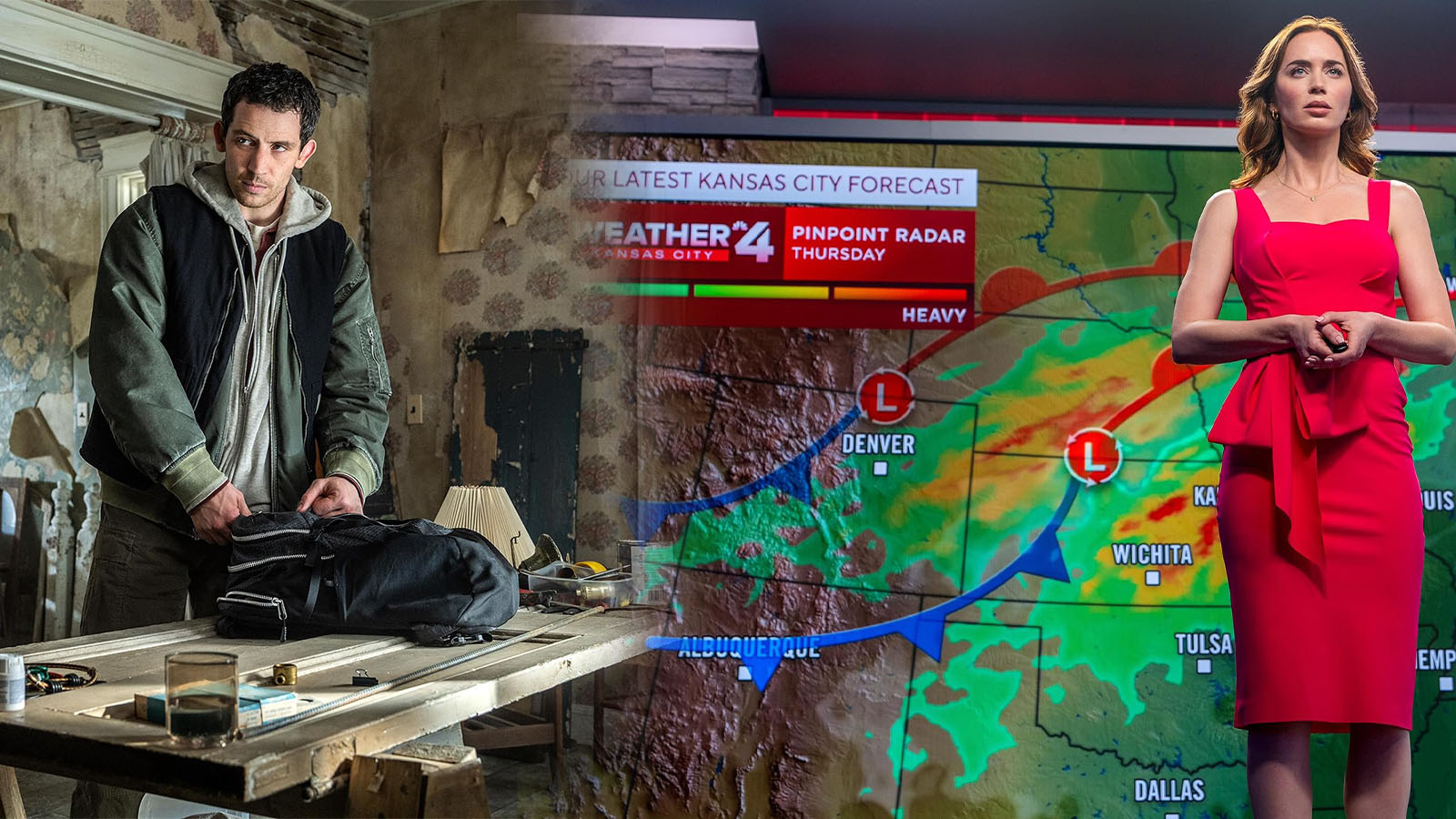
A cybersecurity expert is on the run with the most sensitive information stuffed in his backpack. A weather reporter in Kansas City sees a beautiful cardinal bird at her home and immediately taps into her mysterious, apparently dormant psychic powers. A whistleblower from the US’s highly guarded (fictional) institution, Wardex, hides somewhere in plain sight to disclose something extremely crucial about extraterrestrial life. The chief of Wardex puts together an army of both physical and psychological powers to track down all these and a few more people to stop them from doing what they have set out to do. And Steven Spielberg himself sets out on a new adventure with vintage vigour in his latest feature Disclosure Day, which, self-explanatorily, wants to relay secrets that are as pertinent as they are meant to be soothing for human life’s collective existence.
The 155-minute-long expedition fits comfortably into the filmmaker’s burgeoning catalogue of ‘mankind vs life-outside-earth films’, including E.T. the Extra-terrestrial (1982), Minority Report (2002), War of the Worlds (2005), and most importantly, Close Encounters of the Third Kind (1977). Spielberg has long been defiant in promoting the idea that while alien species’ attempts to contact humanity can easily be mistaken for trespass or even outright attack, the visitor nevertheless arrives with the desire to communicate rather than conquer. The kinship is sometimes forged through innocence (as in E.T.), but it can also pose enigmas whose solutions require absolute commitment, as Roy in Close Encounters demonstrates by boarding the alien mothership to join their travels.
Trust thy alien
With Disclosure Day, the 79-year-old filmmaker simplifies his spiritual research by telling us that a foreign being must not be distrusted, but perhaps embraced for the very aspect it is feared – its otherness. The alien here, complete with its trademark large, googly eyes, egg-shaped head and a skeletal body, is ultimately more than a recognisable extraterrestrial figure; it serves as a vehicle for Spielberg who wants to communicate something deeper about the modern world we live in and America’s own partisan politics in effect today.
Also read: Main Vaapas Aaunga: Imtiaz Ali reaches back to Partition to say what Hindi cinema might be unable to in 2026
Spielberg once again turns to the middle-class American as his protagonist. As before, he chooses to tell his story through commoners who are experiencing a gamut of emotions and instincts, but without having the outlet to explain or explore them. There is Daniel Kellner (Josh O’Connor), the cybersecurity expert baffled by his ability to convert mathematics into spoken language; weather reporter Margaret Fairchild (Emily Blunt), who has deeply suppressed a painful day from her childhood; former government employee Hugo Wakefield (Colman Domingo), who has realised the potential of empathy; renounced nun Jane (Eve Hewson), who learns that her science and faith can peacefully co-exist. These, along with many others, emerge as heroes in Disclosure Day, enduring extremities to bring the world together and share what they have learned.
Spielberg, through David Koepp’s script, awards his heroes certain powers or quirks, if you will, that have strong echoes to his previous works. Margaret and Daniel take part in an enthralling, Indiana Jones-like action sequence involving nothing but two cars and a speeding train. The extrasensory or telepathic perceptions of some of the other characters are a nod to Minority Report. Childhood and reclamation, too, surface, as in The Fabelmans (2022) and a few of his other films, to fill the emotional core of this latest feature. Disclosure Day is a conversation, no doubt, but Spielberg isn’t one to get carried away by the poignance of it all and not deliver the big-screen romp is the least that one least expects from him. In an era where cinema resists or hesitates to wear its heart on its sleeve, this film stands out by freely showing its moist eyes and its sticky-sweet sincerity.
Back to classics
Yet, as the dense story is built towards a crescendo, the very old-fashionedness of the storytelling becomes a hindrance of sorts. Disclosure Day believes the only way to communicate with a world submerged in AI-led distrust is to be direct and with evidence. It opts for a giant news studio to effectively propagate the footage of alien visitations that the US government is said to have enclosed for decades together.
Also read: Backrooms review: Kane Parsons builds the year’s most convincing horror maze
One way of looking at it: it’s a classic cinematic ending that allows for grand monologues, startling revelations and global participation like no other. Parallelly, one can’t help but also find this approach to be too kitschy and unbelievable for a viewer who has already encountered far more nuanced and convincing arguments about the subject matter; Robert Zemeckis’ (one of Spielberg most noteworthy collaborators) Contact (1997), Denis Villeneuve’s Arrival (2016) and multiple other films/series have made more compelling statements about alien-human interaction than what Steven Spielberg manages here.
Nevertheless, despite its traditional sensibility, Disclosure Day is worth a visit to the theatres. Spielberg may not dazzle you as hoped, but he still entertains sufficiently, being backed by some splendid performances (Emily Blunt delivering one of her best) by an ensemble cast that one couldn’t look away from.

Comments are closed.