
Mathematician who calls last three World Cups picks the Netherlands to win their first title

Klement never set out to become a World Cup oracle. He studied mathematics and physics at ETH Zurich, graduating with a master’s in mathematics, before moving into finance, where he now works as a strategist at the investment bank Panmure Liberum.
He built the model as an exercise to show that calling a tournament winner from economic and statistical data was close to impossible.
It was a jab at what he described to BBC Sport as the hubris of economists who think they can forecast things they have no real grasp of. Then it nailed its first attempt.
“I was horrified when Germany became world champions in Brazil,” he told The mirrorrecalling that experts had insisted no European side had ever won a World Cup staged in South America. Germany did exactly that in 2014.
He went on to call France’s title in 2018 and Argentina’s in 2022.
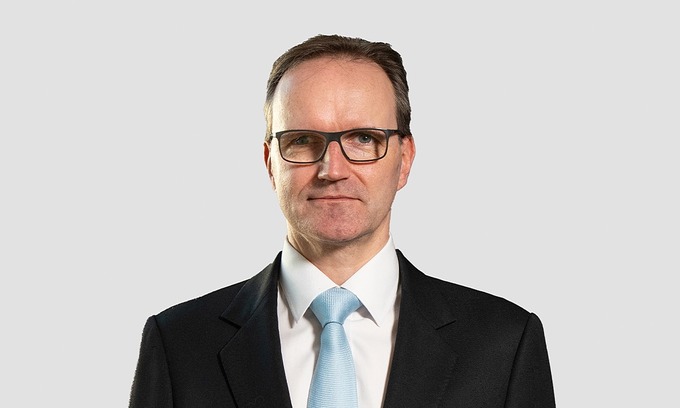
German mathematician Joachim Klement. Photo courtesy of Panmure Liberum |
The model leans on a handful of variables: a country’s GDP per capita, which Klement says shapes its sports infrastructure; population size; how central football is to the society; the national team’s FIFA ranking; and a heavy dose of pure chance.
Run for 2026, it sends the Netherlands past Spain in one semifinal and then past Portugal in the final, with Portugal reaching that final by knocking out England.
The bookmakers’ favorites are France, Spain and England, with France moving clear at the top of the market after Kylian Mbappé’s two goals in a 3-1 win over Senegal, a brace that made him France’s all-time leading scorer.
The Netherlands sit well down the oddsboard, far closer to long-shot territory than to the front-runners.
The opening round has already scrambled Klement’s bracket. Two of his four projected semifinalists stumbled out of the gate, with Spain held to a draw by Cape Verde and Portugal pegged back by DR Congo.
England, the side his model has losing in the semifinals, instead looked the part, beating Croatia 4-2. Argentina, the defending champions, opened with a Lionel Messi hat-trick.
Klement keeps insisting nobody should read anything into it. “It’s completely irrational,” he said, likening the whole thing to a lottery and warning that anyone who bets on his pick is “beyond help.”
He compared the model to tossing a coin: it can land heads four times running, he noted, but that guarantees nothing about the next toss.
The Netherlands have reached three World Cup finals, in 1974, 1978 and 2010, and lost all three, the longest wait for a first title among the traditional powers.
Their 2026 campaign opened on June 14 with a 2-2 draw against Japan in Dallas, the Dutch twice taking the lead before Daichi Kamada’s late equalizer rescued a point for Japan. They face Sweden and Tunisia next in Group F.
Whether Klement’s streak survives a fourth tournament, the answer comes on July 19, when the final is played at MetLife Stadium near New York.
Comments are closed.