


Ramesh Jain, senior journalist
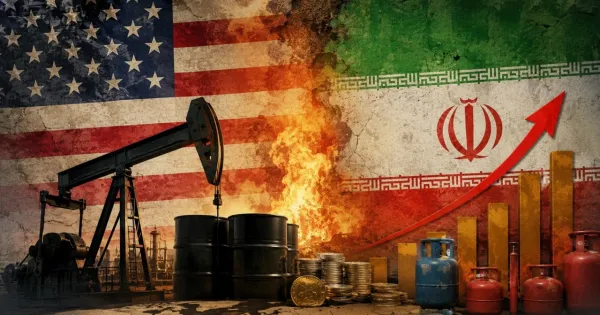
The US-Iran war that lasted for 110 days has finally ended with an agreement. US President Donald Trump is calling it a major diplomatic victory, while critics say that none of the objectives for which America had entered the war was fully achieved. On the other hand, Iran appears to be successful in saving its power, nuclear infrastructure and regional influence, but the most important question of this entire incident is what will be its impact on India?
India was not a direct party to this conflict, yet like any major energy crisis in the world, import-dependent countries like India had to pay the biggest price. Oil became expensive, rupee came under pressure, inflation increased, fertilizer production was affected and the pace of economic growth slowed down. Now that the ceasefire has happened and the reopening of the Strait of Hormuz has been announced, the question is whether the crisis is over for India or the real challenge is yet to come.
Its importance is even greater for India, because most of its crude oil comes from Gulf countries. The problem is that mines laid in the sea during the war, security risks, insurance premiums and potential political instability still remain. Experts estimate that it may take several months to completely restore normal traffic in Hormuz. This means it is too early to expect an immediate and permanent fall in crude oil prices.
India is the third largest oil importer in the world. It buys about 85 percent of its crude oil needs from abroad. This is the reason why every fluctuation in oil prices in the international market directly affects the Indian economy. Before the war started, Brent crude was around $72 per barrel. At the height of the conflict it reached $120 per barrel.
Due to this, India’s import bill suddenly increased. The government did not increase the prices of petrol and diesel in the initial months. The burden of this fell on the oil marketing companies. Later the prices had to be increased, but even then the companies had to suffer losses. Now even if oil comes back to around $70, there is little possibility of petrol and diesel becoming cheaper immediately. The government and oil companies would first want to compensate for the wartime losses. This means that the road to relief for the common consumer is still long.
Oil is not limited to just petrol and diesel. Its impact extends to transportation, electricity, industry, agriculture and consumer goods. During the war, wholesale inflation in India reached a 43-month high. As transportation costs increased, prices of goods also increased. Almost every sector was affected, from food items to construction materials. If any new tension arises in Hormuz and oil prices go up again, then inflationary pressure in India may increase again.
This means that the Reserve Bank of India will have to be more cautious regarding interest rates. This may also affect investment and economic activities. The biggest impact of increasing energy imports is on foreign exchange reserves and the rupee. During the war, India’s import bill increased and so did the demand for dollars. As a result the rupee weakened. The weak rupee makes not only oil, but also electronics, machinery, chemicals and other imported goods expensive. If instability increases again in the Gulf region, the rupee may once again come under pressure. Therefore, despite the ceasefire, the Indian financial markets are not completely relaxed.
The least talked about, but most serious impact of this war has been on Indian agriculture. India is largely dependent on Gulf countries for urea and LNG. Their supply was affected due to the war. As a result, a big decline was recorded in fertilizer production. If this situation continues for a long time, both farming costs and food inflation could increase. Although the supply is expected to be restored for the time being, this crisis has once again reminded India that food security and energy security are linked to each other.
This war has given three big lessons to India. First, energy dependence is a question of national security. As long as India remains largely dependent on foreign countries for its energy needs, any regional conflict will continue to impact its economy. Second, strategic storage and energy diversification must be further accelerated. The policy of increasing oil imports from Russia, America, Africa and Latin America will have to be further strengthened. Third, renewable energy is no longer just an environmental agenda, but an economic and strategic necessity. Investments in solar, wind, green hydrogen and electric mobility can save India from such future crises.
The answer to this question is unfortunately ‘yes’. Many important issues are still unresolved in the US-Iran agreement. There has been no final consensus on Iran’s nuclear program. Israel is not part of this agreement. There is also potential for dispute over the future operation of the Strait of Hormuz and a possible toll system. If agreement is not reached on these issues in the next 60 days, tensions may increase again. This is why global energy markets are still not completely convinced. Insurance companies, shipping companies and investors are currently in a waiting mode. (These are the personal views of the author)

Comments are closed.