
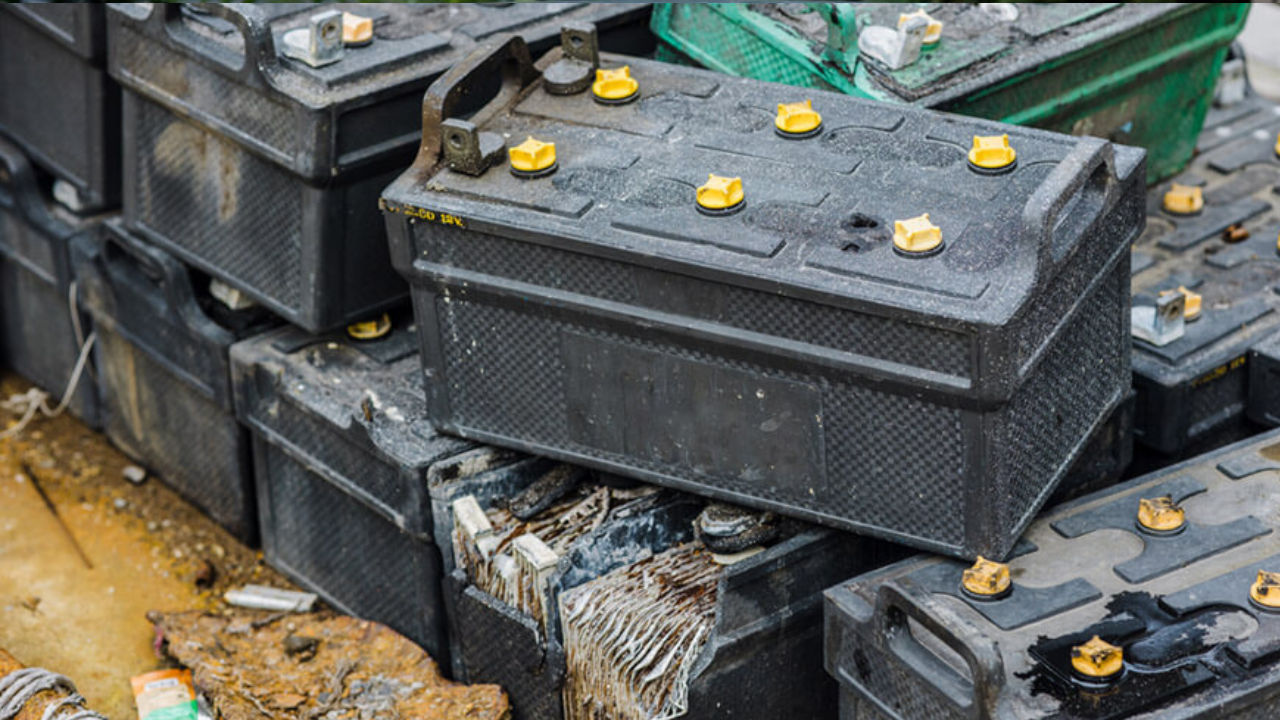
What happens to electric cars when their batteries end? How will environmentally friendly disposal be done? find out

The demand for electric vehicles in India and worldwide is increasing rapidly. At such a time, a big question is arising in the minds of many people, ‘When the life of the ‘lithium-ion’ battery in these cars is about to end, what will happen to it? Is it going to be a waste for the environment?’ The answer is going to be ‘no’! At the end of its life, the EV battery will not be thrown away, but will be processed very systematically. Let us understand how this eco-friendly disposal is going to be done,
1. ‘Second Life‘ will be used
When the battery of an electric car reaches 70% to 80% capacity, it is not considered sufficient to drive the car. But, she will not be completely dead.
Solar and wind energy storage will: These batteries will be removed from cars and used to store electricity in large solar power plants or wind power stations.
Home and business backups available: These batteries are going to be recycled for the next 10 to 15 years as inverters in malls, societies or homes.
Will EV speed up in India? Big decision by JSW Motors, partnership with French company
2. Recycling will be carried out in a scientific manner
When the battery is about to completely exhaust its energy storage capacity, it is to be sent to authorized recycling centers. There it will be disposed of in the following three phases:
Phase 1: Safe discharge and spare parts will be done
First, all electricity remaining in the battery is to be safely removed, so that there is no risk of fire during the process. After that the outer cover of the battery will be separated.
Stage 2: Crushing and ‘Black mass‘ Creation
The internal cells of the battery are to be crushed into fine pieces by a machine in a safe environment. This process will produce a black powder called ‘black mass’.
Phase 3: Chemical processing and metallurgy
This ‘black mass’ will be chemically processed. This will recover the precious metals lithium, cobalt, nickel and manganese from the battery with a purity of more than 95%.
EV Battery Recycling: Old EV batteries to become ‘revenue generator’; Central Government’s ₹1,500 crore master plan announced
3. A new battery will be manufactured
The pure lithium, nickel and cobalt obtained from the recycling process will be supplied to companies to make batteries for new electric cars. This will eliminate the need for mining to extract new ore and will protect the environment.
According to the law, EV manufacturing companies will have the legal responsibility to collect old batteries as per the Government of India’s ‘Battery Waste Management Rules’. Therefore, the risk of pollution due to EV batteries will be completely avoided in the future.

Comments are closed.