
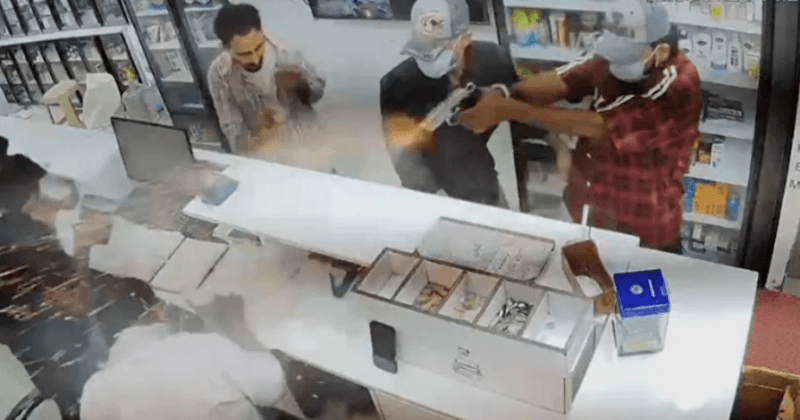
Six Jammu youth held in Chandigarh murder; Security agencies alarmed over ‘Supari Killer’ trend

Even as teams of the Punjab Police and the Jammu and Kashmir Police have arrested six sharpshooters involved in the sensational daylight murder of a medical store cashier in Chandigarh, the incident has exposed a disturbing new dimension of organised crime.
The involvement of alleged “Supari killers” (contract killers) from the Jammu region has sent shockwaves through security and law-enforcement agencies. The emergence of this new breed of criminals could pose a serious challenge to security agencies in northern India.
Police sources said the involvement of Jammu’s youth in contract killings is a matter of grave concern, as such criminals could be exploited by anti-national elements and lured into terror-related activities.
“In the early 1990s, some dreaded gangsters from the Jammu region were lured into terrorist activities by anti-national elements,” a retired police officer told The International Business Times. He described the involvement of local youth in contract killings as a highly dangerous trend.

Investigators have uncovered what they describe as an emerging pattern of “Supari killers” being recruited from rural areas of Jammu to execute murders outside the Union Territory, a development that has raised serious concerns among security agencies.
The revelation came after a joint operation by the Jammu and Kashmir Police and Chandigarh Police led to the arrest of six members of an interstate criminal network allegedly involved in the brazen killing of a cashier at a medical store in Chandigarh.
Officials said all six accused arrested in connection with the murder are natives of rural areas of Jammu province, marking what investigators believe is one of the first major cases in which local youths from the region have allegedly been recruited as contract killers by organised criminal syndicates operating outside Jammu and Kashmir.

Security agencies view the development as particularly alarming because, although Jammu has witnessed incidents of gang rivalry, criminal activity, and organised crime in the past, the phenomenon of locally recruited contract killers carrying out targeted assassinations for money has rarely surfaced in the region.
Six youth from different parts of Jammu region were arrested in connection with the June 13, 2026, daylight murder of Janki Das, a cashier at Shri Kumar Medical Hall in Sector 11, Chandigarh.
Following a coordinated investigation, police teams tracked down and arrested six accused from the Jammu and Samba districts.
According to investigators, the two alleged shooters have been identified as Sunny Mehra, a resident of Samba district, and Aryan Sharma, a resident of Jammu district.
Police said the duo was allegedly hired to execute the murder as part of a contract killing operation linked to extortion activities allegedly orchestrated by an interstate criminal gang.
Besides the two alleged shooters, four other accused — Amit Kumar, Ajay Kumar, Manik Sanhotra, and Vivek Mehra — were arrested for their alleged roles in the conspiracy.
Investigators said these individuals are suspected of providing logistical support, arranging hideouts, facilitating movement, and helping the shooters evade arrest after the crime.
Officials believe the murder was not an isolated act but part of a larger criminal conspiracy involving organised gang members operating across state borders.
Initial reports suggested that the notorious Goldy Dhillon gang had claimed responsibility for the murder. Preliminary investigations indicate that the killing may have been linked to an extortion racket allegedly being run by this infamous gang.
Police also recovered a cache of weapons, ammunition, and cash allegedly linked to the accused.
Investigators are examining whether the seized weapons were intended for future criminal operations or were connected to previous crimes.
The case has triggered concern within security circles as investigators attempt to understand how criminal gangs operating outside Jammu and Kashmir are allegedly recruiting local youths from rural areas for contract killings.

Comments are closed.