
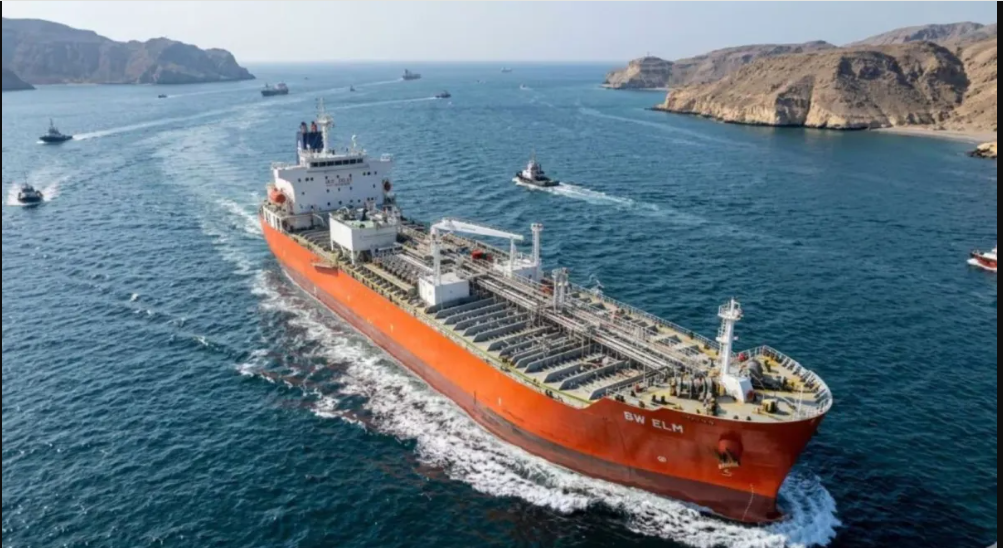

NEW DELHI, June 23: In a good news for India, 11 merchant vessels carrying crude oil, gas and fertilisers to India have transited the Strait of Hormuz and two other ships have sailed from the country towards the Persian Gulf since Iran and the United States reached an agreement on de-escalation last week, the external affairs ministry said on Tuesday.
The movement of the merchant vessels in both directions points to the easing of restrictions on freedom of navigation at the Strait of Hormuz, and New Delhi is hoping that 10 Indian-flagged vessels that were caught to the west of the crucial waterway due to the outbreak of hostilities in February will now be able to move towards the country, external affairs ministry spokesperson Randhir Jaiswal told a regular media briefing.
Iran and the US signed a 14-point memorandum of understanding (MoU) on June 17 that outlines steps to de-escalate in West Asia and lays the groundwork for further negotiations. Since the start of the Iran–US conflict on February 28, India has pushed for freedom of navigation and unimpeded flow of energy and commerce through the Strait of Hormuz, which was largely closed by Iranian authorities.
Jaiswal responded to a question on the current status of the vital waterway by saying: “As of today, we have 10 Indian-flagged vessels which are still in the Persian Gulf region. These are those which were stuck when the conflict began. But in addition to those 10, we have two Indian ships which have crossed from this side into the Persian Gulf, which means that traffic is going back and forth.”
Since the signing of the MoU by Iran and the US on June 17, 11 India-bound vessels transited the Strait of Hormuz, Jaiswal said. These vessels include three India-flagged oil tankers, each carrying 285,000 tonnes of crude, a foreign-flagged crude oil tanker, a foreign-flagged LPG carrier, and six foreign-flagged bulk carriers carrying fertilisers.
“And it is our expectation and hope that the remaining Indian-flagged vessels…would also be able to cross the (Strait of) Hormuz soon,” Jaiswal said. When Jaiswal was asked about the possibility of India resuming purchases of Iranian oil amid the easing of US sanctions, he said New Delhi was closely following all developments in West Asia.
“As far as our energy sourcing is concerned, you are well aware of our policy — that it is based on national interest. The interests of 1.4 billion people, for them to be provided energy at affordable rates and from diverse sources, is our policy,” he said without going into details.
Iran was a key energy source for India before US President Donald Trump imposed sanctions on Tehran in 2019. With the world’s third-largest proven oil reserves, Iran used to be the second-largest supplier of oil to India till around 2010. In FY 2009-2010, India procured 22.1 million tonnes of Iranian crude, making up 14% of the country’s total imports.
After the US announced a 30-day waiver on its sanctions in March, India imported some oil from the country in April. Sources said India was closely following the ongoing negotiations between Iran and the US and the arrangements to be finalized by the two sides in order to explore the possibility of oil imports from Iran.
Iranian leaders have repeatedly said that Tehran stands ready to resume oil supplies to India. They have also pointed out that when India was hit with Western sanctions following its nuclear tests in 1998, Iran was among the few countries that did not stop oil supplies to India.
India imports almost 90% of its oil requirements, and it procured oil worth $123 billion in FY26. Russia currently accounts for the highest share of India’s crude imports, with about 50% in June, while traditional top suppliers such as Saudi Arabia, Iraq and the United Arab Emirates (UAE) now have a lower share. The US has emerged as a key supplier in recent months as India diversified its energy imports.
(Rohit Kumar)

Comments are closed.