

For many Indian households, gold-backed borrowing is a familiar concept. Jewellery has often been used to raise short-term funds for medical needs, business requirements, farm expenses, family commitments or temporary liquidity gaps.
Silver, however, has usually received less attention in mainstream borrower conversations. That may now begin to change.
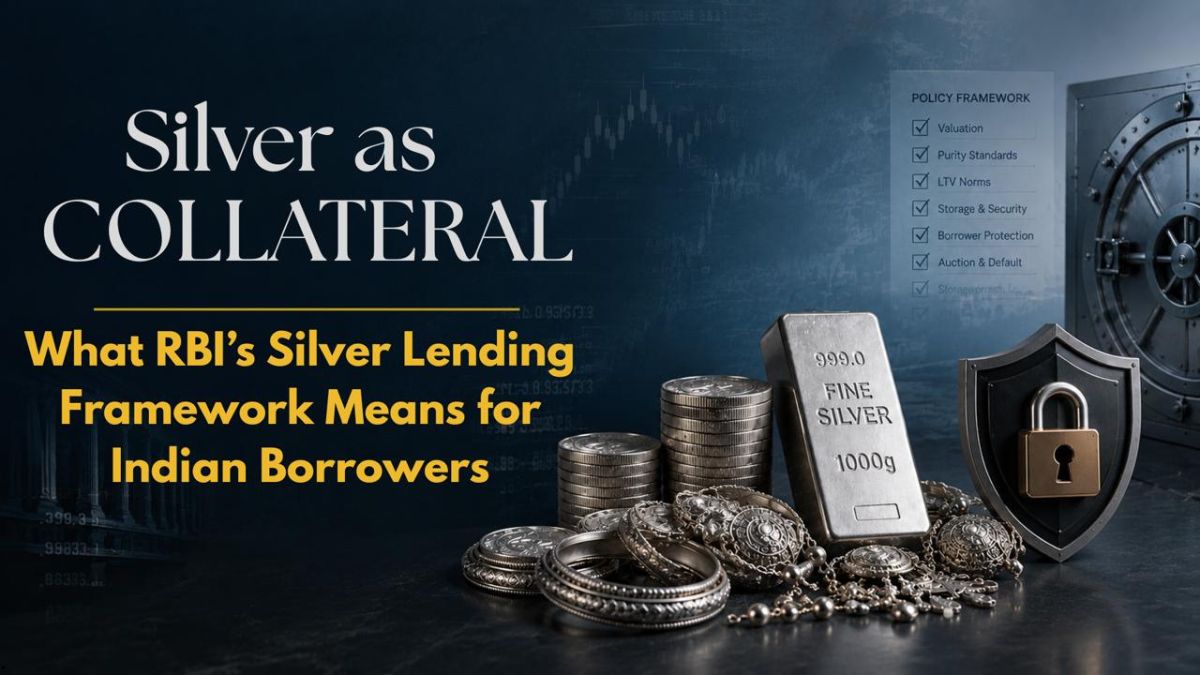
The Reserve Bank of India’s 2025 framework on lending against gold and silver collateral has brought both metals into a more harmonised regulatory structure. With regulated lenders expected to comply with the directions no later than April 1, 2026, borrowers will need to understand not only the opportunity but also the conditions attached to pledging precious metals.
The key point is simple: silver can be a useful collateral asset, but it should not be treated casually.
A loan against silver is not the same as selling silver. The borrower continues to own the pledged item, but the lender holds it as security until repayment. If the borrower fails to repay according to the loan terms, the pledged collateral may eventually be auctioned under the lender’s process. That makes awareness important before any household decides to pledge silver.
The RBI framework is significant because it brings greater clarity to what lenders should consider while accepting gold or silver collateral. It covers areas such as eligible collateral, valuation, loan-to-value limits, assaying, documentation, storage, auction procedure and borrower communication.
For borrowers, the first thing to understand is eligibility. Not every form of silver will automatically qualify. The framework refers to eligible collateral such as jewellery, ornaments or coins made of gold or silver. Loans against primary gold or silver, or financial assets backed by primary gold or silver, are restricted. This means borrowers should not assume that any silver article, bullion holding or market-linked silver product can be pledged in the same way.
The second important factor is ownership. Lenders are expected to avoid loans where ownership of the collateral is doubtful. Borrowers may be asked to provide a suitable declaration or document confirming that they are the rightful owner of the pledged item. For households, this makes record-keeping important, especially when silver has been accumulated over many years or received as gifts.
The third factor is valuation. Silver pledged as collateral is not valued emotionally, culturally or at the purchase price paid years ago. It is valued based on purity, weight and reference price. Only the intrinsic value of the silver content is considered. Any non-metal component, decorative element, stone, fastening or other addition may not be counted in the same way.
This is where many borrowers may misunderstand the process. A family may consider a silver article valuable because of its design, age or sentimental importance. A lender will look at it mainly through the metal value and applicable valuation rules. That difference can affect the loan amount offered.
Loan-to-value, or LTV, is another key concept. The LTV ratio decides how much loan can be given against the assessed value of the pledged collateral. Under the framework, the maximum LTV for consumption loans depends on the loan amount. Smaller loans may have a higher permitted LTV, while larger loans have lower caps. This means borrowers should not expect to receive the full market value of the silver as a loan.
For example, if the silver pledged is valued at a certain amount, the actual loan sanctioned may be lower depending on LTV rules, lender policy, loan purpose, documentation, purity and borrower profile. The valuation may also need to remain within the required LTV level during the loan tenure.
This matters more for silver than many buyers realise. Silver prices can move sharply because the metal has both investment and industrial characteristics. It is used for household items and investment products, but also has demand from sectors such as electronics, solar energy and manufacturing. Since silver can be more volatile than gold, borrowers should understand that price movement can affect the lender’s comfort with collateral value.
The storage aspect is also different. Silver usually occupies more physical space than gold for the same rupee value. A borrower pledging a meaningful value of silver may need to pledge a larger physical quantity. This increases the importance of proper assaying, documentation, handling and secure storage by the lender.
The RBI framework also places emphasis on standardised assaying and valuation procedures. Borrowers should pay attention to how purity and weight are checked. They should ask how gross weight and net silver content are determined, whether any deductions are being made, and whether the details are recorded properly.
Documentation is not a small detail in collateral lending. Borrowers should understand the loan agreement, charges, interest rate, repayment schedule, auction procedure, notice period, release process and what happens in case of default. Any charges related to assaying, auction or other processes should be understood before signing.
Auction rules are another area borrowers should not ignore. If repayment fails and the loan moves toward auction, the borrower should know how the pledged silver may be valued, how notice will be given, and how any surplus after recovery is handled. A collateral loan can provide liquidity, but it also carries the risk of losing the pledged metal if repayment discipline is not maintained.
For small borrowers, the new framework may improve clarity. It can help bring more standardisation across regulated lenders and may make silver-backed borrowing easier to understand. But clarity should not be confused with risk-free borrowing. A household should pledge silver only when it has a clear repayment plan.
There are a few practical questions borrowers should ask before taking a loan against silver.
- What exact silver item is being pledged?
- Is the ownership clear?
- How will purity be tested?
- What weight will be considered for valuation?
- What reference rate is being used?
- What is the applicable LTV?
- What are the charges?
- How will the pledged item be stored?
- What happens if repayment is delayed?
- How and when will the silver be returned after full repayment?
These questions are especially important because silver is often held in households across multiple forms: coins, ornaments, decorative items and gifts received over time. Without proper documentation and understanding, borrowers may not know how the lender will value each item.
Jainam Gandhi, Founder of Vittarqa gold and silver platform, said the growing conversation around silver collateral should be seen as a borrower-awareness issue, not merely a loan-access issue.
“Silver can play an important role for households, but borrowers should understand how collateral value is assessed before pledging it. The value considered by a lender may depend on purity, weight, documentation, LTV rules and repayment terms. A silver-backed loan should be taken with the same seriousness as any other secured borrowing,” Gandhi said.
He added that the broader precious metals market is becoming more structured, making awareness around pricing, purity, storage and liquidity important for both buyers and borrowers.
“Gold and silver are not only purchase decisions. They can also become collateral, savings assets or liquidity tools in different situations. The more structured the market becomes, the more important it is for households to understand the terms behind every transaction,” Gandhi said.
For more updates from Vittarq and its gold and silver insightsbuyers can visit vittarq.com.
The larger takeaway is clear. Silver’s role in Indian households may expand beyond gifting and storage as the lending framework becomes more standardised. But borrowers should not look at silver collateral only as easy liquidity.
They should understand eligibility, valuation, LTV, charges, storage, auction risk and repayment discipline before pledging precious metal.
In a more formal precious metals ecosystem, the smartest borrower is not the one who only asks how much loan can be received. It is the one who also asks what is being pledged, how it is valued, and what must be done to get it back safely.

Comments are closed.