
After CPEC, China now eyes the Bay of Bengal, new strategic challenges may increase for India

New Delhi: China is now taking a new step towards strengthening its strategic presence in South Asia. After gaining access to the Arabian Sea through Pakistan through the China-Pakistan Economic Corridor (CPEC), it is now eyeing direct access to the Bay of Bengal. According to media reports, Beijing is working on the possibilities of a new economic corridor with Bangladesh and Myanmar. If this project goes ahead, it could provide China with an extensive network of road, rail and sea connectivity near India’s eastern border, which is considered strategically important.
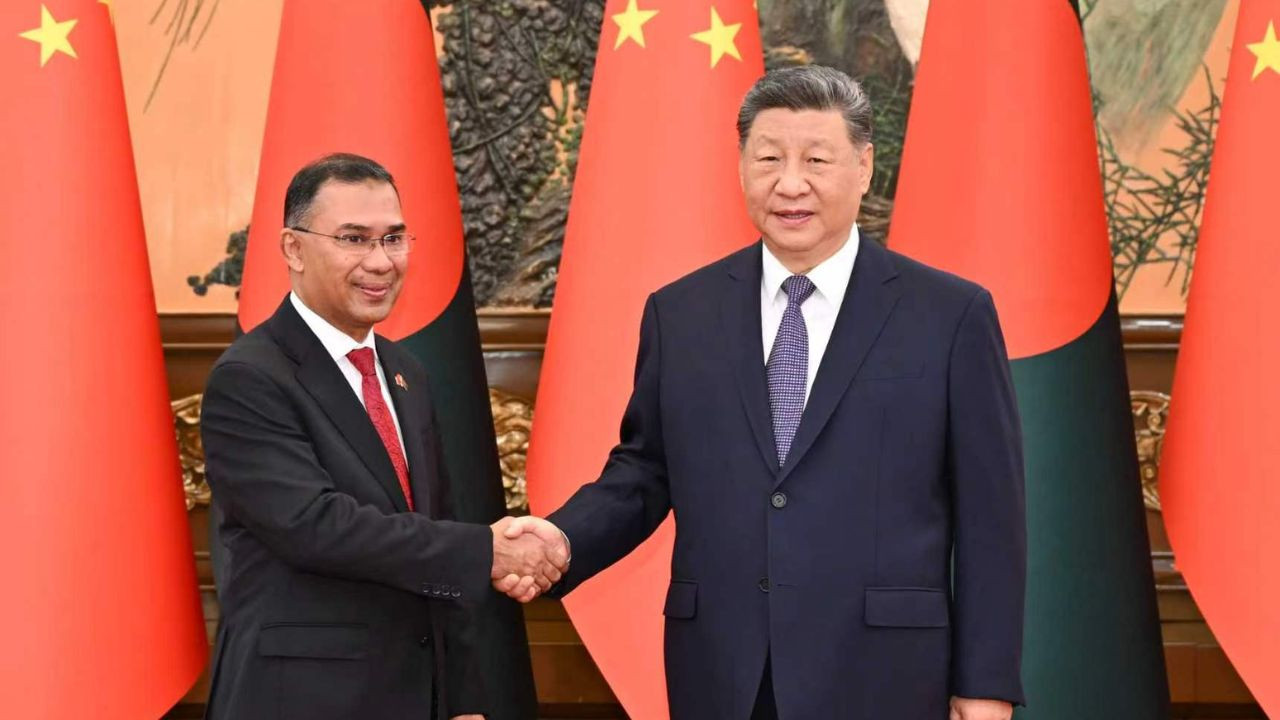
According to reports, this proposal was discussed in detail during the recent visit of Bangladesh Prime Minister Tariq Rahman to China. Under the plan, it is proposed to connect China’s Kunming city with major ports of Bangladesh, especially Mongla Port, through Myanmar. If this corridor is developed, it may give China an opportunity to strengthen its strategic reach in the Bay of Bengal region along with trade activities.
New corridor can move forward on strategy like CPEC
Experts believe that the proposed project can be developed largely on the lines of the China-Pakistan Economic Corridor (CPEC). Just as CPEC gave China direct access to the Arabian Sea through Pakistan’s Gwadar port, similarly this new network can ease China’s access to the Bay of Bengal.
Defense experts say that modern infrastructure like roads, rail and ports are useful for trade in normal times, but when required, they can also be used for fast transportation of military supplies, troops and heavy equipment. For this reason, India is keeping an eye on this project.
Preparation to advance BCIM corridor in a new form
According to media reports, China’s Ambassador to Dhaka Yao Wen said that this idea is not completely new. He told that in the year 1999, the concept of Bangladesh-China-India-Myanmar (BCIM) Economic Corridor was emerged, the objective of which was to connect the four countries through road, rail, waterways and air connectivity. Although that plan could not go ahead, but now efforts are being made to increase cooperation again in this direction between China and Bangladesh. Yao Wen also said that if other countries want to join this initiative in the future, China will welcome them. He called it an independent decision of the countries concerned.
Cooperation is also increasing in defense and foreign policy
According to the report, China and Bangladesh do not want to be limited to only the economic sector. Both countries have also agreed to start a ‘2+2 dialogue mechanism’ on foreign policy and defense matters. Through this arrangement, both the countries want to take forward regular level talks on security, strategic cooperation and regional issues.
Why is this development important for India?
Analysts believe that after the removal of Sheikh Hasina’s government from power in Bangladesh in the year 2024, the relations between China and Bangladesh have strengthened rapidly. After this, cooperation between the two countries has increased on many important projects. These include the Teesta River Project, possible Chinese cooperation in the development of Lalmonirhat airbase near India’s eastern border, plans to set up a drone manufacturing and technology unit in Dhaka and developing an economic zone near Mongla Port. It is also worth noting that a project related to Mongla Port was earlier proposed with India, but later Bangladesh canceled it and handed it over to China.
Strategic balance may change in South Asia
If the proposed economic corridor materializes in the future, China’s strategic presence in South Asia could be further strengthened. At the same time, it will be important for India to constantly keep an eye on the changing geopolitical equations on its eastern borders and in the Bay of Bengal region. At present, the formal further process regarding this project and the decisions of the concerned countries are awaited.

Comments are closed.