
AI Is Rebuilding Asia’s Factories, but India Risks Falling Behind the Hardware Revolution – Obnews

By The Obnews Editorial Team
Artificial intelligence is often presented as a software revolution, but its most expensive and strategically important effects are increasingly physical. The global race to build more powerful AI systems is producing enormous demand for semiconductor factories, data centres, electricity networks, cooling systems, industrial robots, memory chips and advanced electronic components.
Across Asia, that demand is beginning to reshape national manufacturing strategies. China, Taiwan, South Korea and Japan are expanding the industrial foundations required to support AI, while Malaysia, Vietnam and other Southeast Asian economies are attracting assembly, packaging and data centre investment.
India is participating in this transformation, but it is capturing a larger share of the software and services opportunity than the physical manufacturing boom. The country has the engineers, technology companies, digital market and economic scale to become a major AI power. However, it remains behind several Asian competitors in advanced semiconductor production, AI hardware and deeply integrated electronics supply chains.
The distinction matters because the countries that manufacture the chips, servers, networking systems and industrial equipment required by AI will capture more than export revenue. They will gain skilled employment, strategic influence, local supplier networks and greater control over the technologies that will power future industries.
The strength of the AI investment cycle was visible in Asia’s June 2026 manufacturing data. Factory activity expanded in China, Japan, South Korea, Taiwan, Malaysia, Vietnam and the Philippines as demand for semiconductors, servers and data centre equipment helped offset energy and supply disruptions. India’s factories continued to expand, but the pace was among the weakest recorded in several years as export demand softened, particularly from Europe.
South Korea has demonstrated the scale of the competition. Samsung Electronics and SK Hynix announced plans to invest approximately 800 trillion won, or about US$518 billion, in a new semiconductor manufacturing hub. The plan includes four fabrication plants and additional capacity for memory chips and advanced packaging used in AI systems.
China has taken a different but equally ambitious path. It is combining semiconductor investment with industrial automation, robotics, electric vehicles, renewable energy equipment and increasingly sophisticated domestic manufacturing.
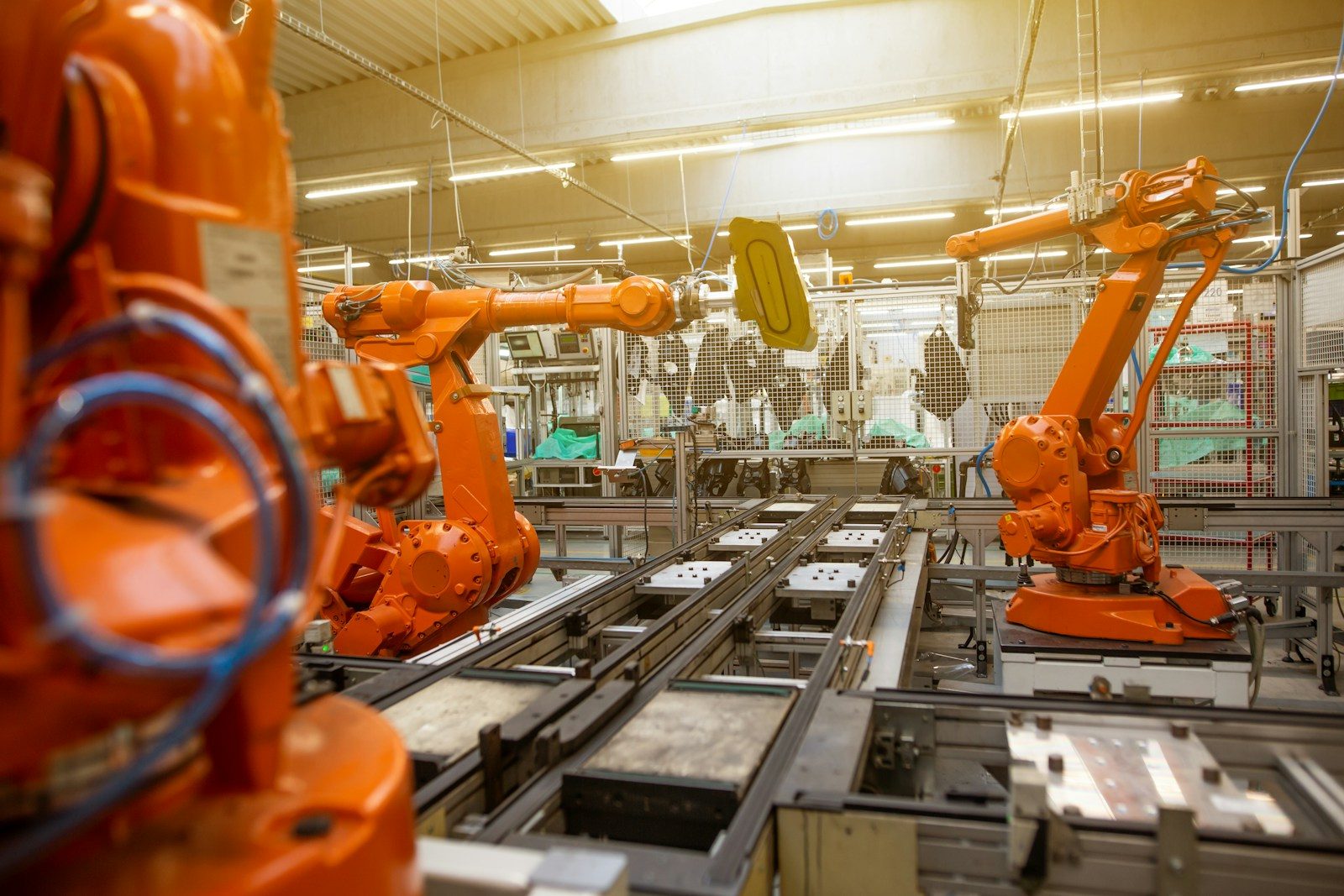
China installed approximately 295,000 industrial robots in 2024, representing 54 per cent of all new factory robot deployments worldwide. More than two million industrial robots were operating in Chinese factories by the end of that year, the largest installed base of any country. Chinese manufacturers also supplied a majority of the robots sold within their domestic market for the first time.
Those figures reveal that China is not merely preparing for an automated economy. It is already constructing one.
Automation helps Chinese manufacturers produce goods with greater precision, consistency and speed. It can also reduce the pressure created by an ageing population and a shrinking labour force. Factories that once depended on large numbers of low wage assembly workers can increasingly operate with robotic arms, computer vision systems and AI directed production lines.
This gives China an important advantage as international companies demand more advanced products while seeking to shorten production times. China can combine enormous industrial scale with increasingly capable machines, domestic component suppliers and extensive transportation infrastructure.
The economic benefits, however, will not be evenly distributed.
Research examining Chinese workers found that greater exposure to industrial robots was associated with lower employment, reduced labour force participation and weaker hourly wages among affected workers. The results do not mean every robot eliminates the same number of jobs, but they demonstrate that automation can impose real costs on employees performing routine and easily replicated tasks.
China’s youth unemployment rate remained 15.6 per cent in May 2026, even after falling to its lowest level in 11 months. That figure cannot be blamed entirely on robots or AI. Weak hiring, the large number of university graduates, changing consumer demand and structural problems in the property sector also influence the labour market. Nevertheless, rapid automation could make entry level opportunities more difficult to create in traditional factories.
Beijing appears to recognize the danger. China’s new five year employment strategy calls for protecting jobs in labour intensive industries while promoting new forms of cooperation between people and machines. It also seeks employment growth in elderly care, childcare, tourism, catering and other service industries that are more difficult to automate completely.
China is therefore attempting to manage two goals simultaneously. It wants to automate quickly enough to preserve industrial leadership, but it must also prevent technological displacement from producing severe unemployment or social instability.
India faces almost the opposite challenge.
The country possesses a young workforce and one of the world’s largest pools of technology professionals. Indian companies and workers are deeply involved in software development, cloud services, data processing, business technology and AI implementation. These strengths position India to earn substantial revenue as global businesses adopt AI.
However, the physical infrastructure behind that software remains heavily dependent on equipment and components manufactured elsewhere.
India has approved 12 semiconductor projects with a planned investment pipeline of approximately ₹1.64 lakh crore. According to the government, those projects include one conventional semiconductor fabrication facility, two compound semiconductor facilities and nine packaging operations.
This represents meaningful progress. Semiconductor packaging, testing and assembly are important parts of the supply chain and can support the development of technical skills and local suppliers. India should not dismiss these activities merely because they occur below the most advanced stage of chip production.
The project mix nevertheless demonstrates the remaining gap. Only one of the approved projects is a conventional semiconductor fabrication plant, while most are concentrated in packaging. India does not yet possess the advanced manufacturing ecosystem of Taiwan, the memory chip leadership of South Korea or the industrial depth of China.
The government is trying to close that gap through India Semiconductor Mission 2.0. The program is intended to support semiconductor equipment, production materials, Indian intellectual property, supply chain resilience, research and workforce training. An initial ₹1,000 crore was allocated for the 2026 to 2027 financial year.
India is also moving aggressively to attract data centres. The 2026 federal budget proposed a tax holiday until 2047 for qualifying foreign companies that provide global cloud services through data centre infrastructure located in India. The policy reflects New Delhi’s ambition to turn the country’s large digital economy into a base for international computing and cloud operations.
Data centre growth could become one of India’s largest AI related opportunities. The country offers a huge consumer market, expanding internet use, skilled workers and growing demand for domestic data storage and cloud services.
But data centres require much more than land and tax incentives. Large AI facilities consume enormous amounts of electricity, need reliable transmission infrastructure and require sophisticated cooling, networking and backup systems. Delays in land acquisition, power connections, approvals or water availability can quickly make another Asian location more attractive.
This is where Malaysia, Vietnam and other regional competitors are gaining ground. They have spent years building electronics clusters connected to ports, international suppliers and export markets. Some offer faster project approvals and already possess substantial experience in semiconductor assembly and component manufacturing.
India’s strong economic growth gives it time and resources to respond. Its real GDP expanded by 7.7 per cent during the 2025 to 2026 financial year, while manufacturing gross value added increased by 10.7 per cent. Yet the latest factory surveys suggest that the country cannot assume rapid economic growth will automatically create a globally competitive AI hardware industry.
Software success and hardware success require different foundations. Software can be exported through digital networks by skilled teams working from offices. Semiconductor and server manufacturing requires factories, specialized machinery, uninterrupted power, precision engineering, chemicals, logistics and supplier networks developed over many years.
India does not need to reproduce every part of Taiwan’s or China’s industrial system. It should identify areas where it can realistically build international advantages, including chip design, compound semiconductors, power electronics, packaging, data centre equipment, telecommunications hardware and specialized manufacturing for automobiles and defence.
The country must also ensure that incentives produce lasting domestic capabilities rather than assembly operations dependent almost entirely on imported components. The goal should be to create Indian suppliers, intellectual property, technicians and manufacturing expertise that remain valuable after subsidies expire.
China’s experience offers India both a model and a warning. China developed its manufacturing power through infrastructure, supplier networks, technical education and long term industrial policy. It is now using automation to protect that position as its population ages.
At the same time, China shows how technological upgrading can disrupt workers whose skills no longer match the needs of automated factories. India has a younger population and must create millions of jobs. A hardware strategy built around a small number of highly automated facilities will not, by itself, solve that employment challenge.
India needs a broader industrial ecosystem in which advanced factories support thousands of component makers, construction companies, logistics operators, maintenance providers and service businesses. That would allow the AI boom to generate employment beyond a limited number of engineers and multinational corporations.
There is also an important opportunity for Canada. Canada possesses critical minerals, clean energy expertise, artificial intelligence research, advanced engineering capabilities and investment capital that could complement India’s industrial ambitions. Stronger Canada and India relations could support partnerships in data centre energy systems, semiconductor materials, battery supply chains, education and technical training.
The AI economy will produce several winners. India has not missed the opportunity, and its software leadership, domestic market and new semiconductor projects provide a serious foundation.
However, the window for capturing the physical side of the AI revolution will not remain open indefinitely. Semiconductor ecosystems become more difficult to displace as suppliers, talent and infrastructure concentrate around established production centres.
China is automating the factories it already built. South Korea is committing hundreds of billions of dollars to expand its chip leadership. Southeast Asian countries are moving rapidly to secure data centres and electronics investment.
India must now convert its digital strength into industrial capacity. Otherwise, it may help write the software that powers the AI revolution while other Asian economies manufacture the machines, chips and infrastructure that capture its greatest long term value.

Comments are closed.