
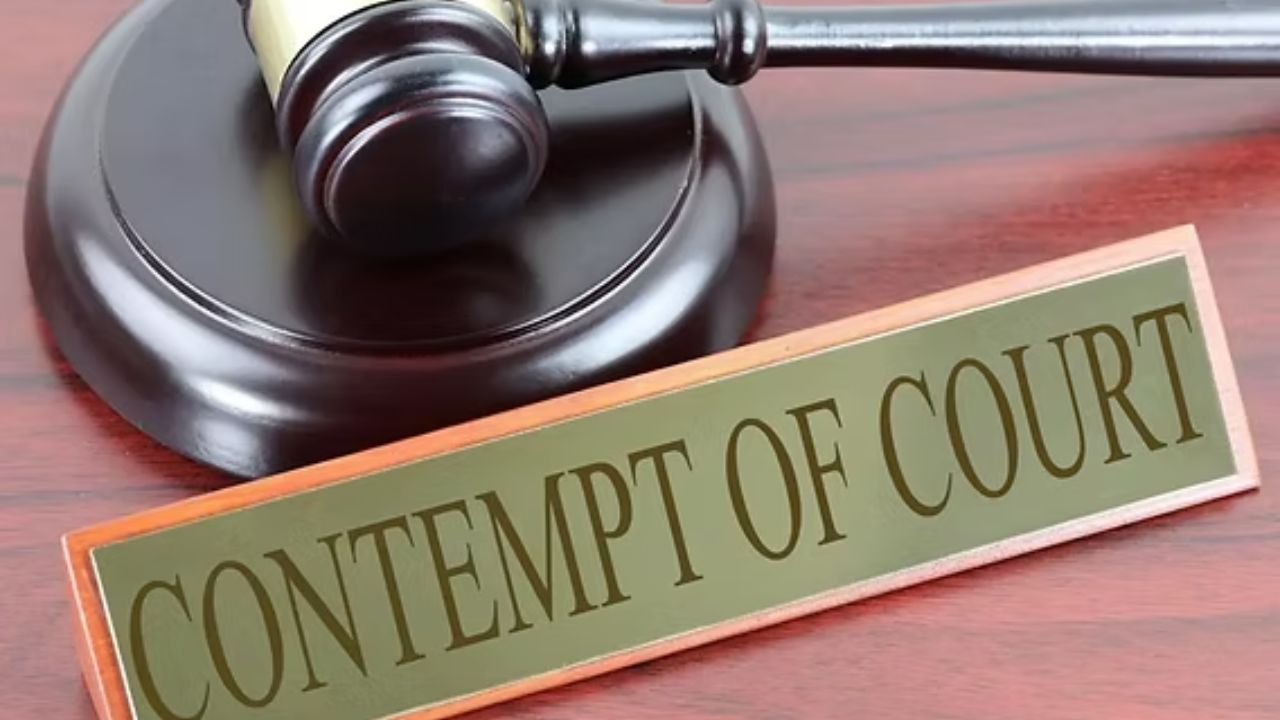
Contempt of Court: From shoehorning to profanity! The issue of contempt of court is in discussion due to ‘those’ incidents in the Supreme Court

- A lawyer threw documents at the judge and abused the Chief Justice
- Obstructing the process of justice Contempt of Court
- Court has power to punish any person for contempt of itself.
Contempt of Court: During the hearing in the Supreme Court on Friday, a lawyer threw documents at the judges sitting in front and abused the Chief Justice. This case caused quite a stir in the Supreme Court for some time. A similar incident happened in the court a few months ago. A senior advocate threw a shoe directly at the Chief Justice. But the court clarified that no action will be taken against both of them. These incidents have once again highlighted the issue of contempt of court.
What is Contempt of Court?
Violation of court orders or obstruction of justice Contempt of Court is considered The ‘Contempt of Court Act, 1971’ has been enacted to deal with such cases. Article 129 and Article 142(2) of the Constitution of India spell out the contempt powers of the Supreme Court.
According to Article 129 of the Constitution of India, Supreme Court This is the ‘Court of Record’. Therefore, the Court has the power to punish any person for contempt of itself.
‘Court of Record’ means all proceedings, orders and records of the Court preserved as official and permanent records. The authenticity of these records cannot be questioned. Therefore, an act prejudicial to the credibility of these records or contempt of legislative court can be considered.
Supreme Court News: Documents leaked, abusive words against the Chief Justice…! High voltage drama of lawyer again in Supreme Court
Essentials for Contempt of Court
For any person to be convicted of contempt of court certain important conditions must be met.
Civil Contempt: It is a willful violation of any judgment, decree, direction, order, writ or other process of a court or willful breach of an undertaking given to a court.
Criminal Contempt: includes the publication of any matter or any other act, which impairs or taints the authority of the Court, or interferes with the due process of any judicial proceeding, or otherwise obstructs the administration of justice.
Provision of Punishment:
Under Article 12 of the Constitution, anyone who commits contempt of the Supreme Court and the High Court is liable to imprisonment for up to 6 months, Rs. 2,000 or both. Under Articles 129 and 215 of the Constitution, these courts have been given inherent powers to punish for contempt.
However, if the accused apologizes sincerely and to the satisfaction of the court, he can be pardoned or the sentence can be cancelled. A waiver will not be rejected merely on the ground that it is conditional.
Supreme Court News: The complaint of child sexual abuse will be very expensive! A landmark judgment of the Supreme Court
Provisions changed after 2006 amendment ?
Important amendments were made to Section 13 under the Contempt of Court (Amendment) Act, 2006.
According to Section 13(a), the court shall not pass sentence unless satisfied that the contempt has caused or is likely to cause serious obstruction of justice.
According to Section 13(b), the court may accept the defense on the ground of truth if the action is taken in public interest by the person concerned and the defense is bona fide.

Comments are closed.