
Parliament Clears Anti-Paper Leak Bill Amid Opposition Walkout In Rajya Sabha; How’s It Different From 2024 Act?

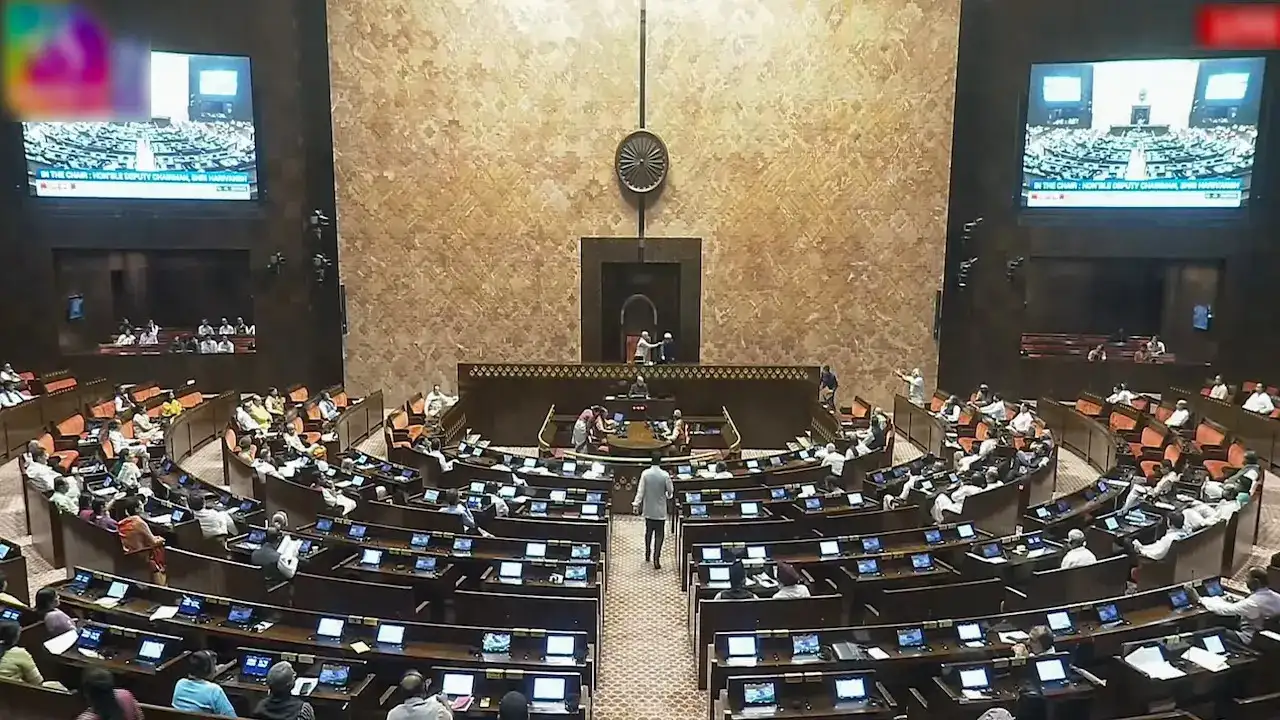
New Delhi: A day after it was passed in the Lok Sabha, the Public Examinations (Prevention of Unfair Means) Amendment Bill, 2026 cleared the Rajya Sabha test on Thursday following a day-long debate, even as the Opposition staged a walkout.
Having cleared Parliament, the bill will now be sent to President Droupadi Murmu for assent before it becomes law.
Opposition attacks govt
Mallikarjun Kharge, Leader of Opposition in Rajya Sabha, said stricter punishments alone won’t stop paper leaks, suggesting that reforms in examination system and institutional accountability were needed.
“What would make a difference is how the government conducts these examinations. Paper leaks hurt innocent students and their parents,” the Congress president expressed.
Kharge also alleged that the government introduced the amendments to pacify protesting students and criticised its handling of recent student protests.
According to Samajwadi Party chief Akhilesh Yadav, the amendments were brought under pressure from student protests and claimed paper leaks continued in BJP-ruled states.
“This law existed in 2024 as well… The new law enacted for 2026 came about under pressure — when large numbers of students took to the streets,” Akhilesh said.
BJP MP Dinesh Sharma called the bill “historic”, accusing Congress of avoiding a meaningful debate. “This is a historic event… It is unfortunate that the Congress was shying away from the discussion,” he said.
Jitendra Singh slams Opposition
Minister of State Jitendra Singh hit out at the Opposition.
“I would just like to add a few points that have been raised during the course of this protracted discussion. But before that, I would like to say that we brought this Bill with all humility… and I have taken very careful note of each and every word that has been said. As I said at the very beginning, we do not stand on prestige. We have come here with the expectation that we would benefit from healthy, constructive suggestions,” Singh said.
“But, as the Leader of the House, JP Nadda, has already mentioned, it is unfortunate that many of the honourable members who were most vociferous in raising objections chose to walk out when it was time for their issues and points to be responded to. But I am sure, having learned quite a bit from Parliament, they must be watching me from outside somewhere. Therefore, I will still not disappoint them. Before I take up a few of the points that have been raised, and which are also relevant to others, let me say that this is an issue that concerns every citizen of India… But the fact of the matter is that this is an issue in which every parent, every family, and indeed every citizen of this country has a stake, because these young children are our greatest investment in what Prime Minister Modi describes as Viksit Bharat 2047.”
The 2024 Act
The Public Examinations (Prevention of Unfair Means) Act, 2024 was brought in after nationwide protests over the NEET-UG paper leak in 2024 and other exam irregularities. Despite enactment of the law which criminalised organised exam fraud, there was a repeat of paper leak in NEET-UG 2026.
The issue escalated in 2026 after widespread student protests
Spearheaded by the Cockroach Janta Party (CJP), students and Gen-Z joined an unprecedented agitation, demanding systemic reforms, accountability and stricter action against those responsible.
The 47-day protest at Jantar Mantar led to the resignation of Union Education minister Dharmendra Pradhan and heated debates in Parliament.
Changes under amended law
The amendments retain core framework of the Public Examinations (Prevention of Unfair Means) Act, 2024, under which offences are cognisable, non-bailable and non-compoundable, while candidates themselves remain outside its ambit.
* Punishments and timelines significantly strengthened. Individuals convicted of using unfair means will now face five to 10 years’ imprisonment, up from three to five years earlier.
* Maximum fine increased from Rs 10 lakh to Rs 50 lakh.
* Service providers found guilty can be fined up to Rs 5 crore, compared with Rs 1 crore earlier.
* They will be barred from conducting examinations for eight years instead of four.
* For organised examination fraud, minimum jail term has been increased from 5 to 7 years. Fines will be up to Rs 10 crore.
* Investigations have be completed within two months of referral by the Centre and requires states and Union Territories to establish fast-track Courts to end trials within three months of filing the chargesheet.

Comments are closed.