
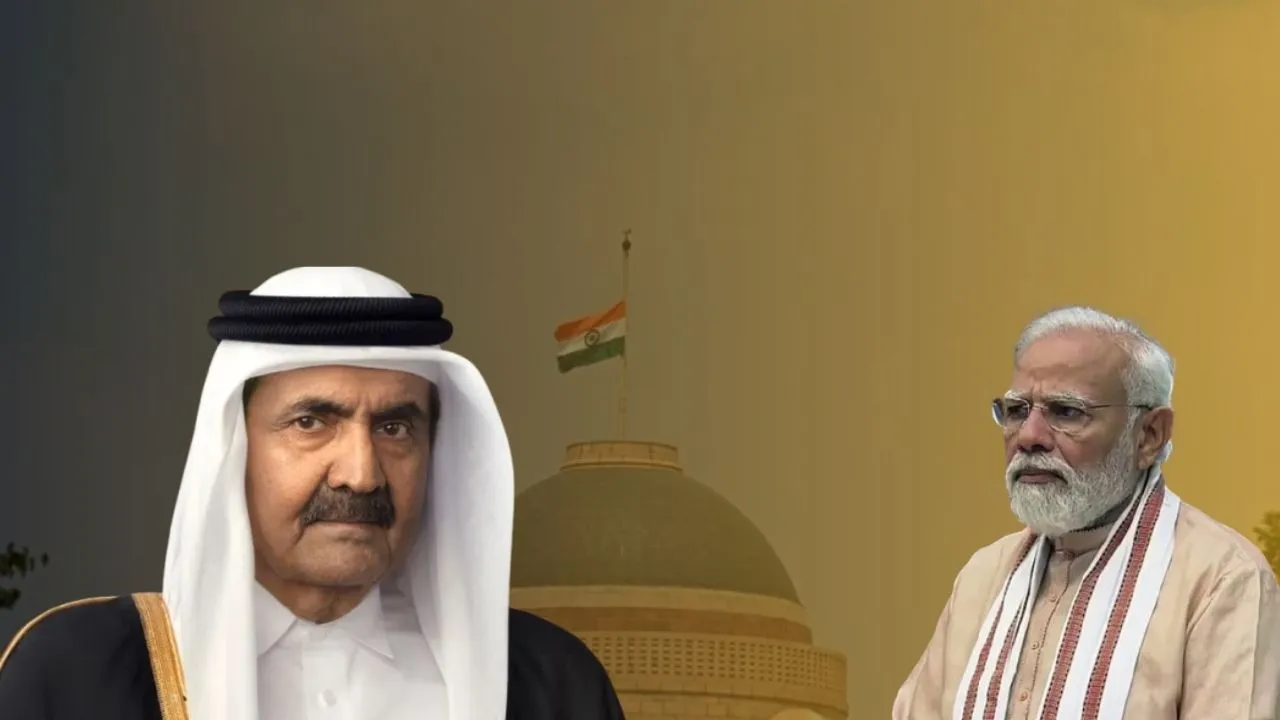
Explainer: Why is India mourning the death of former ruler of Qatar? Know the reason behind this

Qatar Father Emir Death: Qatar’s Father Emir Sheikh Hamad bin Khalifa Al Thani died on Sunday (12 July 2026) after a prolonged illness. Thani, who ruled Qatar from 1995 to 2013, has the status of Father of the Nation in Qatar. At present, his son Emir Sheikh Tamim bin Hamad Al-Thani is in charge of Qatar.
India has declared a day of national mourning on the death of Emir Sheikh Hamad bin Khalifa Al Thani. During this period, the national flag will remain at half mast on major buildings of India. Apart from this, there will be no official entertainment programs of any kind. In such a situation, the question arises that why is mourning in India on the death of the head of state of another country? What rules have to be followed during this period? What happens in national mourning?
Why is India mourning the death of Emir of Qatar?
India or any other country does not declare national mourning every time on the death of a foreign head of state. This is considered a special diplomatic and sensitive decision. People often take this government holiday to mean national mourning. But this does not happen, countries declare national mourning on the day of a foreign head of state and express respect and sorrow towards that person.
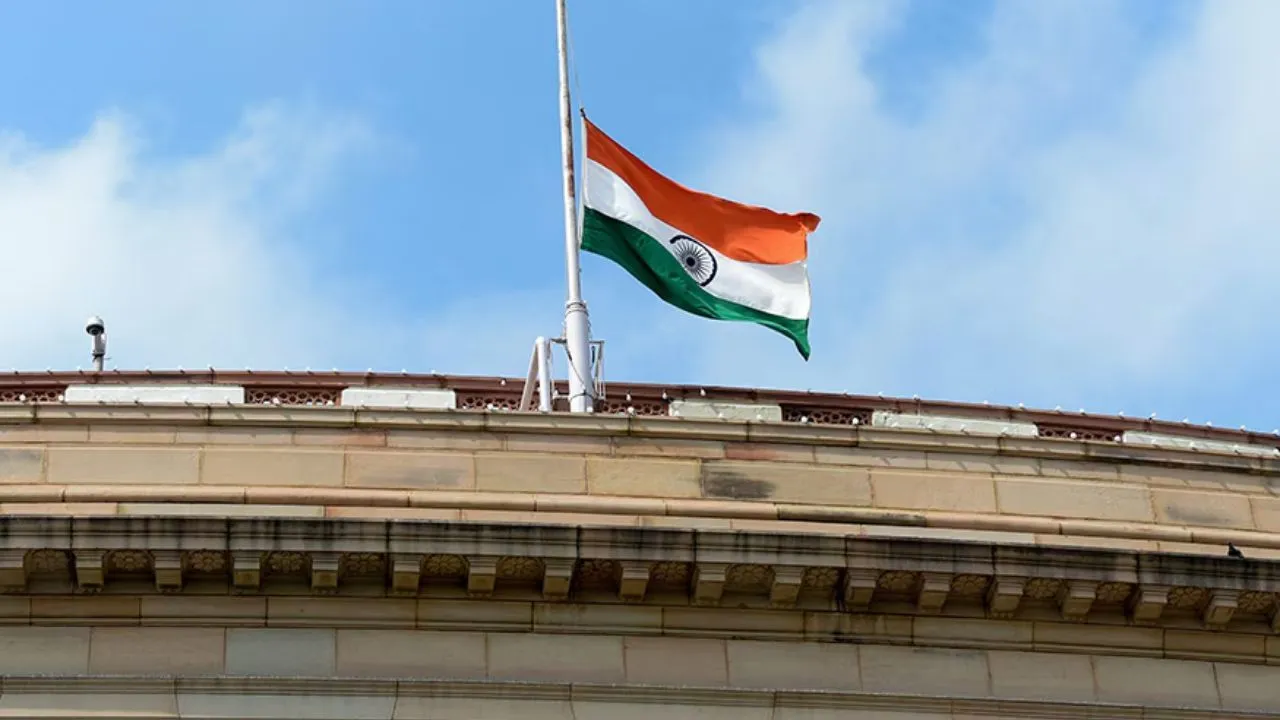
In India, the national flag remains at half mast on national mourning (Source- Social Media)
The declaration of national mourning is taken considering the deceased person’s connection with India, the leader’s global importance and his contribution to India. National mourning is not just a formality. Rather, it serves to indicate the direction of the country’s foreign policy, and also conveys human sympathy and diplomatic messages.
What is national mourning?
National mourning is a way of expressing grief on behalf of the entire country. The government takes some special steps during the stipulated period, the purpose of which is to show respect to the deceased person. During this time the national flag is lowered to half mast. Through this, an attempt is made to convey the message of what importance the deceased person had for India and the world. This honor can also be given to big leaders of India, social personalities and some foreign leaders. The central government declares national mourning.
Why is national mourning declared?
Declaring national mourning on the death of a foreign head of state is not only a show of respect for that person, but it also sends a message to the people of that country that India stands with you in the hour of grief. This increases trust in bilateral relations between the two countries. Which impacts everything from business to global politics. Apart from this, it is India’s ‘Vasudhaiva Kutumbakam’ It also works to show the feeling of.
However, it is not necessary that India declare national mourning on the death of every present or former head of any country. Every decision is taken keeping in mind the circumstances and the nature of relations between the two countries.
National mourning was announced on the death of which foreign leaders?
India has from time to time declared national mourning on the demise of some prominent foreign leaders. If we talk about the last few years, the names of three prominent leaders are included in it.
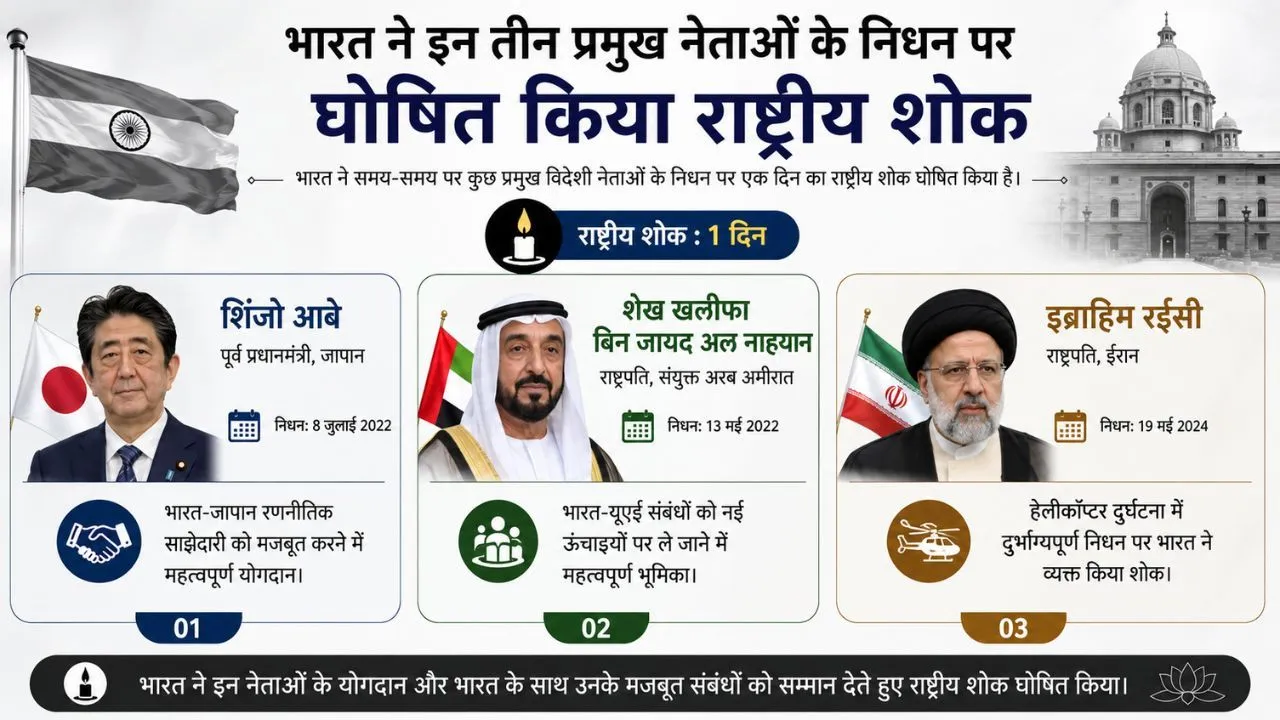
On the death of which leaders, national mourning was announced (AI generated image)
Shinzo Abe: India had declared a day of national mourning after the assassination of former Japanese Prime Minister Shinzo Abe. Abe had an important contribution in strengthening the India-Japan strategic partnership.
Sheikh Khalifa bin Zayed Al Nahyan: India had also declared a day of national mourning on the death of UAE President Sheikh Khalifa bin Zayed Al Nahyan.
Ibrahim Raisi: India also observed a day of national mourning after the death of Iranian President Ebrahim Raisi in a helicopter crash.
In cases of foreign leaders, the Indian government often declares a day of national mourning. However, the central government has the right to decide its duration. This is often announced by the Home Ministry after consultation with the External Affairs and Defense Ministries.
Why one day of national mourning?
One day of national mourning is considered a formal and dignified sign of respect and condolences from India. It also reflects the seriousness and closeness of India’s relations with the concerned country. At the same time, national mourning of two or more days is usually declared on special occasions such as the death of current or former top constitutional officials of India.
What happens during national mourning?
After national mourning is declared, the central government issues a formal order, specifying the period, date and instructions to be followed. Generally some rules are followed under this.
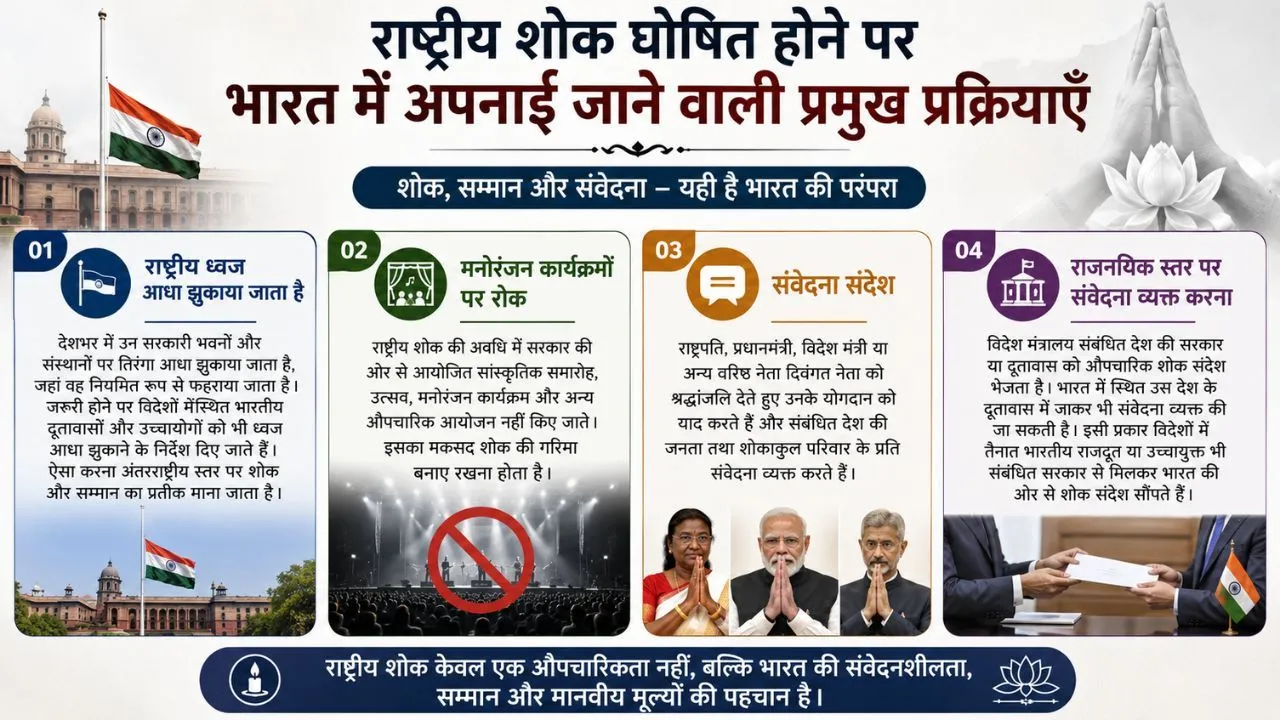
What does the Indian government do in national mourning (AI generated image)
The national flag is flown at half mast: The tricolor is flown at half mast on government buildings and institutions across the country where it is hoisted regularly. If necessary, Indian embassies and high commissions abroad are also instructed to lower the flag at half mast. Doing so is considered a symbol of mourning and respect internationally.
Ban on entertainment programmes: During the period of national mourning, cultural ceremonies, festivals, entertainment programs and other formal events organized by the government are not held. Its purpose is to maintain the dignity of mourning.
Condolence message: The President, Prime Minister, Foreign Minister or other senior leaders pay tribute to the deceased leader, remember his contribution and express condolences to the people of the country concerned and the bereaved family.
Expressing condolences at diplomatic level: The Ministry of External Affairs sends a formal condolence message to the government or embassy of the country concerned. Condolences can also be expressed by visiting the embassy of that country located in India. Similarly, Indian Ambassadors or High Commissioners posted abroad also meet the concerned government and submit condolence messages on behalf of India.
However, many people consider national mourning to mean a holiday, but it is not so. There is no holiday of any kind during national mourning and government offices and schools continue to function as normal.

Comments are closed.